


In today’s digital landscape, brands must go beyond conventional advertising to spark genuine conversations and drive organic advocacy. One of the most powerful tools at their disposal is augmented reality. By layering digital elements onto the physical world, interactive AR campaigns transform passive observers into engaged participants, boosting brand visibility and fueling word-of-mouth momentum. This year (2026), innovative marketers are harnessing immersive experiences to connect deeply with audiences, encouraging users to share their personalized interactions across social platforms.
Interactive AR campaigns enable brands to forge emotional ties, offering customers unique, memorable moments that feel custom-crafted. Imagine trying on virtual apparel in your living room or discovering hidden content at a pop-up event—all without leaving home. When users share these experiences via social media or show them to friends in person, they become authentic advocates, extending reach far beyond paid channels. In this article, we explore the foundations, benefits, design strategies, performance metrics, and real-world examples that illustrate how augmented reality can supercharge word-of-mouth marketing in a measurable, cost-effective way.
Understanding Augmented Reality in Modern Marketing
Defining AR and Its Core Capabilities
Augmented reality overlays digital objects—such as 3D models, animations, and interactive overlays—onto a user’s real-world environment through a smartphone, tablet, or AR glasses. Unlike virtual reality, which immerses users in a completely artificial setting, AR enhances the existing surroundings. This capability allows brands to deliver contextually relevant content at scale. For instance, a cosmetics company can let customers preview lipstick shades on their own reflection, while a furniture retailer can show how a sofa fits in a living room. When implemented thoughtfully, these dynamic interactions feel both practical and playful, setting the stage for organic sharing and extended dwell time.
User Engagement and Brand Experiences
Today, consumers expect more than static visuals—they want to interact, explore, and co-create. By leveraging interactive AR campaigns, companies can invite audiences to manipulate virtual elements, participate in gamified challenges, or trigger surprises in their surroundings. This heightened involvement fosters an emotional connection: when users personalize content or solve a branded AR puzzle, they form a positive memory associated with the product. As a result, they are far more likely to discuss their experience in person or online, effectively promoting the brand without additional ad spend.
How AR Amplifies Word-of-Mouth Dynamics

Immersive Engagement Leading to Organic Sharing
Interactive AR campaigns captivate users by offering novelty and a sense of discovery. When a user uncovers a hidden 3D character at a retail store or watches an AR filter transform their face in real time, the thrill is inherently shareable. Organic sharing spikes because people love to showcase new tech experiences and unique visual effects. Research from MIT Reality Lab indicates that immersive content can increase social sharing rates by up to 30% compared to traditional videos or images.
Emotional Connections and Lasting Advocacy
Beyond novelty, AR can build genuine emotional bonds when it aligns with a user’s identity or aspirations. Personalized filters, branded lenses, and location-based AR quests can be tailored to individual tastes. By giving users control over how they engage—whether by customizing a virtual sneaker or competing in an AR scavenger hunt—brands nurture a sense of ownership. That personal involvement translates into stronger advocacy: customers who feel invested in an experience are more likely to recommend it to friends or repost it on their social channels, driving peer-to-peer referrals that are highly trusted.
Real-World Examples of Interactive AR Campaigns
Virtual Try-Ons in Retail Environments
Several fashion retailers have led the way by integrating AR try-on tools into their mobile apps. Users can point their camera at themselves and overlay garments or accessories in real time. A global clothing chain saw a 25% lift in engagement when they introduced an AR mirror feature that let shoppers experiment with outfit combinations virtually. Shoppers then shared short video clips of their virtual outfits on Instagram Stories, adding branded hashtags and driving conversations about fit, style, and innovation.
Event Activation Through Geolocated AR Games
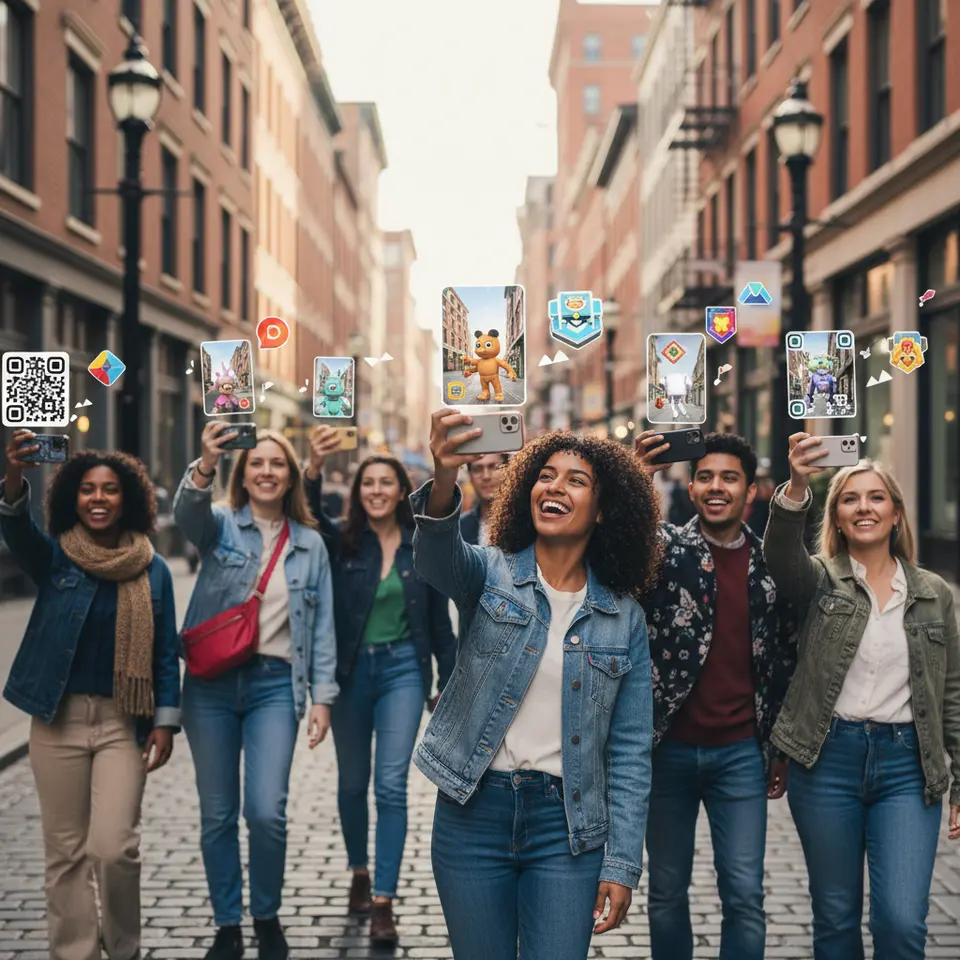
In festival settings, beverage and consumer brands are deploying city-wide AR scavenger hunts to turn attendees into brand champions. Participants open a branded app, navigate to designated spots, scan a QR code, and unlock AR filters or digital collectibles. Each shareable selfie includes event-specific overlays and hashtags. A recent campaign generated over 5,000 user-generated posts in a single weekend, with impressions climbing into the millions organically. These interactive AR campaigns often integrate with popular social channels, minimizing friction and maximizing reach.
Blueprint for Crafting Interactive AR Campaigns
Setting Clear Objectives
Any successful interactive AR campaign begins with defining measurable goals. Are you aiming to boost brand awareness, drive foot traffic, or generate user-generated content? Clear objectives guide creative decisions, helping you choose the right AR format and distribution channels. For example, when seeking social buzz, face filters with branded stickers and share prompts perform well. Conversely, immersive world-placement effects may be better suited for in-store engagement and time-on-site metrics.
Choosing AR Formats and Platforms
There are multiple AR formats to consider, each with distinct advantages. Spark AR Studio and Snap Lens Studio enable quick creation of face filters and lens effects for Instagram, Facebook, and Snapchat. Web-based AR services like 8th Wall allow experiences to launch directly from a URL, eliminating app-download barriers. For highly custom or location-aware campaigns, Unity with AR Foundation offers full creative control on iOS and Android. Align platform choice with your audience’s habits—if they gravitate toward TikTok, consider tools that easily export to that channel.
Incorporating Shareable Elements
To spark word-of-mouth, embed clear sharing prompts within the AR experience. Branded frames, call-to-action overlays, and custom hashtags encourage users to post their creations online. Gamification elements—such as scoreboards, badges, or unlockable content—can motivate users to invite friends, turning each participant into a mini-ambassador. Reward participants for sharing by offering discount codes or entry into sweepstakes, reinforcing advocacy with tangible value.
Ensuring Accessibility and Inclusion
Eliminate friction by optimizing load times and minimizing required permissions. WebAR experiences often prove more accessible than app-based solutions, as there’s no installation barrier. Provide alternative experiences for users on older devices and ensure captions or audio descriptions accompany immersive content for users with hearing or visual impairments. Prioritizing accessibility demonstrates brand responsibility and broadens your campaign’s reach.
Evaluating ROI and Emerging Trends
Key Performance Indicators for AR Marketing
Measuring success requires tracking metrics that reflect both engagement and conversion. Core KPIs for interactive AR campaigns include the number of AR sessions launched, average session duration, interactions per session (taps, rotations, captures), and social shares tagged with your campaign hashtag. Conversion lift can be gauged through unique promo code redemptions or increased site visits correlated with AR activations. Additionally, sentiment analysis of user comments provides qualitative insight into how the experience resonates.
Budgeting and Timeline Considerations
Interactive AR campaigns can span a wide budget spectrum. Simple face filters built in Spark AR Studio may roll out in 2–4 weeks with costs under $5,000, while custom Unity-based experiences with geolocation features can require 3–6 months and budgets exceeding $50,000. Align your scope with objectives and allocate resources for creative development, platform integration, testing, and promotion across channels (email, SMS, influencer partnerships).
Emerging Technologies and Future Directions
As AR hardware and software mature, new possibilities emerge for immersive word-of-mouth marketing. Wearable AR glasses promise hands-free interactions at events and retail locations. Brands are experimenting with AR shopping walls—interactive storefront displays that trigger digital demos when scanned. In academic circles, researchers at the Stanford Virtual Human Interaction Lab are exploring social dynamics in mixed-reality environments, laying groundwork for metaverse-integrated campaigns. Keeping a pulse on these trends ensures your brand stays ahead of the curve in today’s competitive landscape.
Frequently Asked Questions
What types of AR campaigns are most shareable?
Face filters and gamified AR experiences tend to see the highest social sharing rates because they offer instant, personalized interactions that users can easily showcase on their preferred platforms.
How do I measure the ROI of an AR campaign?
Track key metrics such as AR session launches, average session duration, interactions per session, and social shares tagged with your campaign hashtag. Pair these with conversion metrics like promo code redemptions or site visits to understand the campaign’s impact on your bottom line.
What budget should I allocate for an AR campaign?
AR campaign costs vary based on complexity. Simple face filters can be created in 2–4 weeks with budgets under $5,000, while custom geolocation-based experiences may require 3–6 months and $50,000 or more. Align your budget with campaign objectives and desired features.
Conclusion
Interactive AR campaigns represent a potent fusion of technology and storytelling, offering brands a novel path to ignite word-of-mouth advocacy. By understanding core AR principles, aligning campaign formats with clear objectives, and embedding shareable elements, marketers can create experiences that resonate deeply and spread organically. Rigorous performance tracking ensures continuous optimization, while exploring emerging trends—such as wearable AR and metaverse integrations—prepares brands for tomorrow’s digital frontier. In today’s competitive environment, embracing augmented reality is no longer optional; it’s essential for companies seeking to spark authentic conversations and build vibrant communities of enthusiastic advocates this year (2026). Empower your brand with interactive AR campaigns and watch genuine buzz flourish.


