

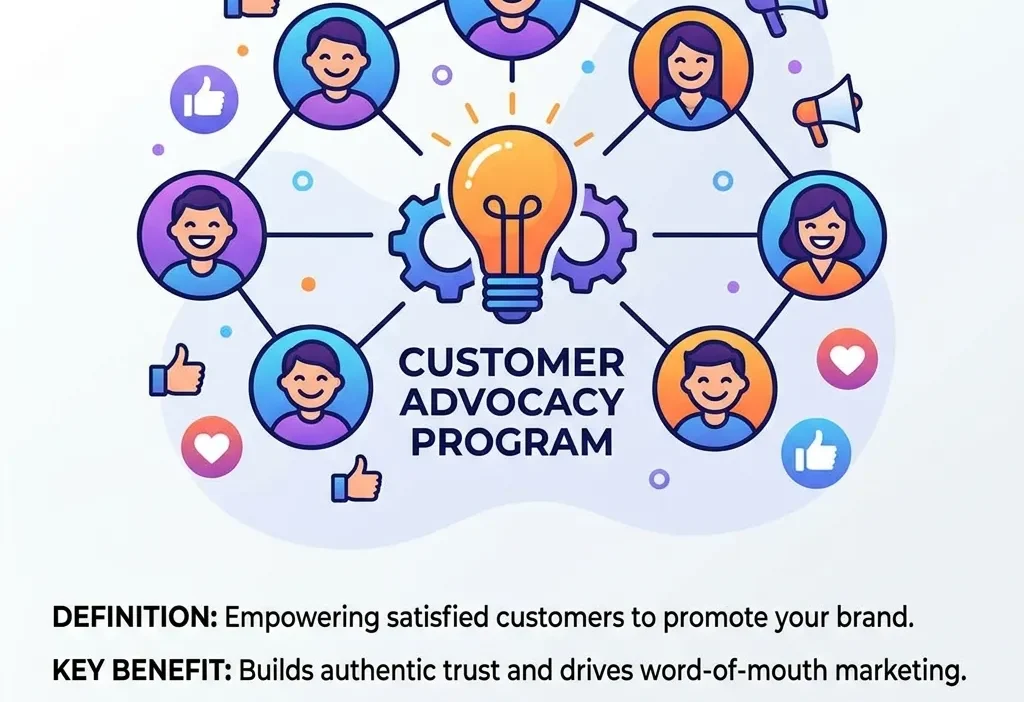
A customer advocacy program turns satisfied customers into active supporters who voluntarily share their experiences, provide testimonials, participate in case studies, refer new customers, and help strengthen brand credibility. A successful program requires clear goals, the right customer advocates, meaningful engagement opportunities, appropriate rewards, and consistent measurement. This guide explains how customer advocacy programs work, how to build one step by step, common advocacy activities, best practices, tools, and key metrics for measuring business impact.
What Is a Customer Advocacy Program?
A customer advocacy program is a structured initiative that encourages satisfied customers to actively support and promote a brand through authentic experiences and recommendations.
Customer advocates can contribute in many ways, including:
- Writing reviews
- Providing testimonials
- Participating in case studies
- Referring potential customers
- Sharing brand content
- Speaking at events
- Joining customer communities
- Providing product feedback
- Participating in surveys
- Creating user-generated content
- Serving as references for prospects
The key difference between ordinary customer satisfaction and advocacy is action. A satisfied customer may enjoy your product and continue purchasing, while an advocate is more likely to voluntarily communicate their positive experience to other people.
A program gives businesses a systematic way to identify these customers, engage them, provide valuable experiences, and measure the results.
For a broader foundation, explore this customer advocacy strategy guide.
Why Is a Customer Advocacy Program Important?
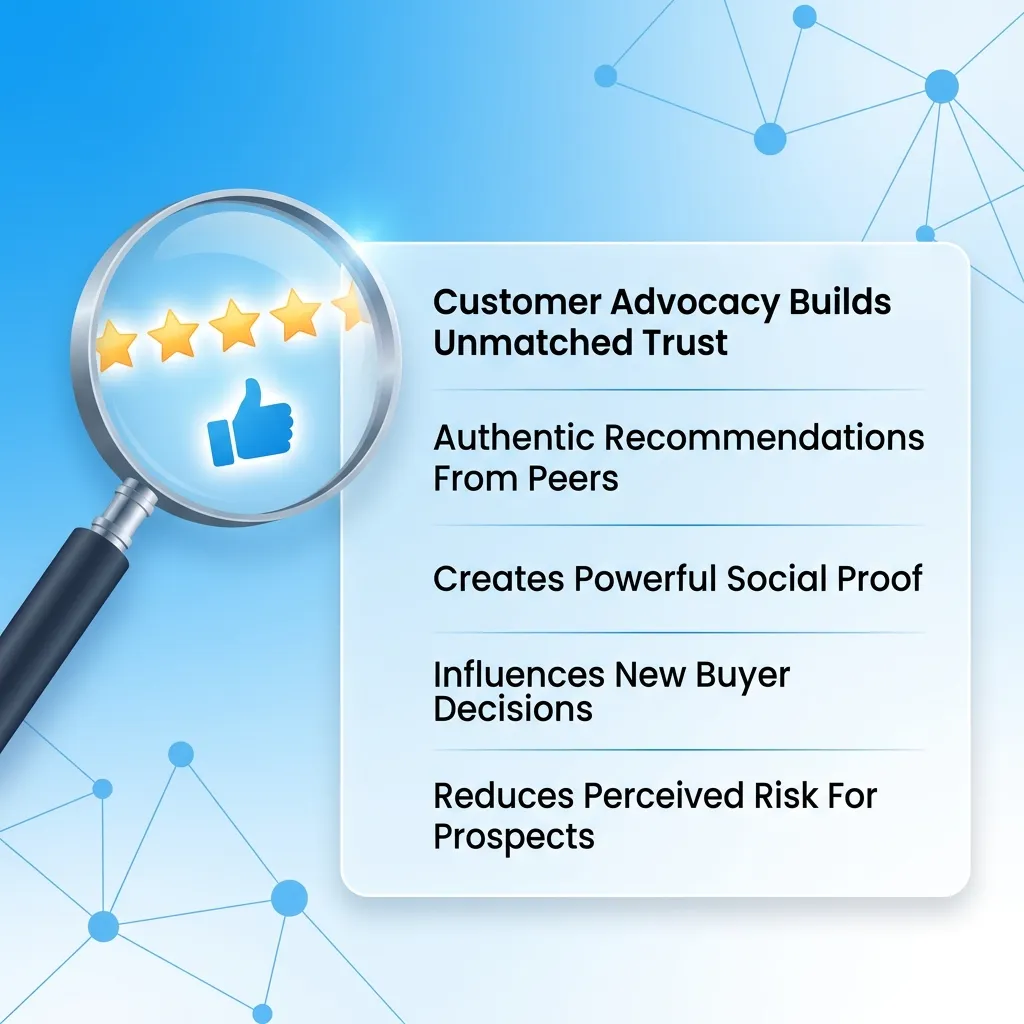
Traditional marketing tells potential customers why they should trust a brand. Customer advocacy provides another source of credibility: people who have actually experienced the product or service.
A well-designed program can help businesses:
- Increase customer trust
- Generate referrals
- Build social proof
- Produce authentic testimonials
- Strengthen customer relationships
- Improve retention
- Generate qualified leads
- Support sales teams
- Increase brand awareness
- Collect valuable customer feedback
- Reduce dependence on purely paid acquisition
Customer advocacy is particularly powerful because prospects often want evidence that a product works for people or organizations like them.
Instead of simply saying that your company delivers results, you can demonstrate those results through customer stories, reviews, testimonials, referrals, and real-world experiences.
Customer Advocacy Program vs. Customer Loyalty Program
These concepts are related but not identical.
A customer loyalty program primarily focuses on encouraging customers to continue purchasing by offering benefits, rewards, discounts, points, or exclusive experiences.
A customer advocacy program focuses on encouraging customers to actively support the brand.
| Customer Loyalty Program | Customer Advocacy Program |
|---|---|
| Focuses on retention | Focuses on active advocacy |
| Encourages repeat purchases | Encourages recommendations and participation |
| Often uses points or discounts | Can use recognition, access, rewards, or experiences |
| Measures retention and purchases | Measures referrals, testimonials, engagement, and influence |
| Customer remains primarily a buyer | Customer becomes an active brand supporter |
A strong customer relationship can eventually lead to both loyalty and advocacy.
What Are the Goals of a Customer Advocacy Program?
Before launching a program, determine what you want it to accomplish.
Common goals include:
Increase Customer Referrals
Encourage existing customers to introduce potential buyers to your business.
Generate Testimonials
Collect authentic customer experiences that can be used across websites, landing pages, sales materials, and campaigns.
Create Customer Case Studies
Turn successful customer experiences into detailed stories that demonstrate measurable outcomes.
Increase Brand Awareness
Encourage customers to share content, experiences, or recommendations with their professional and personal networks.
Support Sales Teams
Advocates can provide references, testimonials, or direct experiences that help prospects feel more confident about purchasing.
Improve Customer Relationships
Advocacy programs can create stronger relationships by giving customers opportunities to interact with your company beyond ordinary transactions.
How to Build a Customer Advocacy Program
Creating a successful program requires a structured approach.
1. Define Your Objectives
Start with specific business goals.
Instead of saying:
“We want more advocates.”
Define measurable objectives such as:
- Generate 100 qualified referrals per quarter
- Collect 30 customer testimonials
- Recruit 50 active advocates
- Produce 10 customer case studies
- Increase referral-generated revenue by a specific percentage
Specific goals make it easier to determine whether the program is working.
2. Identify Potential Customer Advocates
Not every customer is ready to become an advocate.
Look for customers who demonstrate signs of strong satisfaction or engagement.
Potential indicators include:
- High product usage
- Long customer relationships
- Positive reviews
- Strong customer satisfaction
- Frequent engagement
- Successful product outcomes
- Positive feedback
- Participation in communities
- Previous referrals
- Strong relationships with account teams
You can also use customer surveys to identify people who are highly likely to recommend your brand.
For additional guidance, see how to find brand advocates in your customer base.
3. Segment Your Advocates
Your advocates are not all motivated by the same things.
Create segments based on:
- Customer type
- Industry
- Product usage
- Experience level
- Engagement
- Advocacy behavior
- Professional role
- Geography
- Interests
For example, one customer may be interested in speaking at events while another may prefer writing reviews.
Segmentation allows you to offer relevant advocacy opportunities instead of sending identical requests to everyone.
4. Create Valuable Advocacy Opportunities
Make it easy for customers to participate.
Possible activities include:
Reviews and Ratings
Ask satisfied customers to share honest feedback on appropriate review platforms.
Testimonials
Request short statements describing the customer’s experience and results.
Case Studies
Invite customers to participate in detailed stories showing how they solved a problem using your product.
Referrals
Create a structured process for customers to introduce potential buyers.
User-Generated Content
Encourage customers to share photos, videos, social posts, or other experiences.
Events and Webinars
Invite advocates to participate as guest speakers, panelists, or expert contributors.
Product Feedback
Invite advocates to beta programs, product feedback sessions, or advisory groups.
5. Create a Simple Advocacy Journey
Your program should guide customers from initial participation toward deeper advocacy.
A simple journey could look like:
Satisfied Customer → Identified Advocate → First Advocacy Action → Engaged Advocate → Active Advocate → Brand Champion
For example, a customer might first complete a short survey. After a positive response, you could invite them to provide a testimonial. Later, they might participate in a case study or refer a potential customer.
Don’t immediately ask every customer for a major commitment.
Start small and build the relationship.
6. Decide How You Will Reward Advocates
Rewards can motivate participation, but they are not always necessary.
Possible incentives include:
- Exclusive content
- Early product access
- Event invitations
- Recognition
- Community status
- Product-related benefits
- Gift cards where appropriate
- Swag
- Discounts
- Charitable donations
- Professional networking opportunities
The right reward depends on your audience.
For some B2B customers, professional recognition or exclusive access may be more valuable than a discount.
Rewards should also complement—not replace—genuine customer relationships.
7. Make Participation Easy
Complex processes reduce participation.
An effective program should make it simple to:
- Join
- Understand available activities
- Select an activity
- Submit content
- Track participation
- Receive recognition
- Communicate with program managers
Clear instructions and simple forms can significantly reduce friction.
8. Build a Dedicated Advocacy Hub
As your program grows, consider creating a centralized location where advocates can see available opportunities.
A customer advocacy hub can include:
- Available activities
- Referral opportunities
- Rewards
- Community information
- Content submission forms
- Events
- Recognition
- Program updates
- Advocate resources
This creates a consistent experience and reduces the administrative burden of managing activities through scattered emails.
9. Personalize Advocacy Requests
Avoid sending the same request to every customer.
Instead, consider the customer’s history.
For example:
Long-term customer:
“Would you be interested in sharing how you’ve used our platform over the past three years?”
Recently successful customer:
“Would you be open to sharing your experience and results?”
Highly engaged customer:
“Would you like to join our customer advisory community?”
Personalization makes advocacy requests feel more relevant and less transactional.
10. Promote the Program Internally
Customer advocacy should not exist only within the marketing team.
Relevant teams include:
- Customer success
- Sales
- Marketing
- Product
- Community
- Support
- Partnerships
Customer-facing employees can identify potential advocates through everyday interactions.
For example, a customer success manager may recognize when a customer achieves an important result and recommend them for a case study.
Customer Advocacy Program Activities
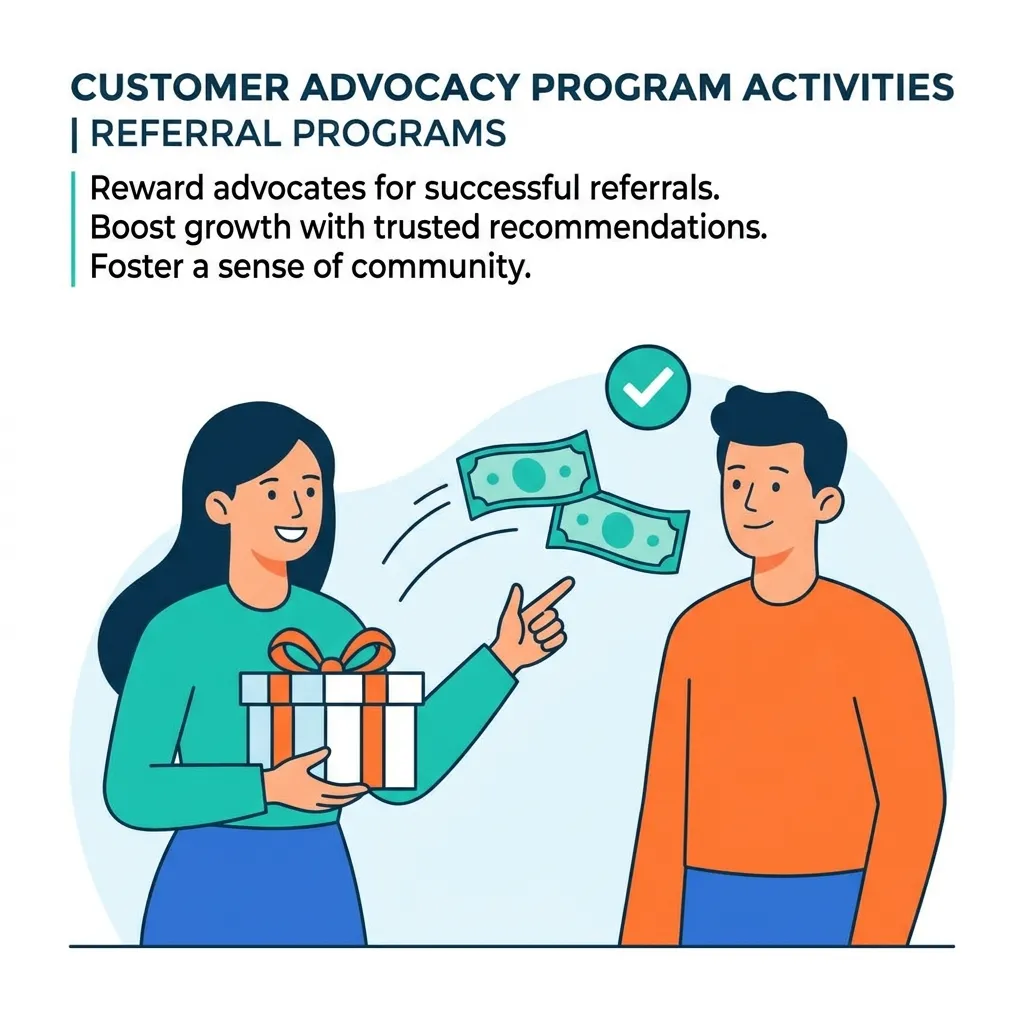
A strong program should offer different ways for customers to participate.
Referral Programs
Customers introduce potential buyers to the company.
Referrals can be especially valuable because they begin with an existing relationship of trust.
Customer Testimonials
Short testimonials can strengthen landing pages, sales presentations, advertisements, and product pages.
Case Studies
Case studies provide deeper evidence by explaining:
- The customer’s problem
- The solution
- Implementation
- Results
- Customer perspective
Learn more through this customer stories and testimonials guide.
Reviews
Reviews provide social proof and allow prospects to see experiences from other customers.
Community Participation
Advocates can help answer questions, share knowledge, and support other members of a customer community.
Events
Invite advocates to participate in:
- Webinars
- Conferences
- Panels
- Workshops
- Customer events
- Product launches
User-Generated Content
Customers can create authentic content featuring their experiences with the product or service.
How to Promote a Customer Advocacy Program
Once the program is ready, customers need to know about it.
Use Email
Send targeted invitations to customers who meet your advocacy criteria.
Explain:
- Why they were invited
- What they can do
- What they receive
- How participation works
Use Customer Success Teams
Account managers and customer success teams can introduce the program during relevant customer conversations.
Use Your Customer Community
If your business operates a community, create dedicated spaces for advocacy opportunities.
Use In-Product Messaging
For digital products, contextual messages can introduce advocacy opportunities when customers achieve important milestones.
Use Events
Introduce the advocacy program during customer webinars, conferences, and community events.
Customer Advocacy Program Best Practices
Follow these best practices to build a sustainable program.
Focus on Customer Value
Don’t make every interaction about what your business wants.
Give advocates useful experiences, recognition, access, or opportunities in return.
Ask at the Right Moment
Timing matters.
Good moments may include:
- After a successful implementation
- After a positive review
- After achieving a measurable result
- After a renewal
- After positive customer feedback
Avoid Over-Asking
If you repeatedly ask customers for testimonials, referrals, reviews, and social posts, participation can become frustrating.
Track advocacy activity so you can control request frequency.
Recognize Contributions
Recognition can be powerful.
You can feature advocates in:
- Customer spotlights
- Community posts
- Events
- Newsletters
- Social media
- Industry stories
Keep Advocacy Authentic
Never pressure customers to make claims they do not genuinely support.
Authenticity is one of the most important foundations of customer advocacy.
Measure Business Impact
Track more than the number of activities completed.
Connect advocacy activity to business outcomes such as:
- Leads
- Opportunities
- Revenue
- Retention
- Engagement
- Customer satisfaction
Customer Advocacy Program Metrics
Measurement helps determine whether your program is creating real value.
Advocate Participation Rate
Measures the percentage of invited customers who participate.
Active Advocate Rate
Tracks how many advocates actively complete activities over a defined period.
Referral Volume
Measures the number of referrals generated by advocates.
Referral Conversion Rate
Shows how many referred prospects become customers.
Advocacy-Generated Revenue
Measures revenue influenced or generated by advocacy activities.
Testimonial and Review Volume
Tracks the amount of usable customer-generated social proof.
Case Study Production
Measures how many customer stories are created.
Advocate Retention
Shows whether customers continue participating in the program over time.
Customer Engagement
Measures activity levels within the advocacy program.
For a deeper measurement framework, explore this guide on measuring brand advocacy program success.
How to Measure Customer Advocacy ROI
To calculate the business value of advocacy, connect activities with measurable outcomes.
For example:
Advocacy ROI = (Advocacy-Generated Revenue − Program Costs) ÷ Program Costs × 100
Program costs can include:
- Software
- Rewards
- Events
- Content production
- Program management
- Customer communications
Revenue may come from:
- Referrals
- Advocacy-influenced opportunities
- Customer retention
- Expansion
- Cross-selling
Not every advocacy benefit is immediately measurable. Brand credibility, customer relationships, and content value can also contribute to long-term business performance.
Common Customer Advocacy Program Mistakes
Choosing Advocates Based Only on Purchase Value
Your biggest customers are not automatically your strongest advocates.
Look for engagement, satisfaction, and willingness to participate.
Making Everything Transactional
If every advocacy activity requires a reward, customers may begin to view the relationship as purely transactional.
Asking Too Much Too Soon
Start with low-effort actions and gradually build deeper participation.
Ignoring Advocate Feedback
Advocates can provide valuable insights into your products, services, and customer experience.
Listen to them.
Failing to Track Results
Without measurement, it becomes difficult to determine which activities create value.
Treating Every Advocate the Same
Different advocates have different interests and levels of influence.
Segment and personalize your program.
Customer Advocacy Program Tools
Technology can simplify program management as your advocate network grows.
Depending on your needs, tools can help manage:
- Advocate profiles
- Activities
- Rewards
- Referrals
- Reviews
- Communications
- Campaigns
- Reporting
- Community engagement
Before selecting software, determine your requirements.
Consider:
- Integrations
- Automation
- Reporting
- Scalability
- Ease of use
- Customer data management
- Reward management
- Referral tracking
The right technology should support your strategy rather than become the strategy itself.
Customer Advocacy Program Examples
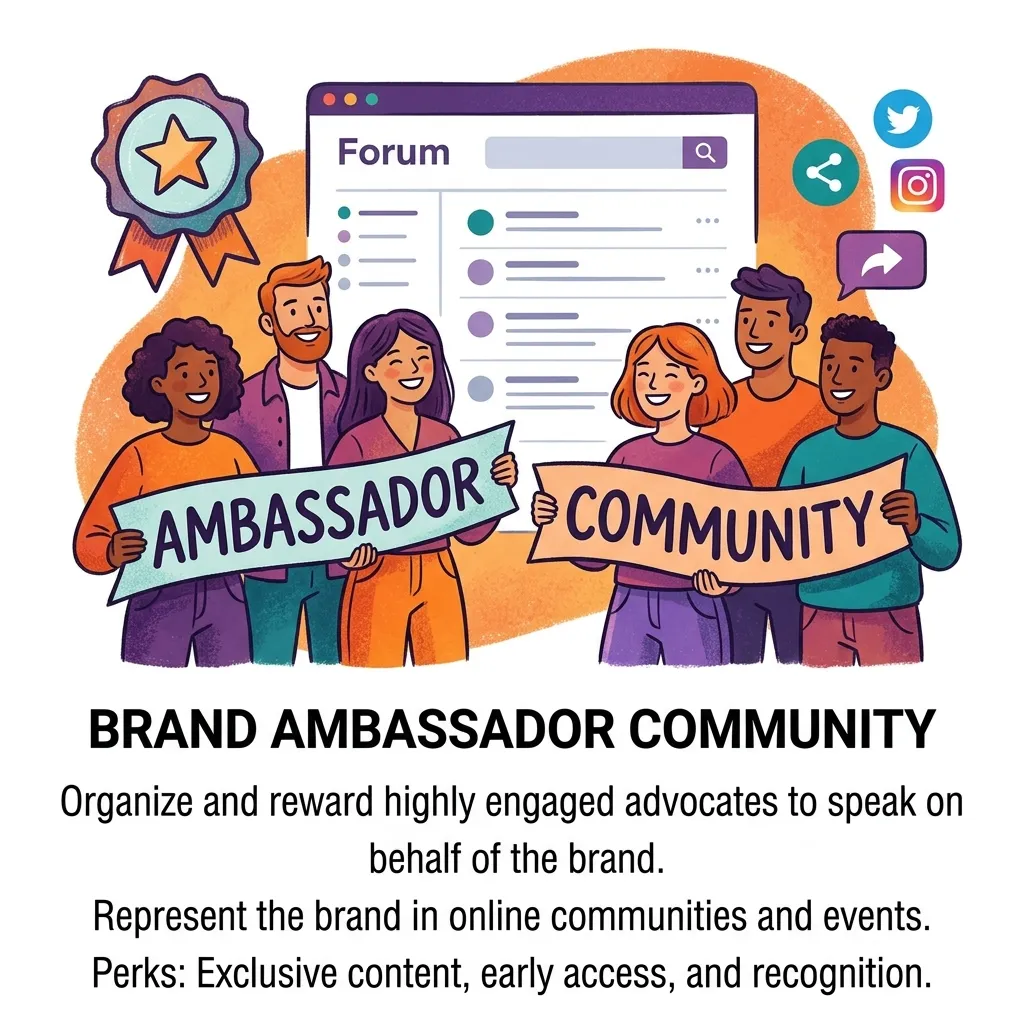
A B2B software company might build a program around:
- Customer case studies
- Product testimonials
- Referral opportunities
- Customer advisory boards
- Webinar speakers
- Industry events
An e-commerce company might focus on:
- Product reviews
- User-generated content
- Referral campaigns
- Social sharing
- Loyalty-based advocacy
A professional services company might encourage:
- Client testimonials
- Industry interviews
- Case studies
- Referrals
- Speaking opportunities
The best program is the one that matches the customer’s relationship with the brand and the behaviors that naturally support business growth.
Conclusion
A successful customer advocacy program transforms positive customer experiences into meaningful business outcomes. Instead of treating advocacy as a one-time request for a testimonial or referral, businesses can create a structured system that identifies enthusiastic customers, provides relevant opportunities, recognizes participation, and measures the resulting impact.
Start with clear objectives and identify customers who have demonstrated satisfaction, engagement, and successful outcomes. Give them multiple ways to participate, from reviews and testimonials to referrals, case studies, events, communities, and product feedback.
The most effective programs prioritize authenticity and customer value. When customers feel recognized rather than exploited, advocacy becomes a natural extension of a strong customer relationship.
By combining thoughtful engagement, personalization, appropriate incentives, cross-functional collaboration, and meaningful measurement, businesses can build an advocacy engine that supports trust, referrals, retention, brand credibility, and long-term growth.
Frequently Asked Questions
1. What is a customer advocacy program?
A customer advocacy program is a structured initiative that encourages satisfied customers to support a brand through referrals, testimonials, reviews, case studies, events, feedback, and other advocacy activities.
2. What is the purpose of a customer advocacy program?
The primary purpose is to turn positive customer experiences into measurable advocacy that can support trust, referrals, customer engagement, sales, retention, and brand growth.
3. How do I start a customer advocacy program?
Start by defining measurable objectives, identifying potential advocates, segmenting customers, creating advocacy opportunities, deciding on appropriate recognition or rewards, and establishing a process for tracking participation.
4. Who should be included in a customer advocacy program?
Customers who demonstrate satisfaction, strong engagement, successful outcomes, positive feedback, or a willingness to recommend your brand can be good candidates.
5. What activities can customer advocates participate in?
Advocates can write reviews, provide testimonials, participate in case studies, make referrals, create user-generated content, attend events, join communities, provide product feedback, and speak at webinars or conferences.
6. Should customer advocacy programs offer rewards?
Rewards can encourage participation, but they are not always necessary. Recognition, exclusive access, community status, professional opportunities, and other benefits can also motivate advocates.
7. How is customer advocacy different from referral marketing?
Referral marketing primarily focuses on generating new customers through recommendations. Customer advocacy is broader and can include referrals along with reviews, testimonials, case studies, events, feedback, community participation, and content creation.
8. How do I find customer advocates?
Look for customers with strong satisfaction, high engagement, successful product outcomes, positive feedback, long-term relationships, previous referrals, or active participation in customer communities.
9. What metrics should I track?
Important metrics include advocate participation rate, active advocate rate, referral volume, referral conversion rate, advocacy-generated revenue, testimonial volume, case study production, engagement, and advocate retention.
10. How can I increase customer advocacy participation?
Make activities easy to complete, personalize requests, contact customers at the right moment, provide meaningful recognition, offer different participation options, and avoid asking the same customer for too many actions.
11. What is the difference between customer advocacy and brand advocacy?
Customer advocacy specifically focuses on customers supporting a brand based on their experiences. Brand advocacy is a broader concept that can include customers, employees, partners, creators, or other supporters.
12. How can a customer advocacy program improve business growth?
It can generate referrals, strengthen social proof, create authentic marketing content, support sales conversations, improve customer relationships, increase trust, and potentially contribute to acquisition, retention, and revenue.
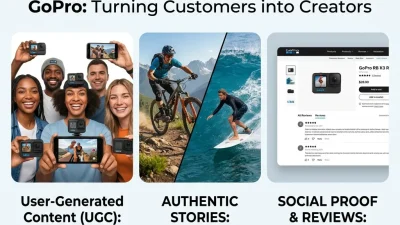
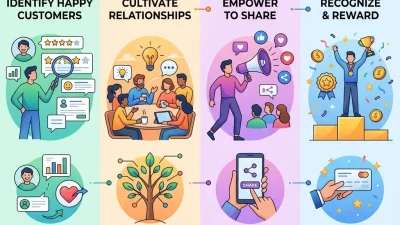
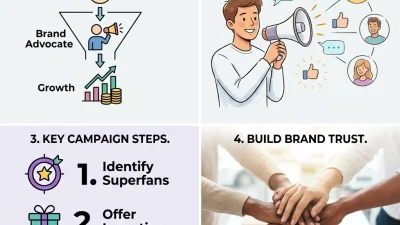
[…] For a broader understanding of this concept, explore Customer Advocacy Program: A Complete Guide. […]
[…] that relationship, and giving them structured, low-friction ways to share their experience. This guide to building a customer advocacy program covers the practical steps involved, from identification through […]