A customer advocacy platform gives businesses the tools to identify, engage, and reward their most enthusiastic customers at scale — turning scattered testimonials and referrals into a managed, measurable program. This guide covers what a customer advocacy platform actually does, the core features worth prioritizing, and how to choose the right one for your business.
Running customer advocacy campaigns manually — tracking referrals in a spreadsheet, chasing testimonials over email, hoping happy customers remember to leave a review — works fine at a small scale, but it breaks down fast as a business grows. That’s exactly the gap a customer advocacy platform is built to fill, giving marketing teams a centralized system to identify advocates, manage engagement, and measure results without relying on manual tracking across scattered tools.
This guide walks through what a customer advocacy platform actually does, the features that separate strong platforms from weak ones, and a practical framework for choosing the right fit for your business. For broader context on the strategy these platforms support, our guide on customer advocacy campaigns covers the campaign types a good platform needs to support effectively.
What Is a Customer Advocacy Platform?
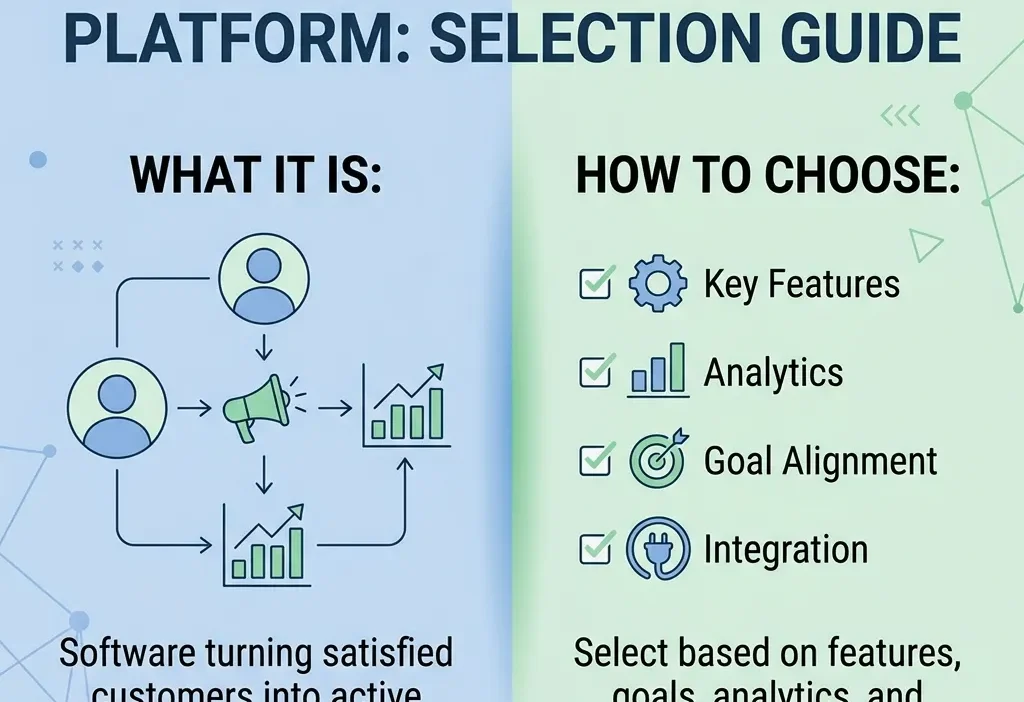
A customer advocacy platform is software designed to help businesses identify satisfied customers, engage them through structured advocacy activities, and track the resulting content, referrals, and impact — all from a centralized dashboard rather than spreadsheets and disconnected tools. Most platforms combine several capabilities: referral tracking, review generation, testimonial collection, and sometimes community features that let advocates connect directly with the brand and each other.
The core value of a customer advocacy platform is turning advocacy from an ad hoc, manual effort into a repeatable, measurable system — one that can scale alongside a growing customer base without requiring proportionally more manual work from the marketing team.
Core Features of a Customer Advocacy Platform
Not every customer advocacy platform offers the same feature set, but several capabilities show up consistently across the strongest options in the category.
Advocate Identification and Segmentation
Good platforms use engagement data, satisfaction scores, or usage patterns to automatically surface customers most likely to become effective advocates, rather than requiring marketing teams to manually comb through customer lists looking for enthusiastic accounts.
Referral Program Management
Most customer advocacy platform solutions include built-in referral tracking, generating unique links or codes for each participant and automatically attributing new customers back to the advocate who referred them. Our guide on building a customer referral program covers the mechanics this feature needs to support well.
Review and Testimonial Collection
Many platforms streamline the process of requesting, collecting, and organizing reviews and testimonials, often integrating directly with popular review sites so customers can leave feedback without extra friction. Our resource on customer stories and testimonials covers what makes this collected content actually persuasive once gathered.
Reward and Incentive Management
A customer advocacy platform typically automates the distribution of rewards — discounts, credits, gift cards, or points — tied to specific advocacy actions, removing the manual work of tracking who’s earned what and ensuring rewards are distributed promptly and accurately.
Community and Engagement Tools
More advanced platforms include community features that let advocates interact directly with the brand and each other, creating an ongoing relationship rather than a one-off transactional exchange tied to a single referral or review request.
Analytics and Reporting
Robust reporting is essential to any customer advocacy platform worth investing in, since it’s what allows marketing teams to demonstrate the program’s actual impact on pipeline, retention, and revenue rather than just tracking participation for its own sake. Our guide on measuring brand advocacy metrics and KPIs covers the specific metrics a strong platform should make easy to track.
CRM and Marketing Tool Integration
Since advocacy data needs to connect with broader customer records, integration with CRM systems and marketing automation tools is a critical feature, ensuring advocate activity is visible alongside other customer data rather than living in an isolated silo. Our step-by-step guide on HubSpot referral tracking shows what this kind of integration looks like in practice with one of the most widely used CRM platforms.
Types of Customer Advocacy Platforms
Not all platforms in this category serve the exact same purpose, and understanding the different types helps clarify what your business actually needs.
Referral-Focused Platforms
These platforms specialize specifically in referral program management, offering deep functionality for tracking, attribution, and reward automation but typically less emphasis on broader community or content features.
Review and UGC-Focused Platforms
Platforms in this category focus heavily on collecting and organizing reviews, testimonials, and user-generated content, often including tools for requesting feedback automatically after key customer milestones.
Community-Based Advocacy Platforms
These solutions build a more ongoing, relationship-driven experience, creating a dedicated space where advocates can engage with the brand and each other regularly rather than participating in isolated, transactional activities.
All-in-One Advocacy Suites
Some customer advocacy platform providers combine referral tracking, review generation, community features, and analytics into a single comprehensive suite, offering broader functionality at the cost of potentially less specialized depth in any single area compared to a more focused point solution.
Build vs. Buy: Should You Use a Platform or Build Your Own?
For most businesses, buying an established customer advocacy platform makes more sense than building custom tooling from scratch, since established platforms have already solved many of the technical challenges around tracking, attribution, and integration. Building a custom solution is generally only worth considering for businesses with highly unique requirements that existing platforms genuinely can’t accommodate, or those with substantial internal development resources already dedicated to customer marketing infrastructure.
Our comparison of the best referral marketing software options can help evaluate whether an existing solution meets your specific needs before considering a custom build.
How to Choose the Right Customer Advocacy Platform
Selecting the right customer advocacy platform involves weighing several practical factors against your specific business needs:
- Identify your primary use case. Are you mainly focused on referrals, reviews, testimonials, or building an ongoing advocate community? This should heavily influence which type of platform to prioritize.
- Evaluate integration requirements. Confirm the platform connects cleanly with your existing CRM, email marketing, and e-commerce tools to avoid creating a disconnected data silo.
- Consider ease of use for both marketers and advocates. A platform that’s difficult for customers to participate in will suppress engagement regardless of how powerful its backend features are.
- Review reporting capabilities carefully. Make sure the platform can demonstrate the specific business metrics — pipeline influence, conversion rates, retention impact — that matter most for justifying continued investment.
- Factor in pricing structure. Some platforms charge based on the number of advocates, others on referral volume or feature tier, so understanding how costs scale as your program grows is important for long-term budgeting.
Implementing a Customer Advocacy Platform Successfully
Choosing the right customer advocacy platform is only the first step — successful implementation requires careful planning around rollout and adoption. Start with a pilot group of your most engaged customers rather than launching to your entire customer base at once, allowing time to refine messaging, incentive structures, and workflows before scaling more broadly. Ensure internal teams, particularly sales and customer success, understand how the platform works and how it fits into broader customer relationship management, since these teams often play a key role in identifying and nominating potential advocates.
Clear onboarding materials for advocates themselves also matter significantly — the easier it is for a customer to understand exactly what’s expected and how to participate, the higher your overall engagement rates will be once the platform launches.
Measuring ROI From a Customer Advocacy Platform
Justifying continued investment in a customer advocacy platform requires tracking outcomes that connect clearly to business results, not just platform activity metrics. Key indicators include the volume and conversion rate of referred leads, the influence of collected testimonials and reviews on sales cycles, and whether participating advocates show higher retention and lifetime value compared to non-participating customers. Understanding customer lifetime value provides useful context for this kind of analysis, since advocacy program ROI is often best understood over a longer time horizon rather than through short-term participation counts alone.
Common Mistakes When Adopting a Customer Advocacy Platform
Even well-chosen platforms can underperform due to avoidable implementation mistakes:
- Launching without a clear strategy, treating the platform purchase itself as the solution rather than the tool supporting a broader advocacy strategy
- Overcomplicating the advocate experience, creating too many steps or unclear instructions that suppress participation
- Ignoring internal alignment, failing to involve sales and customer success teams who often have the best visibility into which customers make strong advocates
- Focusing only on acquisition metrics, missing valuable data on how advocacy participation affects retention and long-term customer value
- Choosing based on features alone, without adequately weighing integration compatibility and ease of use for both marketers and customers
Customer Advocacy Platforms Across Business Types
The right customer advocacy platform setup varies depending on business model. E-commerce brands often prioritize review and UGC-focused features, since visual social proof directly supports purchase decisions. B2B software companies typically lean more heavily on referral tracking and case study management, since their advocacy content plays a bigger role in longer, more considered sales cycles. Subscription and membership businesses often benefit most from community-based platform features, since ongoing engagement naturally supports a continuous advocacy relationship rather than a single transactional ask.
The Future of Customer Advocacy Platforms
AI is increasingly being integrated into customer advocacy platform capabilities, helping automatically identify likely advocates from engagement data, draft outreach messages, and even summarize or repurpose testimonial content into multiple formats. As these capabilities mature, platforms are becoming more proactive — surfacing advocacy opportunities automatically rather than requiring marketers to manually search for them across disconnected customer data sources.
Evaluating Vendors: Questions to Ask During a Demo
Once you’ve narrowed down a shortlist, the demo stage is where the real differences between customer advocacy platform vendors tend to surface. It’s worth asking specifically how the platform handles edge cases — what happens when a referral is disputed, how duplicate advocate accounts are managed, and how quickly reward payouts are processed once a qualifying action occurs. Vendors that can answer these operational questions clearly and confidently are generally more mature and reliable than those who only speak in high-level feature terms without concrete examples.
It’s also worth requesting references from existing customers in a similar industry or of a similar size, since a customer advocacy platform that works well for a large enterprise with a dedicated advocacy team may feel overly complex for a smaller business managing the program alongside several other marketing responsibilities. Pricing transparency matters here too — vendors that are vague about how costs scale as your advocate base grows can lead to unpleasant budget surprises well after the initial contract is signed.
Comparing platform capabilities alongside broader marketing tooling can also help clarify where a customer advocacy platform fits into your overall technology stack. Our external resource on choosing the best digital marketing tools offers a useful framework for evaluating martech purchases generally, many of which apply directly to assessing advocacy-specific software as well.
Signs You’ve Outgrown Manual Advocacy Tracking
Some businesses stick with spreadsheets and manual outreach far longer than they should, simply because the initial cost of switching to a dedicated platform feels like an unnecessary expense. Common signs that it’s time to invest in a customer advocacy platform include spending significant staff hours manually tracking referral attribution, losing visibility into which advocates are most engaged as the customer base grows, or struggling to report clearly on program impact when leadership asks for updated numbers. Once these friction points start consuming meaningful time each week, the cost of a dedicated platform is often easily justified by the efficiency and improved reporting it provides in return.
Conclusion
A well-chosen customer advocacy platform transforms scattered, manual advocacy efforts into a structured, measurable system that scales alongside your business. By understanding the core features that matter most, evaluating platforms against your specific use case and integration needs, and implementing thoughtfully with clear internal alignment, businesses can turn a customer advocacy platform investment into one of the most reliable, cost-effective growth engines available — one built on the genuine enthusiasm of customers who already believe in what you do.
Frequently Asked Questions (FAQs)
1. What is a customer advocacy platform? A customer advocacy platform is software that helps businesses identify, engage, and reward satisfied customers through referrals, reviews, testimonials, and community-building activities.
2. What features should I look for in a customer advocacy platform? Key features include advocate identification, referral tracking, review and testimonial collection, reward automation, CRM integration, and robust analytics and reporting.
3. Is it better to buy a customer advocacy platform or build one internally? For most businesses, buying an established platform is more practical, since existing solutions have already solved many technical challenges around tracking and integration.
4. How much does a customer advocacy platform typically cost? Pricing varies widely based on features and scale, often based on the number of advocates, referral volume, or feature tier selected.
5. Can a customer advocacy platform integrate with my existing CRM? Most established platforms offer integrations with popular CRM and marketing automation tools, which is an important factor to evaluate before choosing a solution.
6. How do I measure the ROI of a customer advocacy platform? Track referred lead conversion rates, the sales influence of collected testimonials, and whether participating advocates show higher retention and lifetime value than non-participants.
7. What’s the difference between a referral-focused and an all-in-one advocacy platform? Referral-focused platforms specialize deeply in referral tracking, while all-in-one suites combine referrals, reviews, community features, and analytics in a single broader solution.
8. How should I roll out a new customer advocacy platform? Starting with a pilot group of engaged customers before a full launch allows time to refine messaging and workflows based on real feedback.
9. Do small businesses need a dedicated customer advocacy platform? Not always — very small customer bases can sometimes be managed manually, but growth quickly makes a dedicated platform more efficient and scalable.
10. What’s the biggest mistake businesses make when adopting a customer advocacy platform? Treating the platform purchase itself as the strategy, rather than using it to support a clearly defined advocacy plan, is one of the most common mistakes.
11. How is AI changing customer advocacy platforms? AI is increasingly used to automatically identify likely advocates, draft outreach content, and repurpose testimonials, making advocacy programs more efficient to run.
12. Which teams should be involved in choosing a customer advocacy platform? Marketing typically leads the decision, but involving sales and customer success teams ensures the platform aligns with how advocates are actually identified and engaged across the business.