

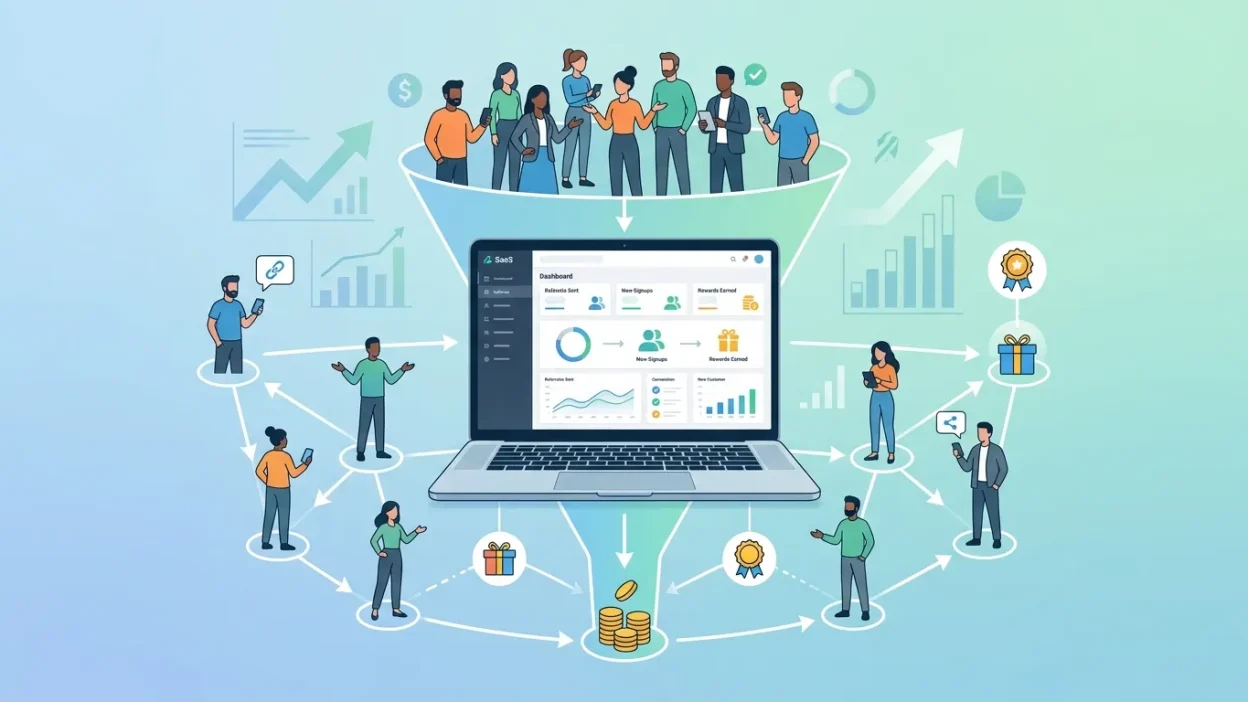
A customer referral program is a powerful growth strategy that turns your existing customers into brand advocates by rewarding them for bringing in new buyers. Instead of relying only on ads, businesses can use structured referral systems with clear incentives, tracking tools, and promotion channels to generate high-quality leads at a lower acquisition cost. When designed well, a customer referral program improves trust, boosts conversions, and creates long-term customer loyalty.
A customer referral program is a structured marketing strategy that incentivizes existing customers to recommend a business to their network. To build a successful program, businesses must establish clear goals, choose compelling rewards, select reliable referral software, and continuously promote the campaign across email, social media, and post-purchase touchpoints.
Word-of-mouth marketing has always been a primary driver of business growth. People naturally trust the recommendations of their friends, family members, and colleagues far more than traditional advertisements. When a happy customer shares their positive experience, they act as an authentic ambassador for your brand.
However, relying purely on organic word-of-mouth can be unpredictable. You might deliver exceptional service, but customers often forget to share their experiences unless prompted. This is where a structured strategy becomes essential. By formalizing the recommendation process, you take control of your customer acquisition pipeline.
Implementing a formal system turns casual brand advocates into an active, revenue-generating channel. You provide the exact tools and incentives your audience needs to spread the word effectively. In turn, you acquire high-quality leads who already have a baseline level of trust in your products or services.
This guide explores everything you need to know to launch a successful campaign. We will break down effective reward structures, review the top software tools available, and analyze real-world business referral marketing strategy examples. By the end of this post, you will have a clear blueprint for designing a system that scales your business efficiently.
What is a referral marketing program strategy?

A referral marketing program strategy is a deliberate framework designed to encourage existing customers to introduce new buyers to your company. Instead of waiting for spontaneous recommendations, a business actively requests and incentivizes these introductions.
Building this strategy requires defining specific goals, such as increasing overall sales, boosting customer retention, or lowering your customer acquisition cost (CAC). You must decide who qualifies for the program, when you will ask for the referral, and how you will track the incoming leads.
A strong strategy aligns closely with your overall business objectives. If your goal is rapid user acquisition, you might offer a highly accessible, low-barrier incentive. If you sell high-ticket enterprise software, your strategy will likely involve multi-tiered rewards and personalized outreach. Defining these parameters early ensures your word of mouth marketing programs remain sustainable and profitable.
For inspiration on structuring incentives, you can explore customer referral strategies without discounts, which shows how brands motivate referrals without relying solely on price reductions.
How do you build a customer referral rewards system?
Your reward structure dictates the success of your entire campaign. A customer referral rewards system is the mechanism that compensates users for successfully bringing in new business.
To design an effective rewards system, you need to understand what motivates your specific audience. Businesses generally choose between single-sided and double-sided rewards. A single-sided reward only compensates the existing customer who makes the introduction. A double-sided reward compensates both the advocate and the new customer, creating a much stronger incentive for both parties to complete the transaction.
Financial incentives remain the most popular choice. Cash bonuses, gift cards, and direct statement credits offer immediate, tangible value. However, discounts and store credit are often better for business retention, as they encourage the referring customer to make another purchase with your brand.
When establishing your rewards, always calculate your maximum allowable customer acquisition cost. The reward value must be lower than your average CAC through other channels to ensure the program remains profitable. Choose cash rewards if you want maximum participation, but select store credit if you prioritize long-term customer loyalty and repeat purchases.
What are the best referral program ideas for business?

Different industries require distinct approaches to customer advocacy. The most effective programs align the incentive with the customer’s natural purchasing behavior. Here are specific models to consider.
One of the strongest underlying drivers here is community behavior. Platforms that invest in long-term engagement often succeed by following principles found in community marketing guide for loyal communities, where participation itself becomes rewarding.
How to design a refer a friend incentive program
A refer a friend incentive program works exceptionally well for direct-to-consumer (DTC) brands and subscription services. In this model, you give customers a unique link or code to share with their peers. When a friend uses the link to make their first purchase, both individuals receive a standardized bonus, such as $20 off their next order.
To maximize the success of a refer a friend incentive program, keep the mechanics incredibly simple. The sharing process should take less than three clicks. Integrate the sharing options directly into the post-purchase confirmation page, as customers are highly engaged immediately after buying a product.
How to leverage customer loyalty referral schemes
Customer loyalty referral schemes blend advocacy with long-term retention. Instead of a one-time payout, customers earn points or tier-status upgrades for every successful recommendation.
This model suits businesses with high-frequency purchase patterns, such as coffee shops, cosmetic brands, and fitness centers. As customers refer more people, they unlock exclusive benefits, early access to new products, or permanent discounts. This gamifies the experience and keeps advocates engaged over months or years, rather than treating the referral as a single transactional event.
How does an affiliate and referral marketing system differ?
While they share similarities, an affiliate and referral marketing system operate on different core principles. Understanding this distinction helps you allocate your marketing budget accurately.
A referral program targets your existing customer base. The primary motivation is sharing a genuinely loved product with friends and family, with the reward acting as a gentle push. The reach is relatively small per person, but the conversion rate is extremely high because the recommendation comes from a trusted personal connection.
An affiliate marketing program targets professional content creators, influencers, and publishers. Affiliates do not necessarily use the product themselves, and they promote the brand to a large, public audience rather than personal friends. Affiliates require cash commissions rather than store credit. Choose a referral program if you want to leverage authentic customer trust, but opt for an affiliate program if you need to reach vast new audiences quickly.
The trust element is why word-of-mouth performs so well. Studies and breakdowns like the psychology of word-of-mouth marketing show that personal recommendations consistently outperform paid advertising in conversion rate.
What are the top referral program software tools?
Managing recommendations manually through spreadsheets quickly becomes impossible as your business grows. Dedicated referral program software tools automate the tracking, reward distribution, and fraud prevention processes.
When evaluating platforms, look for seamless integrations with your existing Customer Relationship Management (CRM) and e-commerce platforms.
- ReferralCandy: This platform excels for e-commerce businesses. ReferralCandy integrates directly with Shopify and WooCommerce, automatically sending post-purchase emails and distributing rewards without manual intervention.
- Ambassador: Designed for enterprise and B2B organizations, Ambassador handles complex reward tiers, multi-campaign management, and integrates smoothly with Salesforce and HubSpot.
- Smile.io: This tool combines referral mechanics with comprehensive loyalty programs, allowing businesses to reward customers for purchases, social media follows, and successful recommendations all in one place.
Choose ReferralCandy if you run an online retail store requiring quick setup. Select Ambassador if you operate a B2B SaaS company with complex sales cycles.
How to launch online customer referral campaigns
Execution dictates the success of your strategy. Launching online customer referral campaigns requires visibility and consistent promotion across multiple marketing channels.
First, build a dedicated landing page explaining the program. Use clear, action-oriented copy detailing exactly what the customer needs to do and what they will earn.
Next, integrate the campaign into your email marketing flows. Send a dedicated announcement email to your entire list when the program launches. More importantly, add a dynamic referral link to your automated post-purchase sequences and monthly newsletters.
Social media also plays a vital role. Highlight successful advocates on your profiles and regularly remind your followers that they can earn rewards for sharing. You should also ensure the program is highly visible on your website, placing call-to-action buttons in the main navigation menu, the user account dashboard, and the checkout success page.
What are some successful business referral marketing strategy examples?
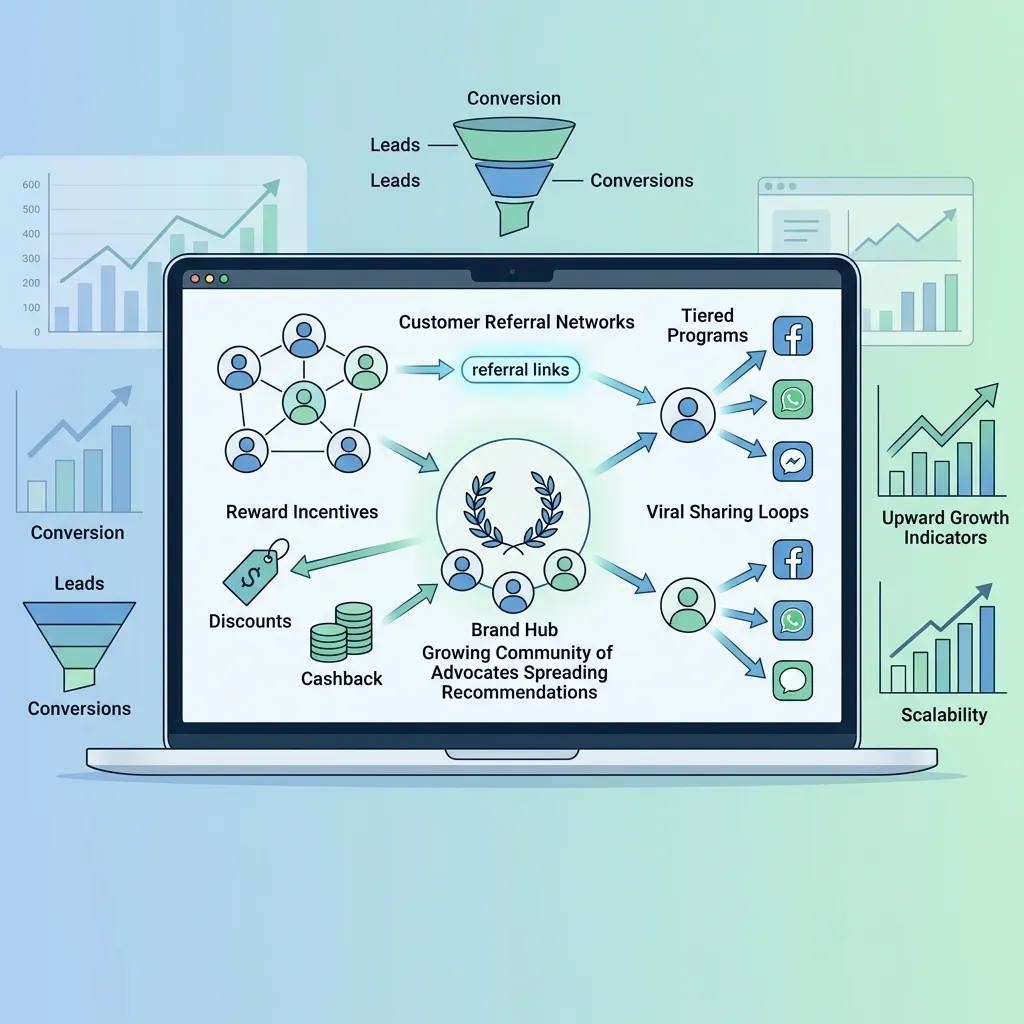
Analyzing successful implementations provides excellent inspiration for your own campaigns. Several major technology and consumer brands have used advocacy as their primary growth engine.
Dropbox: The cloud storage company provides the most famous example of a double-sided reward system. Dropbox offered existing users 500MB of extra storage space for every friend they invited, while the new user also received 500MB. Because the reward tied directly into the core product value (storage space) rather than cash, it kept users engaged with the software and drove millions of signups.
Tesla: The automotive manufacturer utilized a high-value, tiered approach. Tesla owners who referred friends received rewards ranging from exclusive vehicle accessories to invitations to highly anticipated product unveiling events. At one point, referring enough customers gave advocates the chance to win a brand-new vehicle. This tapped into the highly passionate nature of the Tesla owner community.
Morning Brew: The daily business newsletter built a massive audience using a milestone-based loyalty scheme. Subscribers received a unique sharing link at the bottom of every daily email. As readers referred more friends, they unlocked tiered rewards, starting from access to an exclusive Sunday newsletter, moving up to branded stickers, coffee mugs, and premium apparel.
Start Growing Your Customer Base Today
A structured customer referral program transforms your most satisfied buyers into a highly effective marketing team. By defining clear goals, establishing attractive double-sided rewards, and utilizing the right software tools, you can build a sustainable pipeline of high-quality leads.
Start by evaluating your current customer acquisition costs and determining a profitable reward structure. Then, choose a software platform that integrates with your current technology stack and launch your campaign across email and social media. When you make it easy and rewarding for people to share your brand, exponential growth naturally follows.
Frequently Asked Questions
How much does it cost to start a customer referral program?
The cost varies based on the software and rewards you choose. Basic referral software typically starts between $50 and $100 per month. The primary cost is the reward itself (such as discounts, cash, or store credit), which is only paid out when a business successfully acquires a new customer.
How do I prevent fraud in my referral program?
To prevent fraud, utilize dedicated referral software that tracks IP addresses and flags suspicious behavior. You should also implement a verification period, delaying reward payouts until the new customer’s purchase clears the return window, ensuring the transaction is legitimate.
How often should I promote my referral program to existing customers?
You should promote the program consistently but contextually. Highlight the program immediately after a customer makes a purchase or leaves a positive review. Additionally, include a small reminder link in the footer of your regular marketing emails and run a dedicated promotional push once every quarter.
Can B2B companies use customer referral programs?
Yes, B2B companies benefit heavily from referral programs, though the mechanics differ from B2C. B2B programs usually offer higher-value rewards, such as significant statement credits, tech hardware, or professional development funds, and involve more personalized outreach from account managers.
[…] businesses developing a referral-focused advocacy strategy, a customer referral program guide provides additional […]
[…] to introduce new ones, often through a discount, credit, or reward for both parties. Our guide on building a customer referral program walks through the mechanics of designing incentives that motivate sharing without feeling […]
[…] and automatically attributing new customers back to the advocate who referred them. Our guide on building a customer referral program covers the mechanics this feature needs to support […]