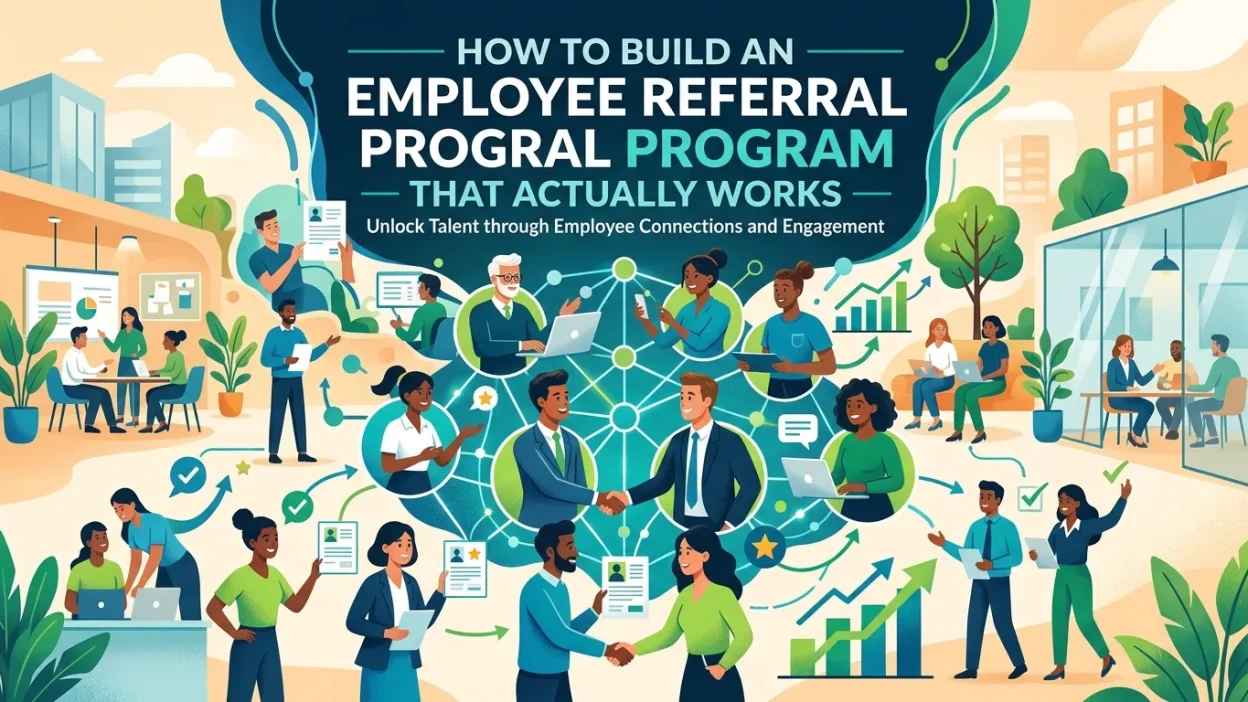
An employee referral program is a structured hiring strategy where current employees recommend qualified candidates for open roles, typically in exchange for incentives. Companies that run effective referral programs consistently report faster hiring, lower costs-per-hire, and better employee retention than those relying on traditional recruiting methods alone.
Hiring is expensive. Posting on job boards, screening hundreds of applications, conducting multiple interview rounds—it all adds up, both in cost and time. And after all that effort, there’s still no guarantee the person you hire will stick around.
That’s where employee referral programs come in. Rather than casting a wide net and hoping for the best, referral programs tap into something far more reliable: your own team’s professional networks. Employees already know your culture, your expectations, and what it takes to succeed. When they recommend someone, that recommendation carries real weight.
This guide breaks down everything you need to know about employee referral programs—how they work, why they deliver results, how to design one, and which tools and incentives make the biggest difference. Whether you’re building a referral program from scratch or refining an existing one, you’ll find practical, actionable guidance here.
What Are the Key Benefits of an Employee Referral Program?
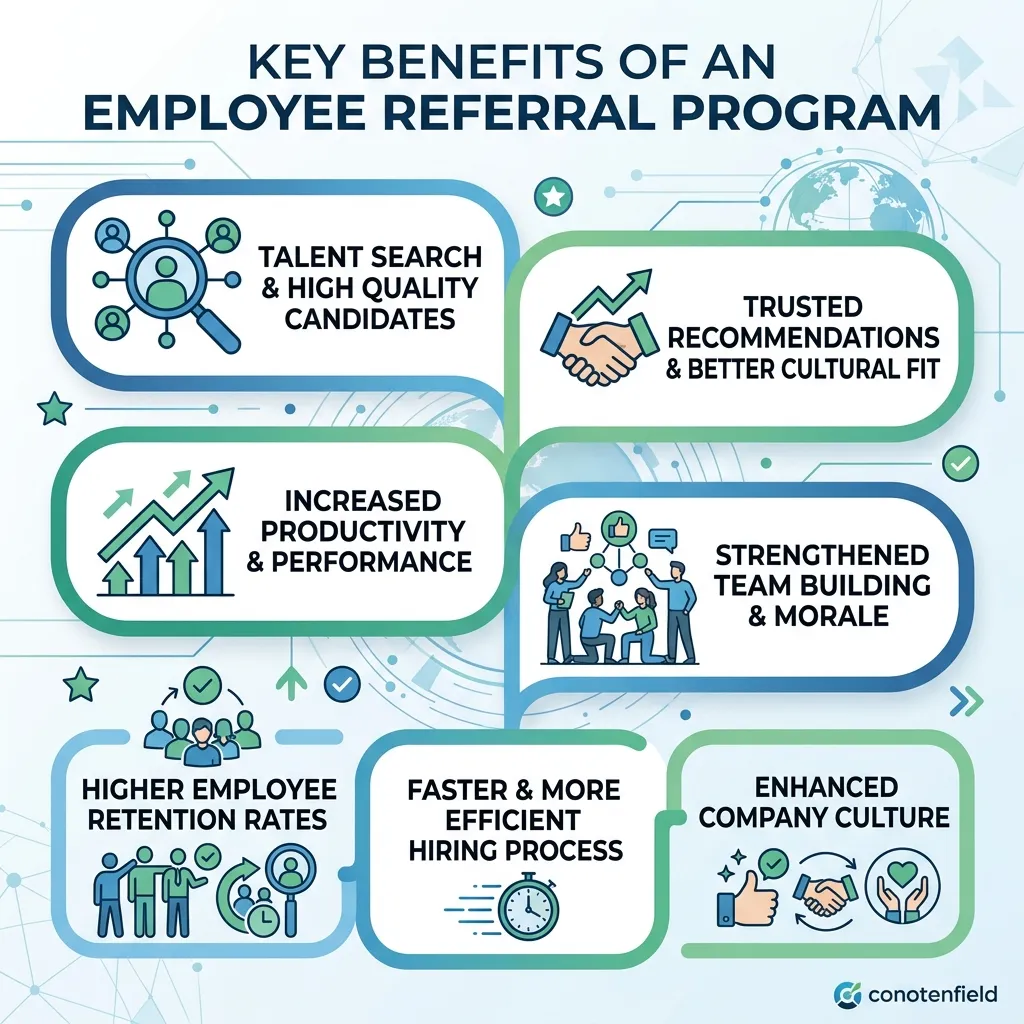
The business case for employee referrals is well-established. According to a report by LinkedIn, referred candidates are hired 55% faster than those sourced through career sites. Research from Jobvite found that referred employees have a 46% retention rate after one year, compared to just 33% for employees hired through job boards.
From a behavioral perspective, these outcomes are strongly tied to the principles explained in the psychology behind word-of-mouth influence, which shows why trusted recommendations outperform traditional advertising and outreach methods:
psychology of word-of-mouth marketing
Here’s why the numbers are so strong:
- Faster time-to-hire: Referral candidates skip several early-stage screening steps because a trusted employee has already vetted them informally.
- Lower cost-per-hire: Referral programs typically cost far less than recruiter fees or paid job board listings.
- Better culture fit: Employees tend to refer people whose values and work styles align with the company’s, reducing the risk of a poor culture fit.
- Higher engagement: Referred employees often arrive with a more realistic picture of the company. They’ve heard the honest version from someone already working there, which leads to higher engagement from day one.
- Stronger retention: The data consistently shows referred hires stay longer. They already have an internal advocate, which helps them integrate faster and feel connected to the team.
How Do Employee Referral Programs Work?
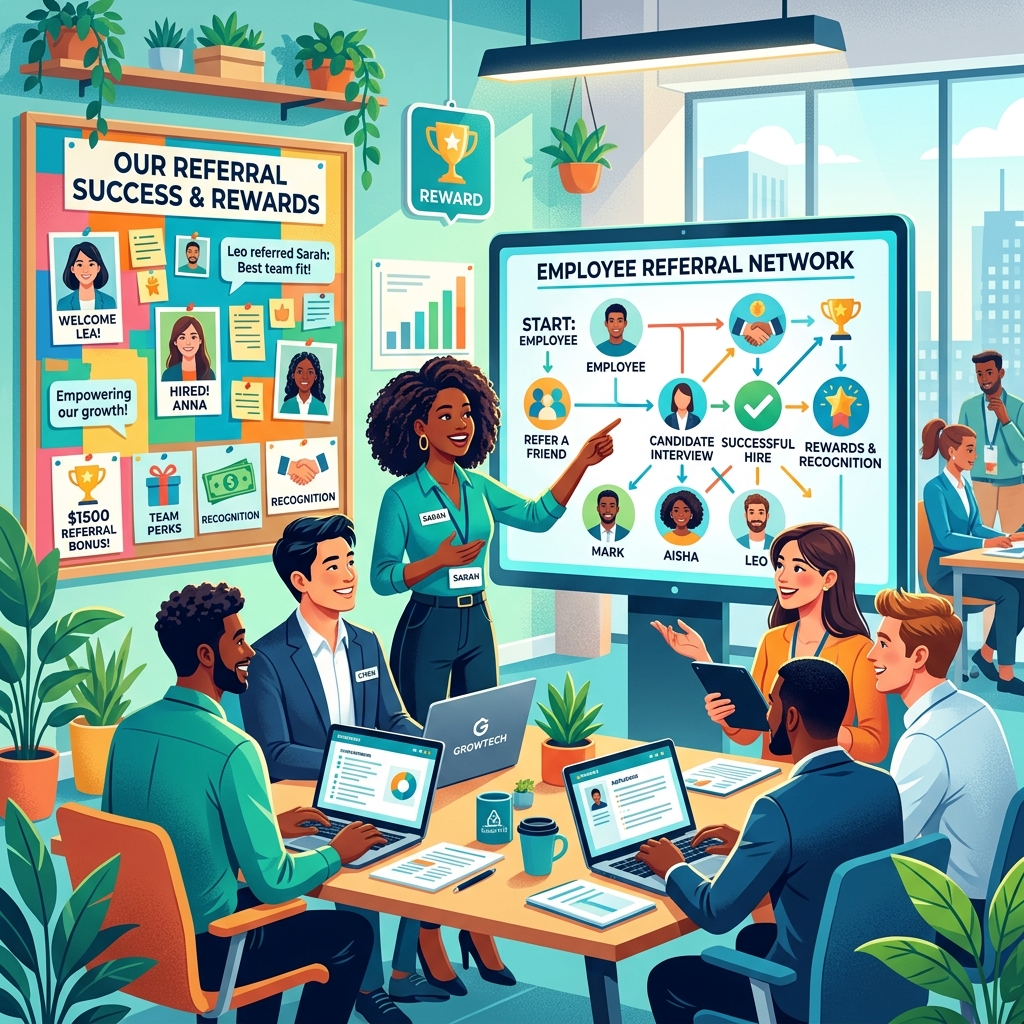
At their core, employee referral programs create a formal process for employees to recommend candidates for open roles. The typical flow looks like this:
- Open positions are communicated internally — HR or hiring managers share available roles with the broader team, along with details about the ideal candidate profile.
- Employees submit referrals — Team members recommend people from their professional network through a designated submission process, whether that’s an online form, email, or referral platform.
- Candidates are reviewed — Referred candidates go through the standard hiring process, though they may receive expedited screening.
- Outcomes are tracked — The referring employee is notified of their candidate’s progress through the pipeline.
- Incentives are awarded — If the referred candidate is hired and meets the required conditions (e.g., completes 90 days), the referring employee receives their reward.
If you want a deeper operational breakdown of setting up such systems properly, this guide on building a successful employee referral program explains how companies structure internal workflows to maximize participation.
The program only works well when the process is visible, simple, and consistent. If employees don’t know the program exists, or find it too complicated to participate, referrals won’t come in.
Employee Referral Program Best Practices
Building a referral program is straightforward. Building one that people actually use requires more thought.
One of the most effective approaches is aligning referral behavior with broader advocacy systems, similar to what’s covered in employee-driven advocacy frameworks:
employee advocacy and word-of-mouth marketing
How can you make your referral program easy to participate in?
Friction kills participation. If submitting a referral takes more than a few minutes, most employees won’t bother. Keep the submission form short—ask for the candidate’s name, contact details, the role they’re being referred for, and a brief note on why they’d be a good fit. That’s it.
How do you keep employees engaged with the referral program over time?
Visibility is everything. Announce the program during onboarding, mention it in team meetings, share success stories on internal channels, and send regular reminders when new roles open up. Referral programs that go quiet quickly get forgotten.
What makes a referral program fair and transparent?
Employees need to trust that their referrals are taken seriously. Provide updates when a referred candidate progresses through the pipeline, and explain clearly if a candidate wasn’t selected. Transparency builds confidence in the system and encourages repeat participation.
Employee Referral Incentive Ideas That Drive Results
Incentives are the engine of any referral program. The right incentive depends on your workforce, your culture, and your budget—but here are options that consistently perform well:
- Cash bonuses: The most straightforward option. Referral bonuses typically range from $500 to $5,000 depending on the seniority of the role. Higher-level or harder-to-fill roles often warrant larger bonuses.
- Additional paid time off: A week of extra vacation is a compelling reward for many employees, particularly at companies where work-life balance is valued.
- Gift cards and experiential rewards: Flexibility here matters—let employees choose from a selection of rewards rather than issuing a one-size-fits-all payout.
- Charitable donations: Some employees prefer their bonus to go toward a cause they care about. This option also reinforces company values around social responsibility.
- Tiered rewards: Offer a small bonus when a referral enters the interview stage, and a larger reward if they’re hired and pass the retention milestone. This keeps employees engaged throughout the process.
- Recognition programs: Public acknowledgment—in an all-hands meeting, company newsletter, or Slack channel—can be just as motivating as financial rewards for some employees.
How to Build an Effective Employee Referral Program Strategy
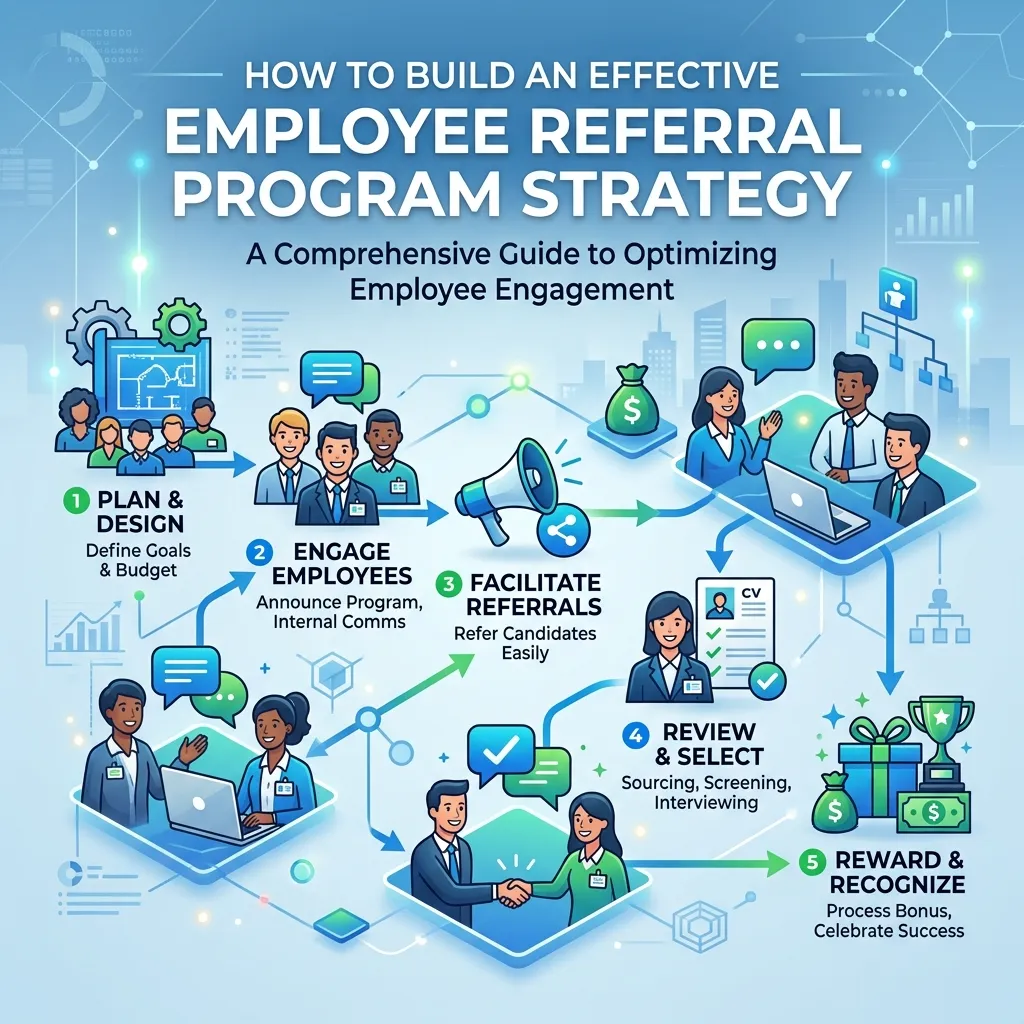
A referral program without a strategy tends to produce inconsistent results. Here’s how to build one with staying power:
Define your goals first. Are you trying to reduce cost-per-hire? Fill roles in specific departments faster? Improve retention rates? Your goal determines how you design and measure the program.
Identify which roles benefit most from referrals. Referral programs are especially effective for mid-to-senior roles, niche technical positions, and roles where culture fit is critical. Entry-level, high-volume roles may be better served by traditional sourcing.
Set clear eligibility rules. Decide who can make referrals, which roles qualify, and how long the referred candidate must remain employed before the bonus is paid. Communicate these rules clearly to avoid disputes.
Build a regular communication cadence. Don’t announce the program once and go silent. Create a monthly or quarterly rhythm of reminders, updates, and success stories to keep referrals top of mind.
Measure and iterate. Track key metrics including referral volume, conversion rate (referral to hire), time-to-hire for referred candidates versus other sources, retention rates, and cost-per-hire. Use this data to improve the program over time.
The Employee Referral Hiring Process: What to Expect
Once a referral is submitted, it’s important to move quickly. One of the biggest mistakes companies make is treating referred candidates the same as cold applicants in terms of response time. A slow response signals to both the candidate and the referring employee that the program isn’t a priority.
Best practices for the referral hiring process include:
- Acknowledge receipt within 24 to 48 hours — Let the referring employee know their referral has been received.
- Provide a dedicated hiring path — Referrals don’t need to sit in the same queue as cold applicants. Assign a point of contact and keep the process moving.
- Give honest feedback — If a referred candidate isn’t moving forward, explain why. This maintains trust and helps employees make better referrals in the future.
- Close the loop — Whether the outcome is positive or negative, notify the referring employee once a final decision is made.
Best Employee Referral Program Software Tools
Managing referrals manually works at a small scale, but as your organization grows, dedicated software makes the process significantly more efficient. Some widely-used employee referral program software tools include:
- Greenhouse — A comprehensive applicant tracking system (ATS) with built-in referral tracking features, widely used by mid-size to enterprise companies.
- Workday Recruiting — Offers referral program functionality integrated into a broader HR management platform.
- Breezy HR — A more accessible option for smaller teams, with an intuitive interface and referral tracking capabilities.
- ERIN — A platform built specifically for employee referral programs, featuring automated communications, bonus tracking, and analytics.
- Teamable — Uses AI to identify which employees are most likely to know strong candidates for specific roles, based on their LinkedIn connections.
Choose a tool that integrates with your existing ATS and HR systems to avoid creating additional administrative overhead.
Real-World Employee Referral Program Examples
Salesforce runs a well-documented referral program that offers cash bonuses for successful hires and has been cited as a key driver of their ability to scale their sales and engineering teams. Salesforce also actively promotes referrals for diversity hiring, offering additional incentives for referring candidates from underrepresented groups.
Accenture uses employee referrals as a primary sourcing channel, with referrals reportedly accounting for a significant portion of total hires annually. The company pairs its referral program with a strong internal communication strategy to keep participation high.
Small and mid-size companies often see even stronger results from referral programs because employees have more direct relationships with leadership and a clearer sense of who would thrive in the company culture.
How to Improve Hiring With Employee Referrals: Practical Next Steps
If your current referral program isn’t performing, or you’re starting from zero, here’s where to begin:
- Audit your current process — Identify where referrals drop off. Is the submission process too complex? Are incentives compelling enough? Are employees even aware the program exists?
- Talk to your team — Ask employees what would make them more likely to refer someone. The answers are often simpler than you’d expect: faster feedback, better incentives, or just more visibility into open roles.
- Pilot before scaling — Launch your improved program in one department first, measure results, then roll it out company-wide.
- Celebrate wins publicly — When a referred hire works out well, say so. Naming the referring employee (with their permission) in a company update reinforces the behavior you want to see.
Build a Hiring Engine That Works for You
Employee referral programs remain one of the most cost-effective, high-quality sources of new talent available to organizations of any size. The research backs it up, and so does the lived experience of companies that have invested in building strong referral cultures.
The key is treating the referral program as an ongoing initiative, not a set-and-forget policy. Keep it visible, keep it simple, reward it genuinely, and iterate based on data. When your employees become active participants in building the team around them, everyone benefits—the company, the new hires, and the employees doing the referring.
Start small if you need to. Define the incentives, write up the process, and communicate it to your team this week. The compounding returns of a well-run referral program build over time, and the best time to start is now.
Frequently Asked Questions
What is an employee referral program?
An employee referral program is a structured recruiting strategy that encourages current employees to recommend qualified candidates for open roles, typically in exchange for a financial reward or other incentive when the referred candidate is successfully hired.
How much should a referral bonus be?
Referral bonuses typically range from $500 to $5,000, depending on the seniority and difficulty of the role. Senior or specialized positions often warrant higher bonuses. The bonus is usually paid after the referred employee completes a probationary period, commonly 30 to 90 days.
Do employee referral programs actually improve retention?
Yes. Research from Jobvite found that referred employees have a 46% one-year retention rate, compared to 33% for job board hires. Referred employees often arrive with a clearer picture of the company culture, which contributes to faster onboarding and stronger long-term engagement.
How do you measure the success of an employee referral program?
Key metrics include referral volume, referral-to-hire conversion rate, time-to-hire for referred candidates, cost-per-hire compared to other sourcing channels, and retention rates for referred hires at the 6-month and 12-month marks.
What stops employees from participating in referral programs?
The most common barriers are a complicated submission process, a lack of awareness that the program exists, poor communication about what happens to referrals, and incentives that don’t feel meaningful. Addressing these issues directly and consistently typically improves participation rates significantly.
Can small businesses run employee referral programs?
Absolutely. Small businesses often benefit most from referral programs because employees have stronger personal relationships and a clearer sense of company culture fit. Formal software tools aren’t necessary at a small scale—a simple form and a clear incentive policy are enough to get started.
What is an Employee Referral Program?
An Employee Referral Program is a hiring system where employees refer candidates for job openings, often receiving rewards if the candidate is successfully hired.
Why do companies use Employee Referral Programs?
Companies use them to hire faster, reduce recruitment costs, and attract higher-quality candidates through trusted employee networks.
How does an Employee Referral Program work?
Employees submit candidate referrals, HR reviews them, and if the candidate is hired and meets conditions, the referring employee receives an incentive.
What are the benefits of an Employee Referral Program?
Key benefits include faster hiring, better culture fit, lower cost-per-hire, improved retention, and higher employee engagement.
What incentives work best in referral programs?
Common incentives include cash bonuses, extra paid leave, gift cards, tiered rewards, and public recognition.
How much should referral bonuses be?
Referral bonuses typically range from $500 to $5,000 depending on the role’s seniority and difficulty level.
Are referred employees more likely to stay longer?
Yes, referred employees generally have higher retention rates because they better understand the company culture before joining.
What roles benefit most from referral programs?
Mid-to-senior roles, specialized technical positions, and culture-critical roles benefit the most from referral hiring.