

In today’s digital landscape, brands are continually seeking innovative approaches to spark authentic conversations and ignite organic buzz. One of the most promising tactics currently reshaping referral and advocacy efforts is the deployment of chatbots for word-of-mouth marketing. By leveraging AI-powered conversational agents, businesses can engage prospects and customers instantly, tailor interactions based on real-time data, and guide users toward sharing experiences with friends and followers. This year (2026), the integration of chatbots has evolved beyond simple question-and-answer functionality into sophisticated platforms capable of driving referrals, soliciting user-generated reviews, and automating reward programs—all within familiar messaging environments.
Throughout this comprehensive guide, we will explore how chatbots for word-of-mouth marketing can elevate your advocacy strategy, outline actionable steps for implementation, and highlight best practices to maximize engagement. We’ll examine various bot types, from rule-based flows to advanced NLP-driven assistants, and provide recommendations on selecting the right technology stack. Additionally, this article will offer measurement frameworks to track ROI and reveal emerging trends poised to shape the future of conversational WOM. For further insights into AI research and best practices, consider reviewing studies from leading institutions such as the Massachusetts Institute of Technology (MIT) and Stanford University (Stanford).
Understanding Chatbots in Word-of-Mouth Marketing
Chatbots for word-of-mouth marketing are AI-driven conversational agents designed to interact with audiences via text or voice applications on websites, social platforms, and messaging services. Unlike traditional marketing tools that broadcast messages, chatbots facilitate two-way interactions, inviting prospective customers to ask questions, receive product recommendations, and even participate in referral or loyalty programs. These automated assistants operate 24/7, offering instant support, collecting user feedback, and nudging users to share positive experiences with their personal networks.
At their core, these chatbots rely on a combination of rule-based architectures—where predefined decision trees guide user journeys—and natural language processing (NLP) engines that decipher user intent and dynamically craft responses. A rule-based component ensures predictable, high-accuracy replies for frequently asked questions, while the NLP layer adapts to conversational nuances, enabling more fluid, context-aware exchanges. In today’s competitive environment, businesses that incorporate chatbots enjoy lower response times, higher user satisfaction rates, and a scalable way to transform satisfied customers into brand ambassadors.
Implementing chatbots within your word-of-mouth marketing framework not only enhances customer experience but also unlocks valuable data points. Every interaction can be tagged, stored, and analyzed to understand user preferences, sentiment, and referral behaviors. By feeding this intelligence back into your marketing stack, you can refine messaging, segment audiences more effectively, and determine which incentives drive the highest share rates. When executed thoughtfully, chatbots provide a seamless bridge between passive website visits and active advocacy.
Advantages of Employing Chatbots for WOM Marketing
Deploying chatbots for word-of-mouth marketing offers multiple distinct advantages that align with modern consumer expectations and drive measurable results:
1. Real-Time Engagement
Today’s consumers expect immediate answers. Chatbots respond in milliseconds, keeping potential advocates engaged and reducing drop-off rates. Real-time interactions also allow brands to capitalize on peak moments when users are most likely to share testimonials or refer friends.
2. Personalized Recommendations
Advanced chatbots integrate with CRM systems and analytics tools to access purchase history, browsing patterns, and demographic details. This data enables tailored product suggestions, referral offers, and promotional codes—creating an emotional connection that boosts the likelihood of peer-to-peer sharing.
3. Automated Referral and Rewards Programs
Traditional referral campaigns often require manual tracking of invites and reward fulfillment. Chatbots automate these processes: they send referral invites via email or messaging channels, monitor registration and purchase events, and instantly distribute incentives such as discount codes or loyalty points. This seamless workflow enhances user satisfaction and motivates repeat participation.
4. Scalability and Consistency
Unlike human agents, chatbots can manage thousands of concurrent conversations without compromising quality. This scalability ensures every user receives a consistent brand experience and has the opportunity to become an active promoter, regardless of peak traffic volumes.
5. Data-Driven Insights
Every conversation can be tracked and analyzed. Metrics such as referral conversion rates, share frequency, and user sentiment provide clear indicators of campaign performance. By monitoring key performance indicators (KPIs), marketers can refine chatbot scripts, adjust incentive structures, and optimize engagement flows for better results.
Chatbot Types and Implementation Strategy
When planning your chatbot-powered word-of-mouth initiative, it’s essential to choose the right bot architecture. Each type offers unique benefits and aligns with varying levels of complexity and budget. Additionally, a structured implementation strategy will ensure your chatbot delivers on business objectives and user expectations.
Rule-Based Bots
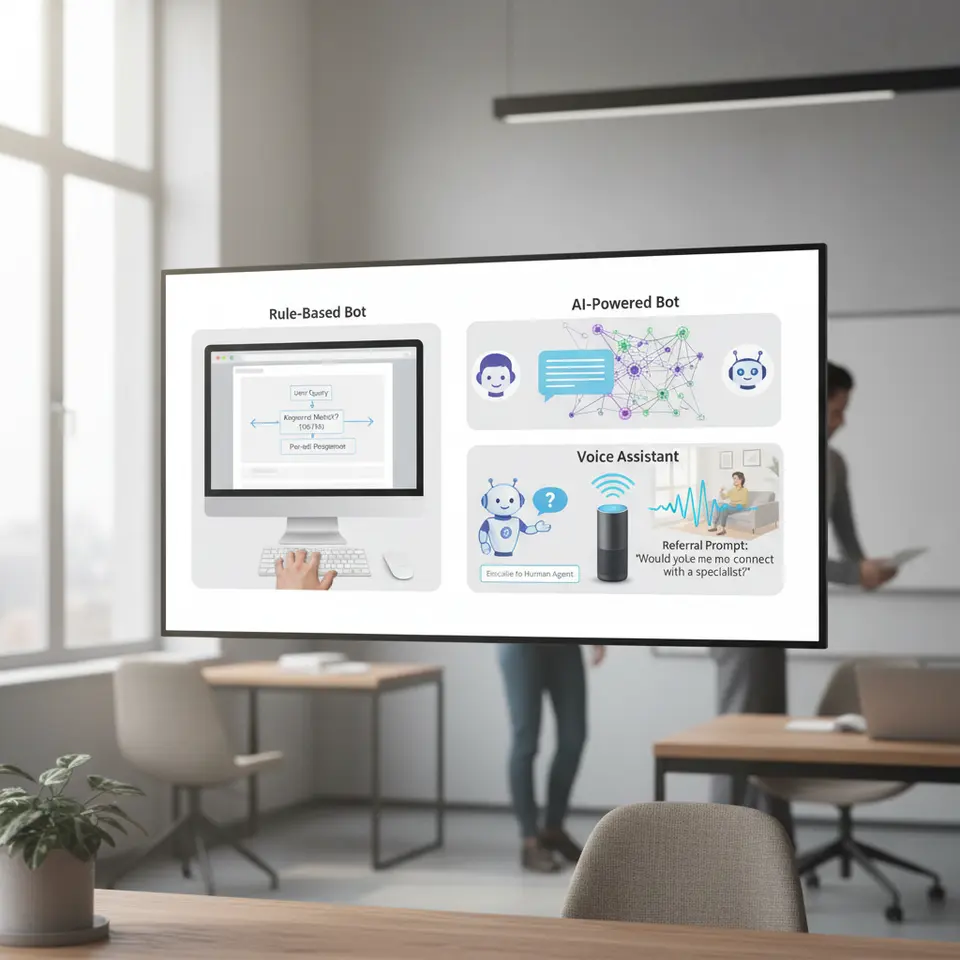
Rule-based bots follow predefined decision trees and are ideal for handling frequently asked questions, guiding users through referral steps, or distributing static content. They require minimal AI infrastructure and are straightforward to set up using platforms like ManyChat or Chatfuel. These bots excel at delivering consistent, accurate responses but may struggle with unexpected queries or nuanced language.
AI-Powered Bots
Leveraging sophisticated NLP models, AI-powered chatbots understand user intent and deliver context-aware replies. They can handle open-ended questions, adapt to various phrasings, and escalate complex issues to human agents when necessary. Solutions such as Google Dialogflow or Microsoft Bot Framework offer robust AI capabilities, enabling deeper conversational experiences that feel natural and engaging.
Hybrid Bots
Hybrid chatbots combine rule-based logic with AI-driven modules. In this configuration, the bot attempts to answer queries using scripted flows and, upon detecting unfamiliar requests or emotional nuance, seamlessly transitions the conversation to a live support agent. This approach balances cost efficiency with high-quality user experiences and prevents user frustration when the bot encounters limitations.
Voice Assistants
Integrating voice-driven chatbots through platforms such as Amazon Alexa or Google Assistant introduces an auditory dimension to word-of-mouth marketing. Voice bots can guide users through referral processes, read out user testimonials, or prompt share actions via voice commands—paving the way for hands-free advocacy and broader accessibility.
1. Define Clear Objectives
Start by specifying what you aim to achieve. Objectives may include increasing referral sign-ups by a certain percentage, boosting the number of user-generated reviews, or driving more social shares. Well-defined KPIs, such as referral conversion rate or net promoter score (NPS) generated via chatbot prompts, will guide your design and measurement efforts.
2. Map Customer Journeys
Chart every touchpoint where a chatbot could stimulate word-of-mouth activity: first-time site visitors, product purchase confirmations, post-purchase feedback, and loyalty program interactions. Identify pain points or moments of delight when users are most open to sharing, and embed chatbot triggers at those critical junctures.
3. Select the Right Technology
Research platforms and AI frameworks that integrate seamlessly with your existing tech stack—CRM, email service providers, analytics tools, and social media channels. Evaluate options based on ease of use, customization capabilities, supported languages, and pricing models. Top contenders include Google Dialogflow, Microsoft Bot Framework, and specialized builders like ManyChat for social messaging.
4. Design Conversational Flows and Incentives
Create brand-aligned scripts that guide users through referral workflows. Use engaging language, clear calls to action, and reward incentives—such as discount codes or exclusive content—to motivate shares. Incorporate branching logic to address various user intents: product inquiries, technical support, feedback collection, and invitation sending.
5. Test, Launch, and Iterate
Before full deployment, conduct internal and limited external testing to identify conversational gaps and unexpected behaviors. Monitor dropout points, fallback rates, and referral completions. Use this data to refine dialog trees, adjust incentive levels, and improve NLP models. Once optimized, roll out to your wider audience and continue iterative improvements based on real-world performance metrics.
Best Practices to Maximize Engagement with Chatbots

To ensure your chatbots for word-of-mouth marketing foster genuine advocacy and sustained user engagement, adopt these proven best practices:
Be Transparent
Always inform users they are interacting with a bot. Transparency builds trust and prevents confusion or frustration. A simple opening message like, “Hi, I’m ChatBuddy, your virtual assistant” sets clear expectations.
Maintain a Consistent Brand Voice
Whether your brand is playful, professional, or community-driven, ensure your chatbot’s tone aligns with overall messaging guidelines. Consistency strengthens brand identity and deepens emotional connections.
Use Rich Media and Quick Replies
Incorporate images, GIFs, carousels, and rapid-response buttons to make interactions visually engaging. Rich media enhances user experience, simplifies decision-making, and guides users toward sharing actions.
Prompt for Shares at Peak Moments
After a positive resolution—such as order confirmation or support ticket closure—gently ask users to share their experience on social media or refer friends. Pair requests with incentives like limited-time discounts or loyalty points to increase motivation.
Offer Easy Human Handoffs
For complex queries or emotional situations, provide an option for users to connect with a live agent. Seamless escalation maintains high service standards and prevents negative word-of-mouth due to unresolved issues.
Monitor and Respond to Feedback
Collect in-conversation feedback through brief surveys or rating prompts and act on constructive criticism. Demonstrating responsiveness to user input not only refines your chatbot’s performance but also reinforces customer trust.
Measuring Success and Optimizing ROI
Tracking the right metrics is critical to validate the effectiveness of chatbots for word-of-mouth marketing. Focus on these key performance indicators:
Referral Conversion Rate
The percentage of chatbot-initiated interactions that culminate in successful referrals or sign-ups. A high conversion rate indicates your incentives and dialog flows are resonating with users.
Net Promoter Score (NPS)
Integrate quick NPS surveys within chatbot conversations to gauge customer willingness to recommend your brand. Tracking NPS trends over time reveals whether your bot interactions are improving overall loyalty.
Share Rate
Measure how frequently users share product pages, social posts, or referral links when prompted by the chatbot. This metric directly reflects the viral potential of your campaign.
Engagement Metrics
Monitor session lengths, message volume per session, and fallback rates (instances where the bot fails to understand a request). These indicators help you pinpoint script areas that require optimization.
Customer Satisfaction Score (CSAT)
Deploy brief satisfaction polls at the end of each interaction. Tracking CSAT provides immediate feedback on the quality of your chatbot’s service and highlights opportunities for improvement.
By analyzing these metrics regularly and leveraging A/B testing on dialog variations or incentive levels, you can continually refine your chatbot approach to maximize word-of-mouth impact and return on investment.
FAQ
What types of chatbots are best suited for word-of-mouth marketing?
Rule-based bots are ideal for straightforward referral workflows and static content distribution. AI-powered bots excel at understanding nuanced user queries and delivering context-aware responses. Hybrid bots offer a balance by combining scripted logic with AI-driven modules, and voice assistants add an auditory interface for hands-free advocacy.
How can I measure the ROI of my chatbot-driven referral campaigns?
Monitor key metrics such as referral conversion rate, share rate, net promoter score (NPS), and customer satisfaction score (CSAT). Tracking these KPIs over time—and using A/B tests on dialog flows or incentive levels—will help you quantify impact and optimize performance.
How do I ensure my chatbot encourages genuine organic shares?
Use personalized incentives based on user preferences, prompt share actions at peak engagement moments, maintain a consistent brand voice, and incorporate rich media and quick replies to make sharing seamless. Regularly collect and act on user feedback to keep the experience authentic and user-centric.
Conclusion
Chatbots for word-of-mouth marketing have emerged as a powerful tool for brands aiming to foster genuine advocacy, streamline referral workflows, and deliver personalized experiences at scale. In today’s hyperconnected world, consumers value instant responses and customized interactions—qualities that well-designed chatbots excel at providing. By defining clear objectives, mapping out customer journeys, choosing the right technology, and adhering to best practices, marketers can harness AI-driven conversations to transform passive customers into loyal promoters.
As AI capabilities advance and conversational interfaces become more sophisticated, the role of chatbots in driving organic growth will only expand. Embrace this conversational revolution, measure success through relevant metrics, and iterate continuously to optimize your chatbot-powered word-of-mouth initiatives. The result is a dynamic advocacy engine that turns satisfied users into enthusiastic brand ambassadors, fueling sustainable growth and competitive differentiation in this year (2026) and beyond.


