

Word-of-mouth (WOM) marketing remains the most trusted form of marketing precisely because it isn’t marketing in the traditional sense — it’s real people sharing real experiences. In a world where audiences scroll past ads without a second glance, a genuine recommendation from a friend, colleague, or trusted online voice still carries outsized influence over buying decisions. This guide breaks down what authentic advocacy actually looks like, why word-of-mouth marketing works on a psychological level, and the concrete tactics brands use to earn it — from referral programs and user-generated content to community building and customer experience design. Whether you run a small business or a growing company, the goal is the same: turn satisfied customers into vocal advocates without making the process feel manufactured.
Every marketer has heard the saying that people trust people more than they trust brands. Word-of-mouth marketing is the practical expression of that idea. As explored in this breakdown of what word-of-mouth marketing actually is, it refers to the organic and encouraged spread of positive opinions about a product or service between individuals, rather than through paid advertising. What makes word-of-mouth marketing unique compared to other channels covered in guides like web development’s role in SEO, PPC, and email marketing is that it cannot be bought outright — it has to be earned through genuine value and a memorable experience.
This does not mean word-of-mouth marketing happens by accident. Brands that consistently generate strong advocacy are usually doing several things deliberately: delivering an experience worth talking about, making it easy for people to share that experience, and rewarding advocacy without making it feel transactional. The rest of this guide walks through exactly how that works in practice.
What Is Authentic Advocacy?
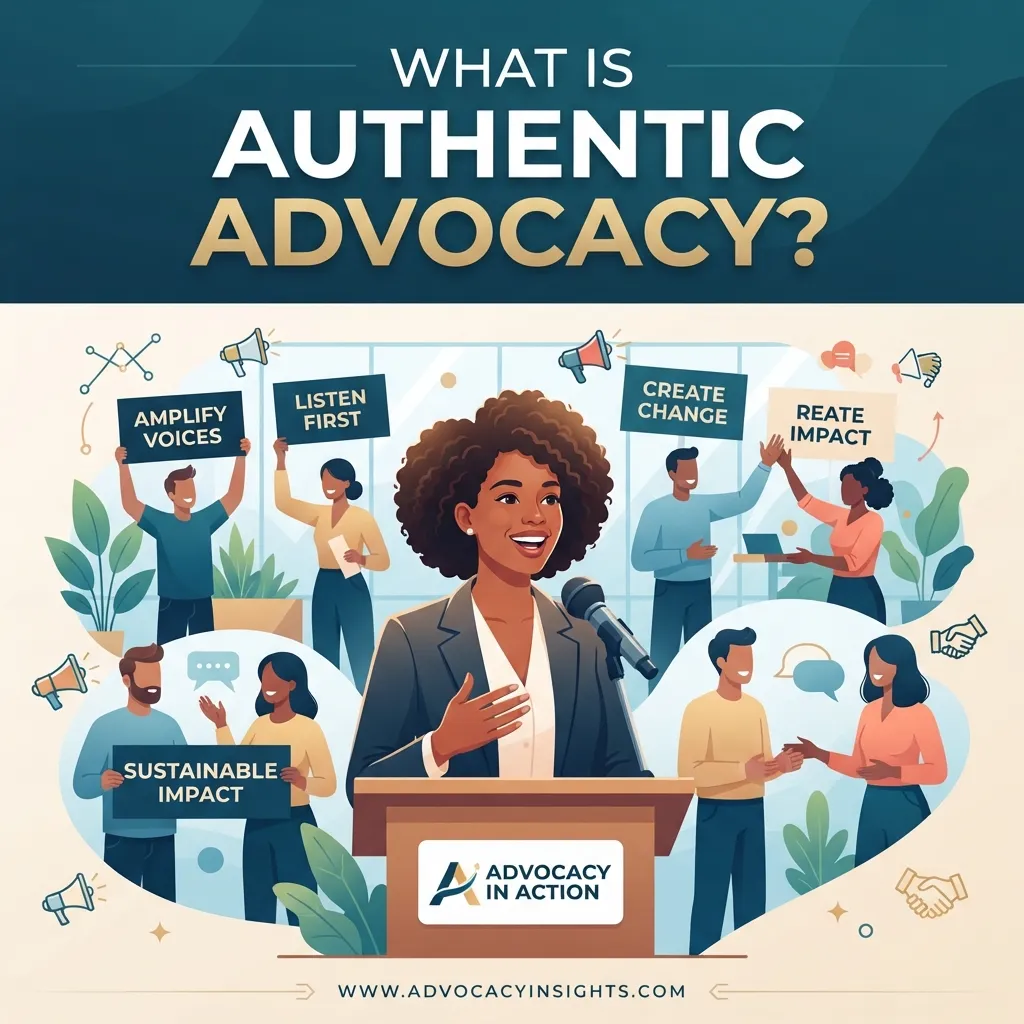
Authentic advocacy is word-of-mouth marketing that originates from a customer’s genuine satisfaction rather than a scripted or heavily incentivized action. It’s the difference between a customer telling a friend “you have to try this app, it saved me hours every week” and a customer posting a generic, obviously-paid endorsement because a brand offered a discount code.
Authenticity matters because audiences today are remarkably good at spotting manufactured enthusiasm. A recommendation that feels forced or overly polished loses much of its persuasive power. The most effective word-of-mouth marketing strategies work with authenticity rather than against it — they create the conditions for genuine advocacy to happen, then amplify it, rather than trying to fabricate it from scratch.
Why Word-of-Mouth Marketing Works
The psychology behind word-of-mouth marketing is well documented. A few core reasons it consistently outperforms other channels on trust:
- Social proof. People look to others, especially peers, to validate their decisions, particularly when a purchase feels risky or unfamiliar.
- Reduced perceived bias. A friend recommending a product has no obvious financial incentive to lie, so their opinion is weighted more heavily than a brand’s own claims.
- Emotional resonance. Stories and personal anecdotes are more memorable than feature lists, which is why a well-told customer story tends to spread further than a spec sheet.
- Network effects. Each authentic recommendation has the potential to reach an entirely new audience that traditional advertising might never have touched.
This lines up closely with broader shifts in how marketing and digital strategy increasingly overlap with product and web experience, since the actual product experience is now inseparable from the marketing message. If the product disappoints, no amount of clever messaging will generate positive word-of-mouth marketing outcomes.
Types of Word-of-Mouth Marketing
Word-of-mouth marketing isn’t a single tactic — it spans a spectrum from fully organic to actively facilitated:
- Organic WOM. Customers share their experience entirely on their own, with no prompting or incentive from the brand.
- Amplified WOM. A brand takes an existing organic mention and gives it a bigger platform, such as resharing a customer’s tweet or featuring a review on the homepage.
- Referral programs. Structured incentives, like discounts or credits, encourage existing customers to invite new ones.
- Influencer and creator partnerships. Trusted voices in a niche share their genuine opinion of a product with their audience, ideally after real, unscripted use.
- Employee advocacy. Team members share company news, product updates, or wins with their own networks, adding a human layer to brand messaging — see this guide on employee advocacy as a word-of-mouth channel for a deeper look.
- Community-led advocacy. Active brand communities — on Discord, Reddit, or dedicated forums — naturally generate peer-to-peer recommendations as members help each other, a dynamic covered in more depth in this community marketing guide.
Each type plays a different role, and most mature word-of-mouth marketing programs use several of these simultaneously rather than relying on just one.
Core Tactics for Building Authentic Advocacy
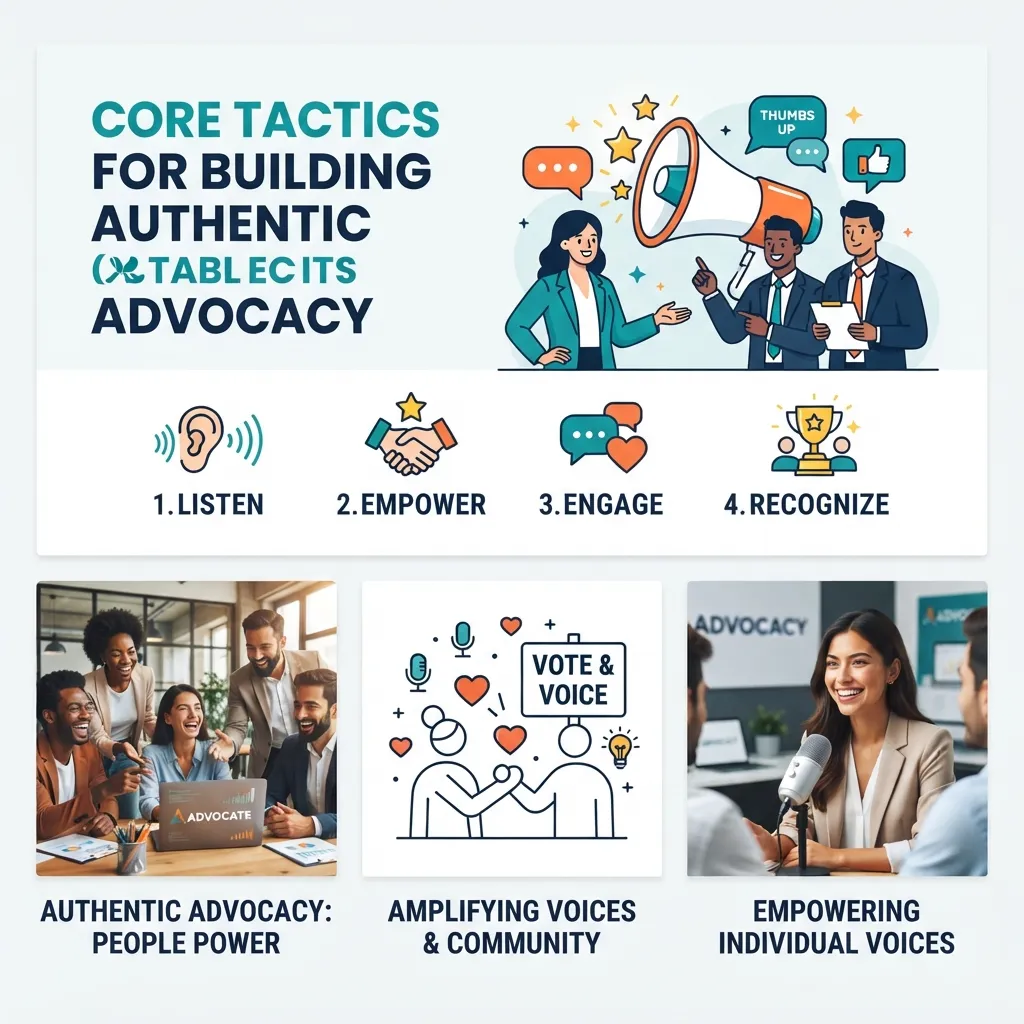
1. Design an Experience Worth Talking About
No tactic can manufacture word-of-mouth marketing if the underlying product or service is unremarkable. The starting point is always the experience itself — is it fast, delightful, or surprising in some way that a customer would naturally want to mention? Brands that over-deliver on a specific, narrow promise tend to generate more organic conversation than brands that try to be everything to everyone.
2. Make Sharing Effortless
Even highly satisfied customers often don’t share their experience simply because it doesn’t occur to them, or because sharing is inconvenient. Reducing friction — through one-click referral links, pre-written share templates, or simple “invite a friend” flows — significantly increases how often satisfied customers actually convert their satisfaction into a shared recommendation.
3. Build a Structured Referral Program
A well-designed referral program formalizes word-of-mouth marketing by rewarding both the referrer and the new customer. As this guide on how to build a customer referral program outlines, the strongest referral programs share a few traits: the reward is meaningful but not so large that it feels like the sole motivation, the process takes seconds to complete, and the referred person immediately understands why they were invited.
4. Invest in User-Generated Content
Encouraging customers to create and share their own content — reviews, photos, videos, or testimonials — turns individual advocacy into a visible, reusable asset, as this guide to customer stories and testimonials explains in detail. User-generated content also tends to convert better in ads and landing pages than brand-produced content, because prospective customers recognize it as coming from someone like themselves.
5. Prioritize Exceptional Customer Service
A single outstanding customer service interaction can generate more organic word-of-mouth marketing than an entire ad campaign. Conversely, a poor support experience is one of the fastest ways to generate negative word-of-mouth. Treating customer service as a marketing function, not just a cost center, pays dividends in advocacy.
6. Partner With Micro-Influencers and Real Customers
Rather than chasing the largest possible audience, many brands find better results working with micro-influencers for word-of-mouth marketing or everyday customers who have smaller but highly engaged, trust-based audiences. This approach mirrors how influencer marketing increasingly intersects with broader web and content strategy, where authenticity and niche relevance often outperform sheer reach.
7. Build and Nurture a Community
Communities give advocacy a home. When customers can connect with each other — not just with the brand — they naturally start answering each other’s questions, sharing tips, and recommending the product to newcomers, a pattern explored further in this piece on empowering customer communities for WOM growth. This kind of community-led growth compounds over time and is difficult for competitors to replicate.
8. Use Social Proof Strategically
Displaying real customer counts, ratings, testimonials, and case studies throughout a website reinforces the word-of-mouth marketing already happening elsewhere, a concept covered thoroughly in this piece on social proof in word-of-mouth marketing. It’s a way of making existing advocacy more visible to prospects who haven’t yet encountered it directly.
9. Tell Customer Stories, Not Just Customer Quotes
A short pull-quote is useful, but a full customer story — the problem, the search for a solution, the results — tends to be far more persuasive and far more shareable. These stories also give a brand’s own sales and marketing teams stronger material to reference in outreach, which connects naturally with email marketing sequences designed around real customer journeys.
10. Reward Advocacy Without Making It Transactional
The line between authentic advocacy and paid promotion can blur quickly if incentives are handled poorly. The best-performing programs frame rewards as a “thank you” for sharing something the customer already believed, rather than as the primary reason to share it in the first place.
Measuring Word-of-Mouth Marketing Success
Because word-of-mouth marketing happens outside of owned channels, measuring it requires a mix of direct and indirect signals — this guide to brand advocacy metrics and KPIs covers the tooling side in more depth:
- Net Promoter Score (NPS). A simple, widely used metric that asks customers how likely they are to recommend a product, offering a proxy for latent advocacy.
- Referral program metrics. Referral conversion rate, number of referrals per customer, and the lifetime value of referred customers all indicate how well a structured program is performing.
- Social listening. Tracking brand mentions, sentiment, and share of voice across social platforms reveals organic conversation that wouldn’t otherwise be visible.
- Branded search volume. An increase in people searching for a brand by name often correlates with rising word-of-mouth marketing activity, since it suggests people heard about the brand somewhere outside of paid channels.
- Review platform activity. The volume, recency, and sentiment of reviews on third-party platforms is one of the more measurable, public-facing forms of word-of-mouth marketing.
Real-World Examples of Word-of-Mouth Marketing
A handful of well-known growth stories, similar to those rounded up in this list of WOM marketing campaigns that changed the game, illustrate how these tactics play out in practice. Dropbox’s early referral program, which rewarded both the referrer and the new user with extra storage space, is widely cited as one of the clearest examples of a structured incentive turning existing users into an acquisition channel. Airbnb’s early growth also leaned heavily on word-of-mouth marketing, as hosts and guests shared their experiences within travel communities long before the platform had a significant advertising budget. Tesla, for years, ran with little to no traditional advertising spend, relying instead on product enthusiasm, media coverage, and owner advocacy to drive awareness. Beauty brand Glossier built much of its early customer base by treating its audience as a design partner, turning fans into a visible, ongoing source of user-generated content and recommendations.
The common thread across these examples isn’t a single tactic — it’s that each brand made its product experience distinctive enough to talk about, then removed friction from the sharing process. That combination is worth returning to whenever a word-of-mouth marketing initiative feels like it’s stalling; brands with strong design and business positioning tend to give customers something more specific and memorable to describe to others than brands with generic, undifferentiated offerings.
Common Mistakes in Word-of-Mouth Marketing
- Treating incentives as the whole strategy. Paying for shares without first earning genuine satisfaction produces low-quality advocacy that rarely converts.
- Ignoring negative word-of-mouth. Unaddressed complaints spread just as effectively as praise, often more so, and should be treated as a priority, not an afterthought.
- Making the ask too complicated. Any friction in the referral or sharing process dramatically reduces participation, even among happy customers.
- Over-scripting influencer or ambassador content. Heavily controlled messaging tends to read as inauthentic, undermining the entire point of word-of-mouth marketing.
- Failing to track results. Without clear metrics, it’s difficult to know which tactics are actually generating advocacy versus which ones simply feel good.
The Future of Word-of-Mouth Marketing

As algorithmic feeds become more crowded and consumer trust in traditional advertising continues to decline, word-of-mouth marketing is only becoming more valuable — a shift examined closely in the future of word-of-mouth in the AI era. Much of today’s most influential advocacy now happens in private spaces — group chats, closed communities, and direct messages — a trend often referred to as “dark social,” where recommendations are shared but rarely tracked by conventional analytics. Brands that build genuinely shareable experiences, invest in community, and make advocacy easy to act on will be best positioned to benefit from this shift, regardless of how visible the resulting conversations are to standard marketing dashboards.
Conclusion
Word-of-mouth marketing isn’t a tactic you can switch on overnight — it’s the natural outcome of a product worth talking about, a customer experience worth remembering, and a handful of deliberate systems that make sharing easy and rewarding. Authentic advocacy can’t be faked convincingly for long, but it can absolutely be cultivated: through referral programs, user-generated content, community building, and a genuine commitment to customer experience. Brands that treat advocacy as a long-term relationship rather than a short-term campaign consistently see the strongest, most durable results. Start by identifying the moment your customers are already happiest, then make it effortless for them to share that moment with someone else.
Frequently Asked Questions
1. What is WebAssembly used for?
WebAssembly is used to run computationally intensive code, such as image processing, gaming engines, video encoding, and scientific computing, directly in the browser at near-native speed.
2. Is it a replacement for JavaScript?
No. It complements JavaScript rather than replacing it. JavaScript typically handles the DOM and application logic, while this technology is better suited to performance-critical computations.
3. Which languages can compile to it?
Rust, C, C++, Go, and AssemblyScript are among the common languages that can compile to this format. Rust currently offers particularly mature tooling for the ecosystem.
4. Does it run outside the browser?
Yes. Runtimes such as Wasmtime and WasmEdge allow modules to run outside browsers, including serverless and edge computing environments.
5. Is it faster than JavaScript?
For many CPU-bound tasks, it can provide faster and more predictable performance than JavaScript, particularly for computationally intensive workloads.
6. Is it secure?
It runs in a sandboxed environment with isolated linear memory and restricted access to system resources, providing a controlled execution model.
7. Can it access the DOM directly?
No. It cannot directly manipulate the DOM. Instead, it generally works through JavaScript to interact with browser APIs and webpage elements.
8. What browsers support it?
All major modern browsers, including Chrome, Firefox, Safari, and Edge, support the technology, making it widely compatible across web platforms.
9. Does it support multithreading?
Yes. With technologies such as SharedArrayBuffer and Web Workers, applications can perform computations across multiple threads.
10. What is WASI?
WASI, or the WebAssembly System Interface, provides a standardized way for modules to access system resources outside the browser while maintaining controlled and sandboxed execution.
11. Is it good for beginners?
It can have a steeper learning curve than standard JavaScript development because it often involves languages such as Rust or C++. Beginners may benefit from understanding JavaScript fundamentals first.
12. Should every web app use it?
Not necessarily. It is most useful for CPU-intensive features. For typical UI-focused applications, JavaScript is often simpler and sufficient.


