

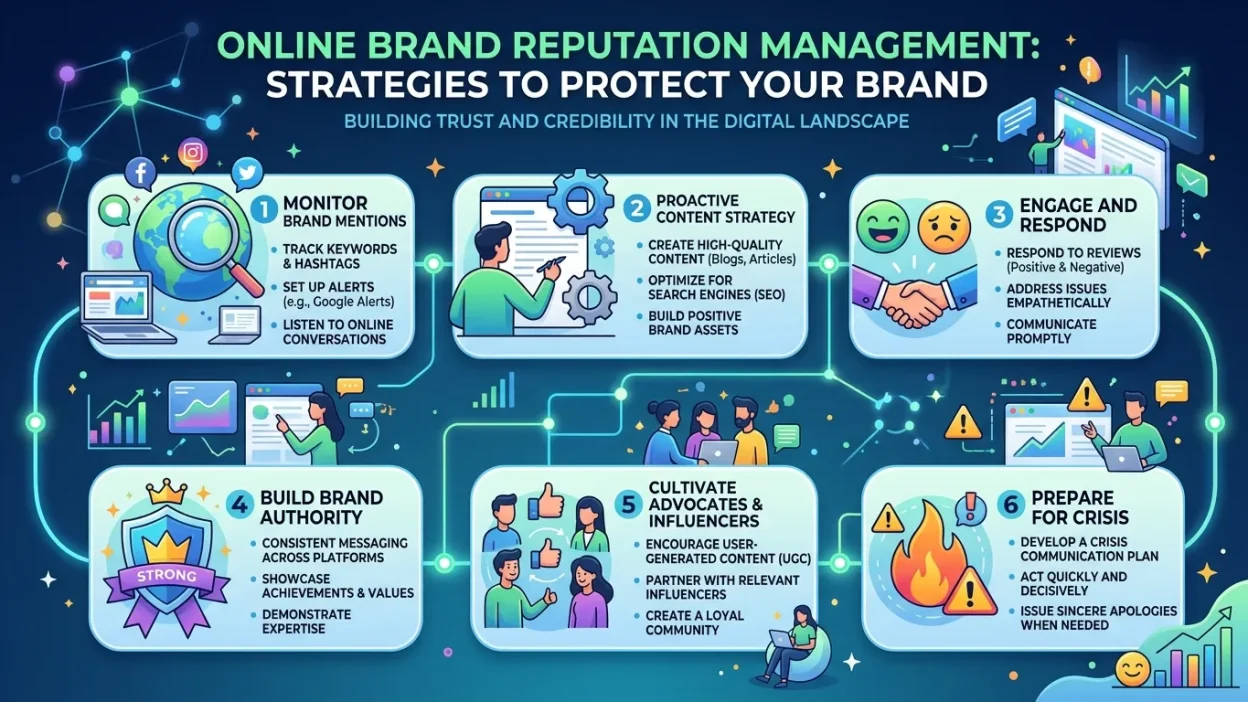
Online brand reputation management helps businesses monitor their digital presence, respond to customer feedback, manage negative reviews, and build lasting trust. Learn practical strategies to protect your brand image and maintain a positive online reputation.
In today’s digital environment, a brand’s reputation can influence whether customers choose to buy from a business, recommend it to others, or move to a competitor. People can quickly search for a company, read customer reviews, check social media discussions, and compare experiences before making a decision. As a result, businesses need to pay close attention to how they are perceived online.
Online brand reputation management involves monitoring, influencing, and improving how a business is represented across search engines, review platforms, social media, websites, forums, and other digital channels. It is not simply about removing negative information. Effective reputation management focuses on creating positive experiences, responding professionally to criticism, correcting inaccurate information, and consistently communicating the values of the brand.
A strong reputation can support customer trust, improve brand credibility, and contribute to long-term business growth. On the other hand, an unmanaged reputation can create uncertainty and discourage potential customers. Businesses that actively manage their digital presence are better prepared to respond when reputation issues arise.
Why Online Brand Reputation Management Matters

Customers increasingly research businesses before making purchasing decisions. A few negative reviews, unresolved complaints, or misleading search results can influence how potential customers perceive a company.
Effective online brand reputation management gives businesses greater awareness of what people are saying about them online. Instead of discovering a reputation problem after it has already affected sales, businesses can identify emerging issues early and respond appropriately.
Reputation management also helps businesses demonstrate that they value customer feedback. A thoughtful response to a complaint can sometimes create a more positive impression than ignoring the complaint altogether. When customers see that a company listens and takes responsibility, they may develop greater confidence in the brand.
Developing Effective Online Reputation Management Strategies
A successful reputation strategy begins with understanding the current perception of the brand. Businesses should identify where customers are discussing them and determine what information appears when people search for the company.
Effective online reputation management strategies should combine monitoring, customer communication, content development, review management, and social media engagement. The goal is not to create an artificial image but to ensure that accurate, useful, and positive information is easy for customers to find.
Businesses should also establish clear procedures for responding to complaints and questions. Having a consistent approach prevents emotional or inconsistent responses that could make reputation problems worse.
Brand Reputation Monitoring
Regular monitoring is one of the most important elements of reputation management. Businesses cannot effectively address reputation issues if they do not know what people are saying about them.
Brand reputation monitoring involves tracking mentions of a company, products, services, executives, and other relevant terms across digital channels. This can include review websites, social media platforms, news publications, blogs, forums, and search results.
Monitoring should not focus only on negative comments. Positive feedback can reveal what customers appreciate about a business and provide useful information for future marketing campaigns. Identifying recurring compliments and complaints can also help companies understand where they are performing well and where improvements are needed.
Digital Reputation Management Across Multiple Channels

A company’s reputation exists across many different online platforms. A business may have positive reviews on one website but receive complaints on another. Its social media accounts may have strong engagement while search results contain outdated information.
This is why digital reputation management should take a comprehensive approach. Businesses need to maintain accurate information across important platforms and ensure that their messaging remains consistent.
Website content, business listings, social media profiles, customer reviews, and third-party mentions all contribute to the overall perception of a brand. Maintaining consistency across these channels makes it easier for customers to understand what the business offers and what it stands for.
Managing and Repairing Online Brand Reputation
Reputation problems can happen even to businesses that provide good products and services. A customer may have a poor experience, inaccurate information may be published, or an isolated incident may receive significant attention online.
Online brand reputation repair requires patience and a strategic response. Businesses should first determine whether the information is accurate, misleading, outdated, or completely false. If a legitimate customer complaint exists, the company should focus on resolving the underlying issue rather than simply trying to hide the negative comment.
When inaccurate information is involved, businesses can publish accurate content, update outdated profiles, and communicate corrections through appropriate channels. Over time, creating useful and trustworthy content can help improve the overall digital presence of the brand.
Reputation Management Services
Some businesses manage their reputation internally, while others work with professional reputation management services. External specialists can help monitor online mentions, analyze sentiment, manage reviews, develop content strategies, and identify potential reputation risks.
Professional assistance can be particularly useful for companies dealing with a large number of online mentions or a serious reputation challenge. However, businesses should choose providers carefully and focus on ethical strategies.
Reputation management should never depend on fake reviews, misleading information, fabricated testimonials, or other tactics designed to manipulate customers. Sustainable reputation management is built on transparency and genuine customer satisfaction.
Customer Review Management
Customer reviews have a major influence on online reputation. Potential customers often use reviews to determine whether a business is trustworthy and whether its products or services are worth purchasing.
Customer review management involves monitoring reviews, responding to customers, encouraging genuine feedback, and identifying recurring issues. Businesses should make it easy for satisfied customers to share their experiences while ensuring that review requests remain authentic and ethical.
Responding to positive reviews is also valuable. A simple, thoughtful response demonstrates that the company appreciates its customers and actively participates in the conversation surrounding its brand.
Managing Negative Reviews Professionally
Negative feedback is unavoidable for many businesses. Even companies with excellent products and services can receive occasional complaints.
Effective negative review management is about responding constructively rather than becoming defensive. Businesses should acknowledge the customer’s concern, remain professional, and provide a practical solution whenever possible.
A negative review can become an opportunity to demonstrate excellent customer service. Other potential customers may judge a company not only by the complaint itself but also by how the company responds to it.
Public responses should remain concise and respectful, while sensitive details can be handled privately. Businesses should avoid arguing with customers or revealing personal information in public conversations.
Protecting Your Brand Image
Brand image protection requires consistent attention to customer experience and online communication. A company’s reputation cannot be protected through marketing alone if its actual products or services consistently disappoint customers.
The strongest reputation strategies begin with delivering what the brand promises. When customer expectations match their actual experiences, businesses naturally generate more positive reviews and recommendations.
Companies should also ensure that employees understand brand communication standards. A careless social media post, inappropriate response, or inaccurate statement can quickly become a reputation issue.
Social Media Reputation Management
Social media has made reputation management more immediate than ever. Customers can publicly share complaints, questions, recommendations, and experiences within seconds.
Social media reputation management involves monitoring conversations, responding to comments, addressing complaints, and maintaining a consistent brand voice. Businesses should avoid treating every negative comment as a crisis. Instead, they should evaluate the context and determine whether a public response is necessary.
Social media also provides opportunities to strengthen reputation. Sharing useful information, celebrating customers, highlighting achievements, and responding to questions can create a more positive perception of the brand.
Using Online Reputation Monitoring Tools
Manually checking every platform can become difficult as a business grows. Online reputation monitoring tools can simplify the process by helping companies track brand mentions, reviews, social media activity, and other digital signals.
These tools can provide alerts when a business receives a new review or when its brand is mentioned online. Some platforms also provide sentiment analysis and reporting features that help businesses identify trends.
However, technology should support human judgment rather than replace it. Automated systems may identify a mention, but a person still needs to determine the appropriate response and context.
Creating Positive Content for Your Brand
Content marketing can play an important role in online brand reputation management. Businesses can publish helpful articles, case studies, customer stories, guides, videos, and other resources that demonstrate expertise and provide value.
High-quality content can also help ensure that customers encounter accurate and useful information when researching the brand. Over time, a strong collection of authoritative content can strengthen search visibility and contribute to a more positive digital presence.
The content should remain genuinely useful rather than being created solely to manipulate search results. Providing real value is more sustainable and helps establish credibility with both customers and search engines.
Encouraging Genuine Customer Feedback
Businesses should not be afraid of reviews. Instead, they should create systems that make it easy for satisfied customers to provide honest feedback.
After completing a purchase or service, companies can politely invite customers to share their experience. The request should be straightforward and should not pressure customers to provide positive reviews.
A steady flow of genuine feedback gives potential customers a more accurate understanding of the business. It can also help companies identify areas that require improvement.
Measuring Reputation Management Performance
Effective online brand reputation management requires ongoing measurement. Businesses should establish key performance indicators that help them understand whether their reputation strategy is working.
Useful metrics can include review ratings, review volume, sentiment trends, brand mentions, customer response rates, social media engagement, and search visibility. Businesses can compare these metrics over time to identify improvements or emerging risks.
It is also important to connect reputation metrics with broader business outcomes. Improvements in customer sentiment may contribute to higher conversions, stronger retention, and increased referrals.
Common Reputation Management Mistakes to Avoid
Businesses can unintentionally make reputation problems worse through poor responses. One common mistake is ignoring negative feedback completely. Silence can make customers feel that their concerns are not important.
Another problem is responding emotionally. Arguing with customers or attempting to publicly discredit them can attract more attention to the original complaint.
Businesses should also avoid fake reviews and misleading reputation tactics. While these approaches may appear attractive as short-term solutions, they can seriously damage credibility if discovered.
A better approach is to address genuine problems, communicate honestly, and consistently improve the customer experience.
Building a Long-Term Reputation Strategy
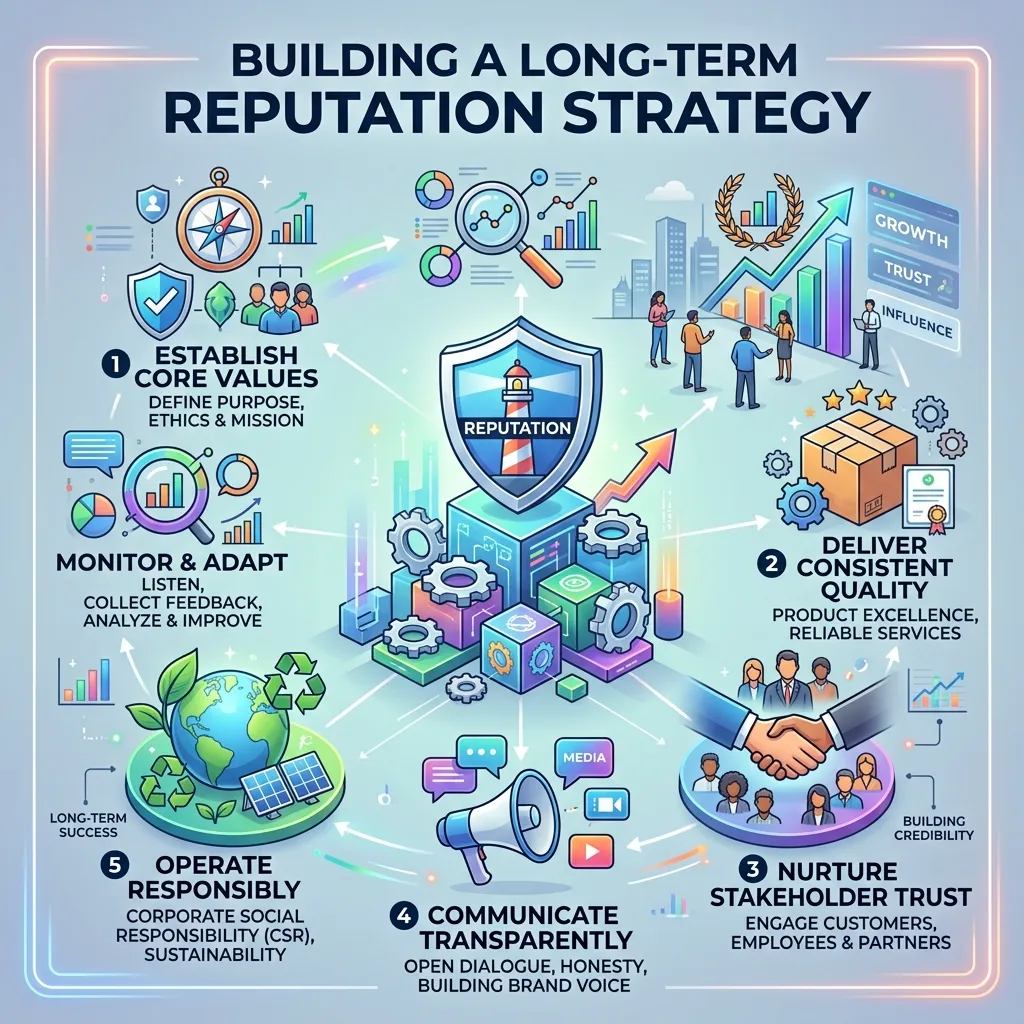
Reputation management should not begin only after a crisis occurs. Companies should develop a proactive strategy that operates continuously.
Effective online brand reputation management combines regular monitoring, review management, social media engagement, customer service, content creation, and performance analysis. These activities help businesses identify potential problems before they become major issues.
A proactive strategy also creates a stronger foundation for handling unexpected events. When a business already has positive customer relationships and a credible online presence, it is generally better positioned to respond to criticism.
Conclusion
A strong digital reputation can become one of a company’s most valuable business assets. Customers want to know that they can trust a brand before spending their money, and online information often plays a major role in that decision.
Effective online brand reputation management requires more than responding to negative reviews. It involves monitoring conversations, protecting brand credibility, managing customer feedback, maintaining consistent communication, and delivering experiences that encourage customers to speak positively about the business.
By combining reputation monitoring with genuine customer service, useful content, ethical review management, and proactive communication, businesses can build a stronger online presence and develop lasting customer trust.
Smart Marketing and Branding for Reputation
Strong marketing and branding can reinforce a company’s online reputation by creating a consistent identity and communicating its values clearly. Businesses should ensure that their website, social media profiles, content, advertising, and customer communications present a unified message.
Effective branding also helps customers recognize and remember a business. Strategies such as storytelling, content marketing, social media engagement, visual consistency, and customer-focused communication can strengthen credibility and create stronger connections with the target audience.
Businesses should also align their marketing activities with the actual customer experience. When a brand consistently delivers what it promises, marketing and branding efforts can support greater trust, loyalty, and positive word-of-mouth.
For more practical ideas on strengthening your brand, explore Smart Marketing and Branding Ideas.
Word-of-Mouth and Brand Reputation
Word-of-mouth remains a powerful influence on how customers perceive a business. People often trust recommendations from friends, colleagues, and other customers because these opinions feel more authentic than traditional advertising. Positive recommendations can introduce a brand to new audiences, while negative experiences can quickly affect customer trust.
Modern businesses should consider word-of-mouth an important part of online brand reputation management. Providing excellent products, responsive customer service, and memorable experiences can encourage customers to recommend the brand naturally. Businesses can also monitor online conversations to identify opportunities to strengthen positive discussions.
As technology changes how people discover and communicate about brands, the Future of Word-of-Mouth is becoming increasingly connected to digital communities, social platforms, reviews, and AI-driven experiences.
Brand Advocates and Reputation
Some of the strongest supporters of a business are existing customers who voluntarily recommend its products or services. These customers can become powerful sources of credibility because their recommendations are based on real experiences.
Brand advocates may share products on social media, leave positive reviews, recommend a company to friends, participate in discussions, or create content about their experiences. Their activity can help businesses reach potential customers without relying entirely on paid advertising.
Identifying and nurturing these customers can strengthen reputation and create a network of genuine supporters. To learn more, explore What Are Brand Advocates?.
Building Brand Advocacy
Brand advocacy should be based on genuine customer satisfaction rather than forced promotion. Businesses can encourage advocacy by consistently delivering excellent experiences and making it easy for satisfied customers to share their opinions.
A strong brand advocacy strategy may include referral programs, review requests, loyalty initiatives, user-generated content, testimonials, and opportunities for customers to participate in brand communities. These activities can increase positive conversations while encouraging long-term engagement.
Businesses should focus on creating advocates naturally rather than manufacturing positive feedback. Authentic recommendations are more likely to build trust with potential customers.
For additional strategies, explore this Brand Advocacy collection.
Frequently Asked Questions
What is online brand reputation management?
Online brand reputation management is the process of monitoring, influencing, and improving how a business is perceived across search engines, social media, review websites, and other digital channels.
Why is online reputation important for businesses?
A positive reputation can increase customer trust and influence purchasing decisions. Potential customers often research reviews and online information before choosing a business.
How can businesses monitor their online reputation?
Businesses can monitor brand mentions, customer reviews, social media conversations, search results, and other digital platforms using manual checks and reputation monitoring tools.
How should a business respond to a negative review?
A business should respond professionally, acknowledge the customer’s concern, avoid arguments, and offer a reasonable solution when appropriate.
Can negative reviews be removed?
Some platforms allow reviews to be removed when they violate specific policies. However, legitimate negative feedback generally should not be removed simply because it is unfavorable.
What are the best online reputation management strategies?
Effective strategies include monitoring brand mentions, responding to reviews, improving customer service, publishing useful content, maintaining accurate business information, and engaging professionally on social media.
How does social media affect brand reputation?
Social media can strongly influence reputation because customers can share experiences publicly and rapidly. Consistent engagement and professional responses can help businesses maintain a positive image.
Are reputation management services worth using?
Professional reputation management services can be useful for businesses with complex or large-scale reputation challenges. The most important consideration is choosing a provider that uses transparent and ethical methods.
How long does reputation management take?
The timeframe varies depending on the size of the business, the severity of reputation issues, and the strategy being used. Building a strong reputation is generally a long-term process rather than a quick fix.
How can a business protect its online reputation?
Businesses can protect their reputation by delivering quality experiences, monitoring online conversations, responding to feedback professionally, maintaining accurate information, and consistently providing valuable content.



[…] strong advocacy strategy can work alongside online brand reputation management to strengthen overall brand […]