

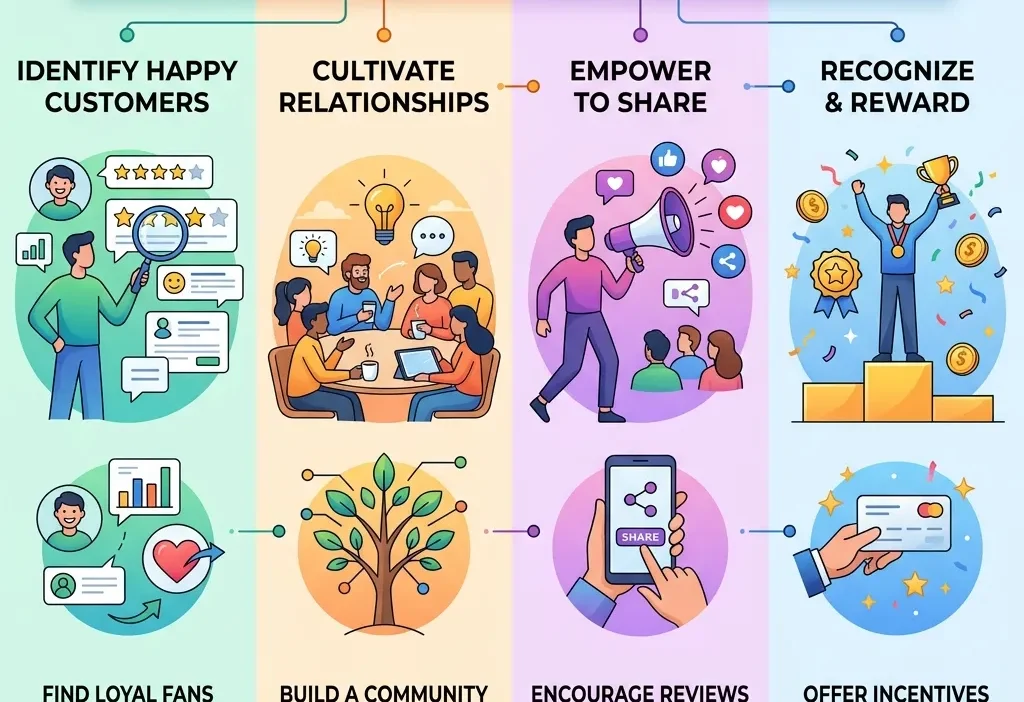
Customer advocates are satisfied and loyal customers who voluntarily promote a brand through recommendations, reviews, referrals, testimonials, social media posts, case studies, and personal conversations. They can become one of the most valuable sources of authentic word-of-mouth marketing because their recommendations are based on real customer experiences rather than traditional advertising.
Customers have more choices than ever before. They can compare products, read reviews, watch demonstrations, ask for recommendations, and research a company before making a purchase. As a result, businesses cannot rely only on advertising to convince potential customers that their products or services are worth buying.
People often trust the experiences of other customers more than promotional messages from brands.
This is where customer advocates become extremely valuable.
Customer advocates are people who have had positive experiences with a company and are willing to share those experiences with others. They may recommend a product to friends, leave a detailed review, participate in a case study, share content on social media, provide a testimonial, or refer another customer.
Unlike paid influencers, customer advocates are usually connected to a brand because of their genuine customer experience. Their advocacy can therefore provide an authentic form of social proof that supports trust, credibility, customer acquisition, and long-term growth.
Businesses can intentionally identify, support, and engage these customers through a structured advocacy program. However, successful advocacy is not simply about asking customers to promote a company. It starts with delivering a product or service that customers genuinely value and then creating opportunities for satisfied customers to share their experiences.
For businesses looking to understand the broader concept, this related guide on customer advocacy programs provides additional strategic context.
What Are Customer Advocates?
Customer advocates are existing customers who actively support and recommend a brand because they have developed a positive relationship with its products, services, or overall customer experience.
An advocate may promote a business without being directly asked to do so. They might tell a colleague about a software product, recommend a local service to a friend, post about a favorite brand on social media, or write a positive review after a successful purchase.
Customer advocacy can happen through both private and public interactions.
For example, a customer might privately recommend a product to someone they know. Another customer might publicly publish a detailed review that reaches thousands of potential buyers.
The common factor is that the recommendation comes from an actual customer experience.
Customer Advocates vs. Regular Customers
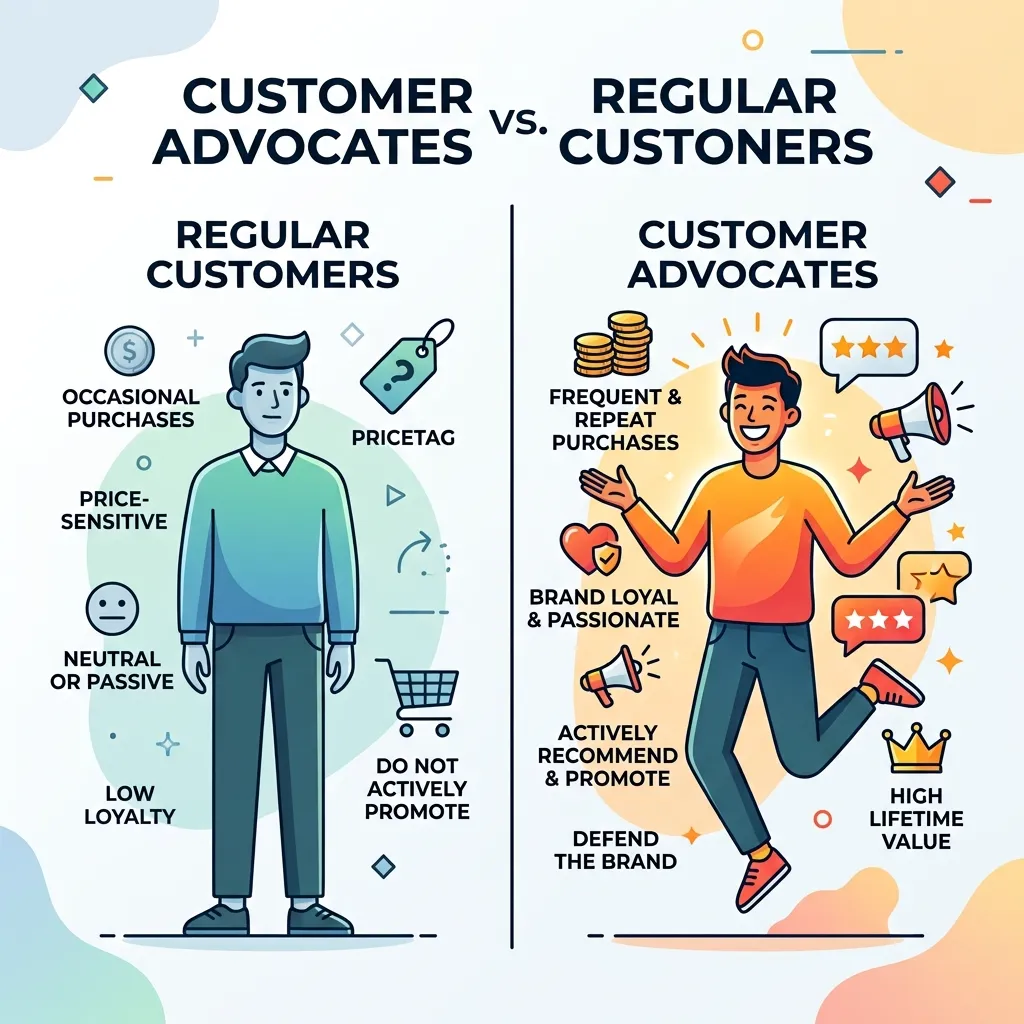
Not every satisfied customer is automatically a customer advocate.
A regular customer may purchase a product and have a positive experience without actively promoting the brand.
A customer advocate goes one step further. They are willing to use their experience to help other people discover, evaluate, or trust the brand.
The difference can be illustrated like this:
Customer: Purchases and uses the product.
Satisfied customer: Has a positive experience.
Loyal customer: Continues purchasing from the business.
Customer advocate: Actively recommends, reviews, refers, or publicly supports the brand.
This distinction is important because advocacy requires participation. A business may have thousands of satisfied customers but only a smaller group who consistently engage in advocacy activities.
Why Customer Advocates Matter for Business Growth
Customer advocacy can influence several parts of the customer journey.
They Build Trust
Modern customers are often skeptical of traditional promotional claims. A recommendation from someone who has actually used a product can feel more authentic.
For example, a software company can describe its platform as easy to use, but a customer explaining how the platform solved a real business problem provides a different type of credibility.
Customer experiences can therefore strengthen trust in ways that conventional advertising cannot always achieve.
They Create Social Proof
Social proof helps potential customers feel more confident about a purchasing decision.
Reviews, testimonials, customer stories, ratings, referrals, and user-generated content all provide evidence that other people have successfully interacted with a brand.
Businesses can strengthen this effect by creating a structured customer stories and testimonials strategy.
They Support Word-of-Mouth Marketing
Customer advocates are a natural extension of word-of-mouth marketing.
When customers share positive experiences with people they know, the brand can gain exposure without having to create every promotional interaction itself.
Word-of-mouth can happen through conversations, social media, online communities, private messages, reviews, and professional networks.
They Can Reduce Customer Acquisition Costs
Advertising can become expensive when businesses continuously need to pay to reach new audiences.
Customer advocacy creates another acquisition pathway.
For example:
Existing customer → Referral → New prospect → New customer → Potential future advocate
This cycle can gradually create a self-reinforcing growth system.
They Strengthen Brand Credibility
A business that has a large number of authentic customer stories can demonstrate real-world value rather than relying entirely on marketing claims.
This is especially important for products or services that require significant trust before purchase.
Types of Customer Advocates
Customer advocates are not all the same. Different customers may advocate for a business in different ways.
Referral Advocates
These customers recommend a company directly to friends, colleagues, family members, or professional contacts.
Referral advocates can be particularly valuable because the recommendation reaches someone who may already trust the person making it.
Review Advocates
Some customers prefer sharing their experiences through online reviews.
These reviews can influence future customers who are researching a business before purchasing.
Testimonial Advocates
Testimonial advocates provide quotes, videos, interviews, or detailed feedback that a company can use in its marketing materials.
A strong testimonial usually explains the customer’s original problem, their experience with the solution, and the outcome they achieved.
Case Study Advocates
Case study participants provide deeper stories about how they used a product or service.
These stories are particularly useful in B2B marketing because potential customers can see how a solution works in a real business environment.
Social Media Advocates
Some customers naturally share their experiences on social platforms.
They might post:
- Product photos
- Unboxing videos
- Reviews
- Tutorials
- Experiences
- Recommendations
- User-generated content
Community Advocates
Community advocates actively participate in customer groups, online communities, forums, or brand-led spaces.
They may answer questions, help new customers, and share practical experiences.
How to Identify Customer Advocates
Finding potential advocates begins with understanding customer behavior.
Businesses should look for customers who demonstrate strong satisfaction, engagement, loyalty, or enthusiasm.
Useful signals include:
- Repeated purchases
- Positive reviews
- High customer satisfaction
- Frequent product usage
- Positive survey responses
- Referral activity
- Social media mentions
- Participation in communities
- Responses to customer surveys
- High engagement with brand content
However, businesses should not assume that every highly active customer wants to participate in advocacy campaigns.
The best approach is to identify potential advocates and then invite them to participate voluntarily.
For a more detailed process, see this guide on how to find brand advocates in your customer base.
How to Build Relationships With Customer Advocates
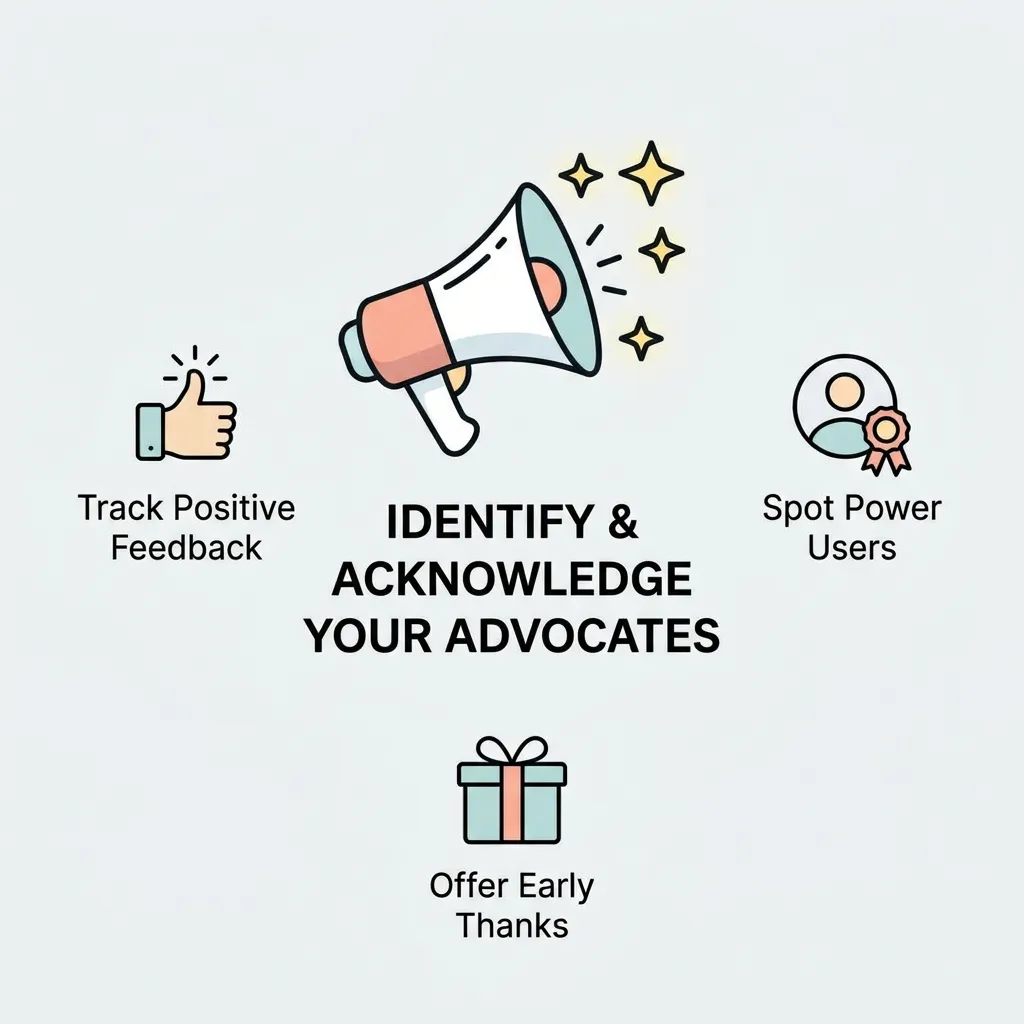
Customer advocacy starts with relationships rather than promotional requests.
Deliver a Great Customer Experience
The foundation of advocacy is customer satisfaction.
A business cannot reliably create enthusiastic advocates through rewards alone if the underlying product or service disappoints customers.
Businesses should focus on:
- Product quality
- Customer support
- Reliable communication
- Easy onboarding
- Problem resolution
- Consistent service
A positive experience gives customers a genuine reason to recommend the brand.
Recognize Loyal Customers
Customers appreciate recognition.
A company can acknowledge valuable customers through personalized messages, exclusive access, early product information, community recognition, or invitations to special events.
Recognition does not always have to involve financial rewards.
Sometimes simply making customers feel appreciated can strengthen the relationship.
Make Advocacy Easy
Customers are more likely to participate when the process requires minimal effort.
For example, if you want reviews, provide a simple review request. If you want testimonials, offer a short interview process. If you want referrals, make the referral process straightforward.
The easier the action, the more likely customers are to complete it.
Give Advocates Something Worth Sharing
People need a reason to talk about a brand.
That reason could be:
- An exceptional product
- A unique customer experience
- Useful content
- An exclusive feature
- A helpful community
- A meaningful brand mission
- A memorable event
The best advocacy programs give customers something genuinely valuable to discuss.
Customer Advocacy Programs
A customer advocacy program is a structured system designed to identify, engage, motivate, and support customers who are willing to promote a brand.
Instead of relying on spontaneous word-of-mouth alone, businesses can create organized opportunities for advocacy.
A program might include activities such as:
- Customer referrals
- Testimonials
- Product reviews
- Case studies
- Online community participation
- User-generated content
- Product feedback
- Event participation
- Social media advocacy
A well-designed program should provide value to both the company and its customers.
For a deeper framework, see this customer advocacy strategy guide.
Customer Advocate Rewards
Rewards can encourage participation, but they should be used carefully.
Possible incentives include:
- Exclusive access
- Discounts
- Loyalty points
- Product credits
- Early product access
- Event invitations
- Recognition
- Branded gifts
- Educational resources
However, businesses should avoid creating an environment where every positive recommendation feels financially motivated.
Authenticity is one of the biggest strengths of customer advocacy.
Rewards should therefore complement genuine customer enthusiasm rather than replace it.
Customer Advocates and Referral Marketing
Referral marketing and customer advocacy are closely connected, but they are not exactly the same.
Referral marketing generally focuses on encouraging customers to introduce new prospects to a business.
Customer advocacy is broader.
An advocate may refer someone, but they may also:
- Write reviews
- Create testimonials
- Share social content
- Participate in case studies
- Answer questions
- Provide product feedback
- Recommend the brand informally
Businesses can combine both approaches to create a broader customer-led growth strategy.
A structured customer referral program can turn existing customer relationships into a repeatable acquisition channel.
Customer Advocates and Brand Advocates
The terms customer advocate and brand advocate are sometimes used interchangeably, but there is a subtle distinction.
A customer advocate is specifically a customer who supports a brand based on their experience with the company’s products or services.
A brand advocate can include customers, employees, partners, community members, or other people who actively support a brand.
Therefore, customer advocacy is one important part of broader brand advocacy.
Businesses interested in expanding beyond customer advocacy can explore this complete brand advocacy strategy guide.
How to Create a Customer Advocacy Strategy
A successful strategy should be systematic rather than random.
Start With Customer Experience
Before launching an advocacy campaign, examine the customer experience.
Ask:
- Are customers satisfied?
- What problems are they solving?
- What do they appreciate most?
- Where do customers experience friction?
- Why do customers continue using the product?
The answers help identify the experiences most likely to inspire advocacy.
Segment Potential Advocates
Not every customer should receive the same advocacy request.
Segment customers based on:
- Purchase history
- Engagement
- Satisfaction
- Product usage
- Referral behavior
- Customer lifetime value
- Community participation
This makes advocacy campaigns more relevant.
Choose the Right Advocacy Actions
Different customers may prefer different activities.
Some may enjoy writing reviews, while others may prefer referrals or social media content.
Give customers multiple ways to participate.
Create a Clear Communication Process
Advocates should know:
- What you are asking them to do
- Why their participation matters
- How long the activity will take
- What they will receive in return
- How their contribution will be used
Clear communication increases participation and protects trust.
Measure and Improve
Track the results of advocacy activities and identify which approaches create the strongest business outcomes.
Then improve the program based on actual data.
Customer Advocacy in Social Media
Social media has made customer advocacy easier to see and amplify.
A single customer post can potentially reach hundreds or thousands of people.
Brands can encourage customers to share experiences by creating campaigns around:
- User-generated content
- Product stories
- Customer spotlights
- Challenges
- Community discussions
- Reviews
- Tutorials
However, brands should avoid forcing customers to make promotional content that does not reflect their genuine experience.
The goal should be to facilitate authentic sharing.
Customer Advocacy and Online Reputation
Customer advocates can play an important role in building a positive online reputation.
When customers publish positive experiences, they provide third-party evidence of the brand’s value.
Businesses should monitor:
- Reviews
- Social mentions
- Customer feedback
- Community conversations
- Referral activity
A strong advocacy strategy can work alongside online brand reputation management to strengthen overall brand perception.
How to Measure Customer Advocacy
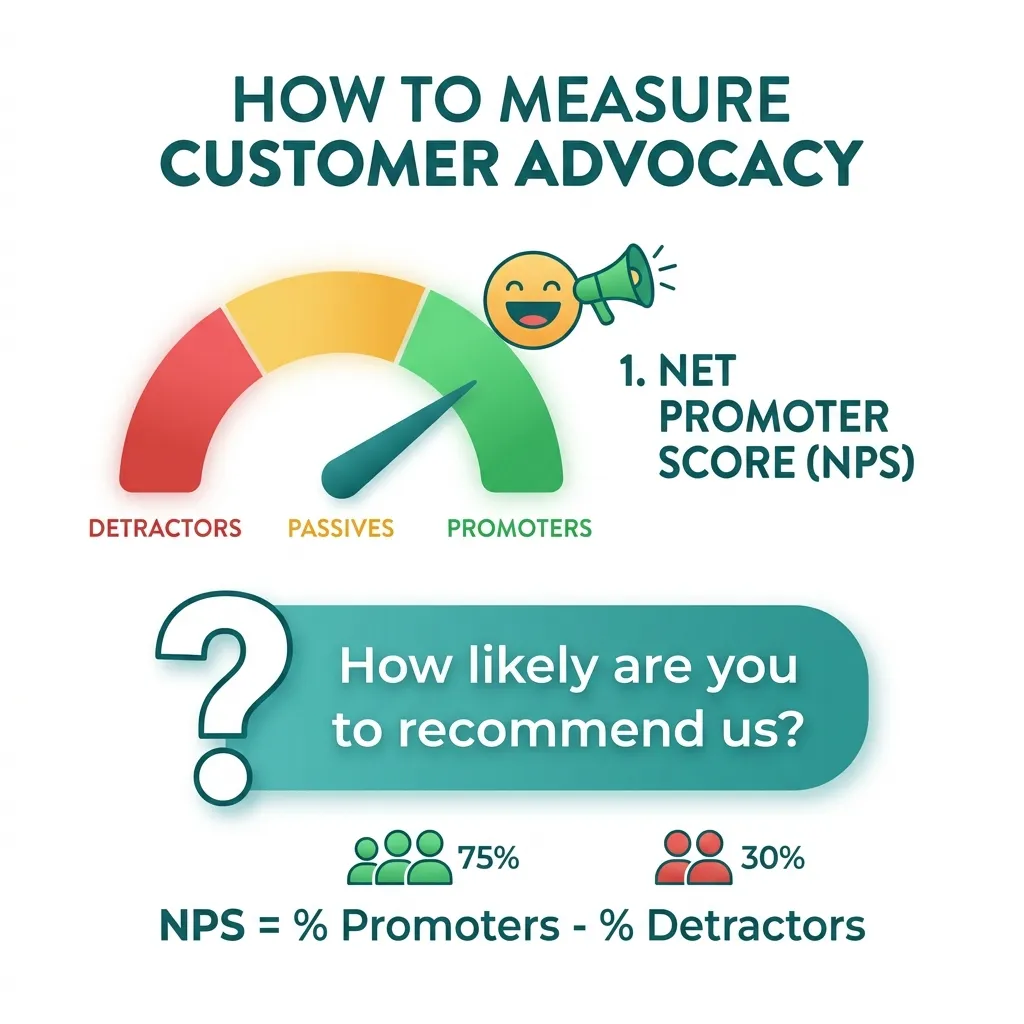
Measuring advocacy requires more than counting how many customers participate.
Referral Rate
Referral rate measures how frequently customers generate referrals.
Number of Advocates
Track the number of customers actively participating in advocacy activities.
Advocate Participation Rate
This measures how many invited customers actually complete an advocacy activity.
Customer-Generated Leads
Track how many new prospects originate from existing customer advocacy.
Conversion Rate
Measure how many referred or advocacy-generated prospects become customers.
Customer Lifetime Value
Advocacy-generated customers can be evaluated based on their long-term value, not just their initial purchase.
User-Generated Content
Track the amount and engagement of customer-created content.
Review Growth
Monitor the number, quality, and consistency of customer reviews.
For a more detailed measurement framework, see this resource on brand advocacy metrics, KPIs, and tools.
Common Customer Advocacy Mistakes
Asking Too Early
Customers need enough experience with a product before being asked to advocate.
Asking immediately after purchase may produce weak or artificial responses.
Focusing Only on Rewards
If the program depends entirely on incentives, customers may participate only for the reward.
Strong advocacy comes from genuine satisfaction.
Making Advocacy Complicated
Long forms, complicated referral systems, and unclear instructions can reduce participation.
Ignoring Negative Feedback
Not every customer experience will be positive.
Negative feedback can reveal product or service problems that need attention.
Treating Every Advocate the Same
Different advocates have different interests, motivations, and communication preferences.
Personalized engagement can produce better results.
Failing to Thank Advocates
Customers who spend time supporting a brand should feel appreciated.
A simple thank-you can strengthen the relationship.
Best Practices for Managing Customer Advocates
A strong customer advocacy program should feel like a relationship rather than a transaction.
Businesses should consistently listen to advocates, communicate transparently, recognize contributions, and provide meaningful opportunities to participate.
It is also important to close the feedback loop. If advocates provide suggestions, companies should explain how that feedback is being considered or implemented when appropriate.
This makes customers feel that their participation has real value.
Another important practice is consistency. Advocacy should not be treated as a one-time campaign. Companies can develop ongoing programs that give customers multiple opportunities to contribute throughout their relationship with the brand.
Real-World Customer Advocacy Examples
Customer advocacy can take many forms across industries.
Software Companies
A SaaS company may invite successful customers to participate in case studies explaining how its platform improved productivity.
E-Commerce Brands
An online retailer may encourage customers to submit product reviews, photos, or videos.
Professional Services
A consulting company may ask long-term clients to provide testimonials or participate in industry events.
Local Businesses
A restaurant, fitness studio, or local service provider can encourage satisfied customers to recommend the business within their community.
More examples can be found in this guide to customer advocacy examples.
Customer Advocates in the AI Era
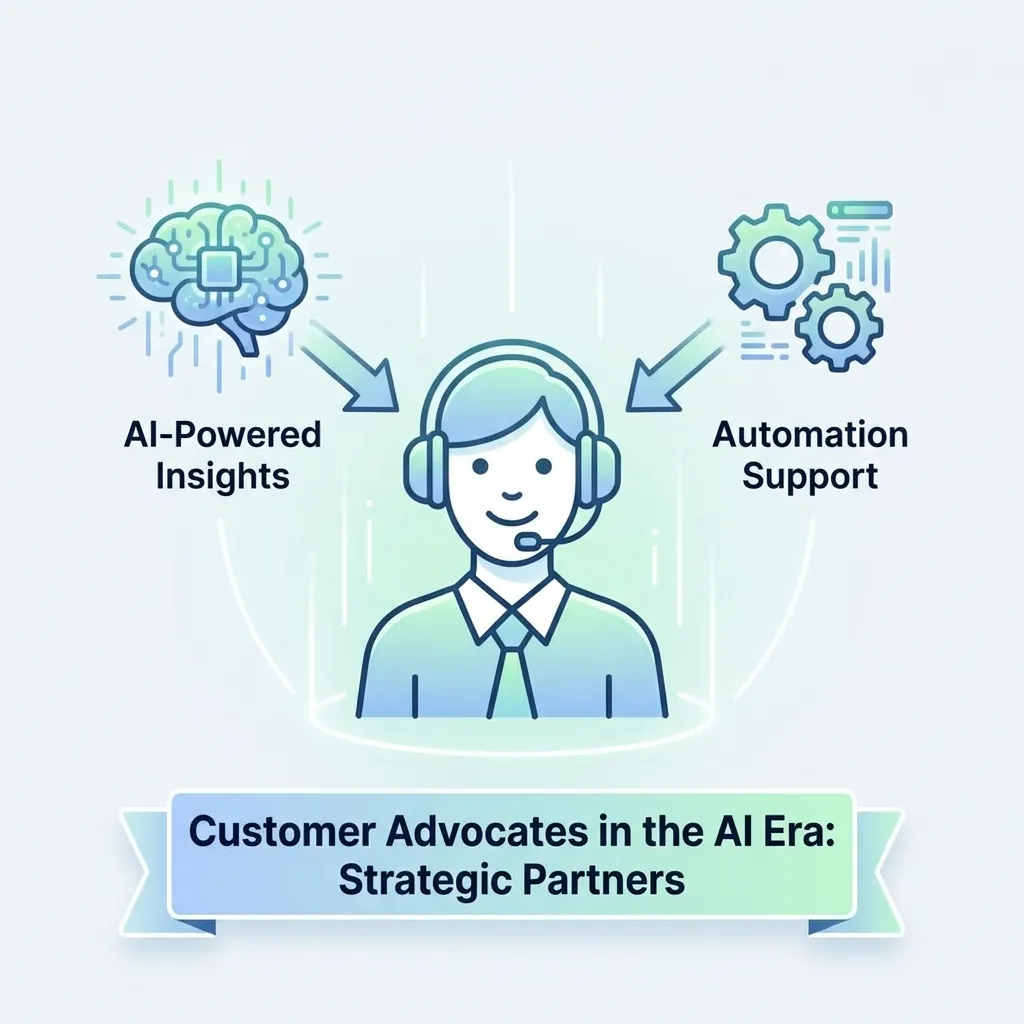
Artificial intelligence is changing how businesses identify and engage potential advocates.
AI systems can analyze customer interactions to identify patterns such as high satisfaction, repeated purchases, positive feedback, and strong engagement.
Businesses may use these insights to identify customers who are more likely to participate in advocacy activities.
AI can also support:
- Customer segmentation
- Sentiment analysis
- Personalized communication
- Review analysis
- Recommendation systems
- Advocacy campaign optimization
However, AI should support the relationship rather than make advocacy feel automated.
Customers are more likely to become genuine advocates when they feel understood and valued.
The Future of Customer Advocacy
Customer advocacy is likely to become increasingly important as consumers continue to research brands through reviews, communities, social media, recommendations, and peer experiences.
Businesses will have more opportunities to turn customer experiences into marketing assets, but authenticity will remain critical.
Future advocacy programs are likely to combine customer communities, personalized engagement, referral systems, user-generated content, AI-powered customer insights, and stronger loyalty experiences.
The companies that succeed will not simply ask customers to promote them. They will create experiences that naturally give customers something worth recommending.
Conclusion
Customer advocates can become one of the most powerful assets in a modern marketing strategy. They provide authentic recommendations, strengthen social proof, support referrals, generate customer stories, and help potential buyers feel more confident about choosing a brand.
However, effective advocacy does not begin with a referral request or reward. It begins with a strong customer experience.
Businesses should identify satisfied customers, understand what motivates them, make advocacy easy, recognize their contributions, and provide multiple ways to participate. Referral programs, testimonials, reviews, case studies, user-generated content, and customer communities can all become important parts of the strategy.
Most importantly, customer advocacy should remain authentic. When customers genuinely believe that a product or service has delivered value, their recommendations can become far more persuasive than traditional promotional messages.
By building long-term relationships with these customers, businesses can create an advocacy engine that supports trust, loyalty, acquisition, and sustainable growth.
Frequently Asked Questions
1. What are customer advocates?
Customer advocates are satisfied customers who voluntarily support and recommend a brand through referrals, reviews, testimonials, social media, case studies, recommendations, or other forms of advocacy.
2. What is the difference between a customer and a customer advocate?
A customer purchases and uses a product or service. A customer advocate actively supports the brand and is willing to share their positive experience with other people.
3. Why are customer advocates important?
Customer advocates can increase trust, strengthen social proof, generate referrals, create authentic content, and support customer acquisition through word-of-mouth recommendations.
4. How do you find customer advocates?
Businesses can identify potential advocates by analyzing customer satisfaction, reviews, repeat purchases, engagement, referrals, social mentions, product usage, and community participation.
5. What motivates customer advocates?
Motivations vary. Some customers advocate because they genuinely love a product, while others appreciate recognition, exclusive access, rewards, community participation, or the opportunity to help others.
6. Do customer advocates need to be paid?
No. Customer advocates can participate voluntarily. Businesses may offer rewards or recognition, but genuine customer satisfaction should remain the foundation of advocacy.
7. What can customer advocates do for a business?
They can provide referrals, reviews, testimonials, case studies, social media content, user-generated content, product feedback, community support, and personal recommendations.
8. How do customer advocates help with word-of-mouth marketing?
They share real experiences with friends, colleagues, communities, and online audiences. These recommendations can introduce new prospects to a brand through trusted relationships.
9. How can businesses build a customer advocacy program?
Start by improving customer experience, identifying satisfied customers, segmenting potential advocates, choosing suitable advocacy activities, creating simple participation processes, recognizing contributors, and measuring results.
10. How should customer advocacy be measured?
Useful metrics include advocate participation, referral rate, customer-generated leads, conversion rate, review growth, user-generated content, advocate retention, and revenue generated from advocacy activities.
11. Are customer advocates the same as influencers?
Not necessarily. Influencers generally have an established audience and may work with brands commercially. Customer advocates are primarily customers whose recommendations are based on their real experiences with a brand.
12. Can small businesses benefit from customer advocates?
Yes. Customer advocacy can be particularly valuable for small businesses because recommendations, reviews, referrals, and local word-of-mouth can help build credibility without requiring a large advertising budget.
[…] you want a deeper breakdown of who these advocates are and how they behave, our complete guide to customer advocates covers the topic in […]