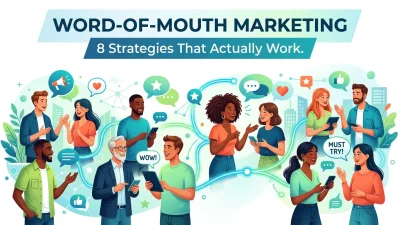
In the digital landscape, voice search and word-of-mouth marketing are reshaping how consumers discover brands. With smart speakers and virtual assistants becoming everyday tools, people now use spoken, conversational queries instead of typed searches. This shift creates a powerful link between voice-driven discovery and trusted recommendations, helping businesses reach the modern conversational consumer.
Nearly half of smartphone users rely on voice assistants for quick answers and reliable suggestions. Unlike traditional searches, these spoken queries feel more natural and closely resemble asking a friend for advice. By combining SEO with referral-based strategies, brands can better position themselves to appear in these voice-driven moments. This post explores how Voice Search and WOM work together to enhance visibility, improve local discovery, and turn everyday voice queries into meaningful brand recommendations.
The Rise of Conversational Discovery
Voice-activated devices have proliferated in homes and pockets, driven by advances in natural language processing and increasing consumer comfort with hands-free interactions. According to a report by the Pew Research Center (pewresearch.org), more than 50 percent of U.S. adults have used voice assistants in the past month, and smart speaker penetration continues to grow. At the same time, data from the National Institute of Standards and Technology (nist.gov) highlights significant improvements in speech recognition accuracy, making voice search more reliable than ever.
Today’s voice queries tend to be longer, more conversational, and often local in intent. Instead of typing “bakery Brooklyn,” users ask, “Hey Siri, where can I find the best vegan bakery near me?” This full-sentence style mirrors the way people speak when seeking referrals from friends or family, reinforcing the natural synergy between voice search and word-of-mouth marketing. Conversational discovery hinges on quick, authoritative answers that address immediate needs while reflecting local relevance.
For businesses, understanding this pattern is critical. By analyzing voice search data, brands can uncover the precise language consumers use when asking about products, services, or experiences. Tools that surface question-based, long-tail keywords reveal the phrases customers speak aloud. These insights guide content creation, inform FAQ development, and shape website architecture to meet users on their conversational turf.
In today’s data-driven environment, companies that embrace conversational discovery reap benefits across visibility, trust, and foot traffic. When your brand consistently appears as the single answer to a spoken query, you inherit the endorsement that the consumer expects from a friend’s recommendation. This foundational advantage sets the stage for deeper word-of-mouth engagement and long-term loyalty.
How Voice Search Supercharges Word-of-Mouth Marketing

Trust is the cornerstone of word-of-mouth marketing. Voice assistants replicate this dynamic by providing a single authoritative answer, often influenced by reviews, relevance, and structured data. This mirrors principles found in social proof in word-of-mouth marketing, where credibility drives conversion. Voice assistants replicate this dynamic by sourcing answers from authoritative review sites, knowledge panels, and reputable local directories. When an assistant responds with your brand as the definitive solution, it confers an implicit seal of approval and streamlines the decision-making process.
Key Advantages of Voice-Driven Referrals
- Enhanced Visibility: Securing the position as the top voice result is akin to landing the prime recommendation slot among peer referrals.
- Accelerated Trust: A concise, authoritative answer reduces choice overload and invites immediate action.
- Local Relevance: With over 60 percent of voice searches centered on “near me” queries, voice search aligns perfectly with local word-of-mouth and in-store visits.
By capturing that single-answer spot, your business moves from being one option among many to the go-to choice. This preferential treatment multiplies organic referrals as users confidently share your brand by name: “I asked Alexa for a reliable plumber, and this company came up first.” That simple testimonial carries greater weight because it references hands-free convenience and the authority of voice technology.
Moreover, voice search simplifies the referral path. Instead of manually searching, reading reviews, and comparing options, consumers receive an immediate, curated recommendation. This streamlined journey mirrors the directness of a one-on-one referral, reducing friction and boosting conversion rates. In today’s fast-paced world, speed and ease of access are as valuable as authenticity, making voice search a powerful accelerator for word-of-mouth marketing.
Ultimately, integrating voice search with traditional advocacy programs amplifies reach. Each time an assistant confidently endorses your brand, it reinforces existing customer relationships and invites new leads, weaving a conversational fabric of trust and loyalty.
Crafting Content for Conversational Queries

To capitalize on voice search and word-of-mouth marketing, content must align with natural language patterns and deliver precise, authoritative answers. Traditional keyword strategies should expand to include question-based, long-tail phrases that mirror spoken inquiries. Here’s how to structure your content for conversational impact.
1. Conduct Natural-Language Keyword Research
Leverage specialized tools that identify “who, what, where, when, why, and how” queries related to your products or services. Focus on long-tail variants such as “How do I reset my smart thermostat via voice?” or “Where can I find sustainable office supplies in Chicago?” Mapping these questions to user intent ensures your content addresses specific needs and boosts your chances of appearing in voice search answers.
2. Develop FAQ-Style and How-To Content
Create dedicated FAQ pages or blog entries organized around the conversational queries uncovered during research. Use clear <h3> subheadings that state the user’s question verbatim, followed by concise paragraphs that deliver direct answers. This format not only improves readability but also aligns with schema markup protocols, increasing visibility in rich snippets and voice snippets.
3. Implement Structured Data Markup
Applying schema.org tags such as FAQPage, Question, Answer, and LocalBusiness helps search engines parse your content and surface precise answers. Proper markup can feed voice assistants the exact text they need to provide accurate, concise responses, elevating your brand in both textual and spoken search results.
By focusing content on conversational queries and leveraging structured data, you position your site as a trusted resource. This not only enhances your performance in voice search but also fuels organic word-of-mouth as advocates share valuable, voice-friendly resources with their networks.
Engaging Advocates with Voice-Activated Features

Beyond tailoring content for voice queries, brands can deepen word-of-mouth marketing by embedding interactive voice experiences that reward and mobilize advocates. These features create memorable touchpoints, encouraging users to share and recommend your brand organically.
Brands can deepen word-of-mouth marketing by embedding interactive voice experiences that reward and mobilize advocates. This is similar to strategies explored in micro-advocacy strategies, where small-scale engagements compound into large-scale brand influence.
1. Develop a Branded Voice App or Skill
Design an Alexa Skill or Google Action that complements your loyalty program. For example, allow customers to check reward balances through simple voice commands, access exclusive tips, or receive personalized product suggestions. Integrating referral prompts within the skill—such as automated voice-driven invitation codes—encourages users to tell friends, “Ask my brand how to unlock a discount.” This approach transforms the voice interface into a channel for viral word-of-mouth amplification.
2. Facilitate Hands-Free Reviews
Satisfied customers are more likely to leave feedback if the process is effortless. Encourage reviews via voice commands—”Hey Google, leave a review for [Your Business Name].” This frictionless method increases the volume of authentic testimonials, feeding both your review profiles and voice search algorithms that prioritize well-reviewed local businesses.
3. Interactive Voice Promotions
Host voice-driven quizzes, polls, or mini-games that educate customers about your products and invite them to share results on social media. By integrating social sharing options within the voice experience, you tap into networks of friends and followers, extending the reach of your word-of-mouth campaigns.
These voice-activated engagement strategies not only reinforce brand loyalty but also create shareable moments. When users tell friends, “I just used my brand’s voice skill to reorder in seconds,” they become brand ambassadors, driving organic referrals in a highly credible format.
Local SEO and Measuring Voice-Driven WOM Success
Since a significant share of voice searches is location-based, optimizing local SEO is essential for capturing conversational queries and fueling foot traffic. Concurrently, tracking voice-driven referrals ensures you can quantify the impact of your word-of-mouth efforts.
Optimizing for Local Voice Queries
- Google Business Profile: Regularly update your listing with accurate name, address, phone number, hours, and service areas. Include high-quality images and invite check-ins via QR codes to boost engagement.
- NAP Consistency: Ensure that your business information is identical across all directories, citations, and website footer to improve voice assistant confidence in your listing.
- Localized Content: Publish blog posts about community events, local partnerships, and nearby customer success stories. This signals relevance for neighborhood-specific voice queries.
Tracking Voice-Driven Referrals
- Voice Search Impressions: Monitor queries triggering your content using Google Search Console, filtering for voice-optimized pages.
- Local Pack Rankings: Use rank-tracking tools with local filters to see how often you appear in “near me” results.
- Referral Codes: Issue unique promo codes via your voice app or skill and track usage to quantify word-of-mouth conversions.
- Advocate Engagement Metrics: Analyze voice app installs, skill reviews, and repeat interactions to measure customer enthusiasm and retention.
By combining local SEO best practices with rigorous analytics, you can gauge the return on investment of both voice search optimization and word-of-mouth marketing. This data-driven approach enables continuous refinement of your conversational strategies.
Frequently Asked Questions
How can I optimize my site for voice search?
Focus on natural-language, question-based keywords and implement structured data markup (e.g., FAQPage schema) so voice assistants can easily parse and present your content.
What tools help identify conversational keywords?
Specialized SEO tools like AnswerThePublic, SEMrush’s Keyword Magic, and Google’s People Also Ask can surface long-tail, spoken-style queries relevant to your audience.
How do voice-activated features enhance word-of-mouth marketing?
Branded voice apps and skills deliver interactive, shareable experiences—like hands-free referrals and reviews—that reward advocates and encourage organic social sharing.
How can I track voice-driven referrals locally?
Use unique promo or referral codes issued through your voice skill, monitor Local Pack rankings, and analyze voice search impressions in Google Search Console to measure local engagement.
What is Voice Search and WOM marketing?
Voice Search and WOM (word-of-mouth) marketing is the strategy of combining voice-activated search optimization with referral-based marketing to increase brand visibility and trust.
Why is voice search important for modern SEO?
Voice search is important because users now ask full conversational questions, requiring brands to optimize content for natural language queries and direct answers.
How does voice search influence word-of-mouth marketing?
Voice assistants often provide a single recommended answer, which acts like a trusted referral, similar to a personal recommendation from a friend.
What types of queries are common in voice search?
Most voice queries are long-tail, question-based, and local, such as “near me” searches or how-to questions.
How can businesses optimize for voice search?
Businesses can optimize by using conversational keywords, structured data (schema markup), FAQ content, and local SEO strategies.
What role does local SEO play in Voice Search and WOM?
Local SEO ensures your business appears in “near me” voice searches, helping drive foot traffic and increasing local word-of-mouth exposure.
How does structured data help with voice search?
Structured data helps search engines understand your content clearly, increasing the chances of being selected as a voice search answer.
What is conversational discovery?
Conversational discovery refers to how users find information using natural spoken language through voice assistants instead of typed searches.
How can brands encourage voice-driven word-of-mouth referrals?
Brands can create voice apps, encourage voice reviews, and offer referral incentives through voice assistant interactions.
How do voice assistants build trust in recommendations?
Voice assistants provide a single, concise answer from trusted sources, which creates an impression of authority and reliability.
How can businesses track voice search performance?
They can use Google Search Console, local ranking tools, and referral codes from voice apps to measure performance and conversions.
What is the biggest benefit of combining Voice Search and WOM?
The biggest benefit is increased trust and visibility, as voice search amplifies recommendations and turns them into instant, actionable referrals.
Conclusion
In today’s digital landscape, voice search and word-of-mouth marketing have emerged as complementary forces for reaching the conversational consumer. By understanding the rise of natural language queries, optimizing content with question-based keywords and structured data, and engaging advocates through interactive voice features, brands can secure that coveted top voice result and amplify referrals. Prioritizing local SEO ensures your business is front and center for location-based searches, while tracking voice-driven referral codes and impressions provides clear insights into campaign performance. Embrace this synergy, speak your customers language literally, and watch as every spoken question becomes an opportunity to extend trust, drive foot traffic, and grow your brand through authentic word-of-mouth.
Voice search and word-of-mouth marketing are now deeply interconnected forces shaping modern discovery. By optimizing for conversational queries, building strong advocacy systems, and aligning with strategies like those in best word-of-mouth marketing tools, brands can secure greater visibility and trust.