Word of mouth marketing is the process of getting customers to talk about and recommend your brand. The most effective strategies include referral programs, influencer partnerships, shareable content, exceptional customer experiences, and active community building. These tactics work because people trust recommendations from peers far more than traditional ads.
People have always trusted their friends more than they trust commercials. A recommendation from someone you know carries weight that no billboard, banner ad, or paid placement can match. That instinct sits at the heart of word of mouth marketing—and it’s exactly why smart brands invest in it.
According to Nielsen research, 88% of consumers trust recommendations from people they know more than any other form of advertising. That trust translates directly into sales, loyalty, and long-term growth. When a customer raves about your product to a colleague, you gain a new lead without spending a cent on media.
This guide breaks down the word of mouth marketing strategies that actually move the needle. You’ll learn proven techniques, see how referral and influencer programs fit together, and discover how to track the impact of organic buzz. By the end, you’ll have a practical playbook for turning happy customers into vocal advocates.
What is word of mouth marketing and why does it matter?
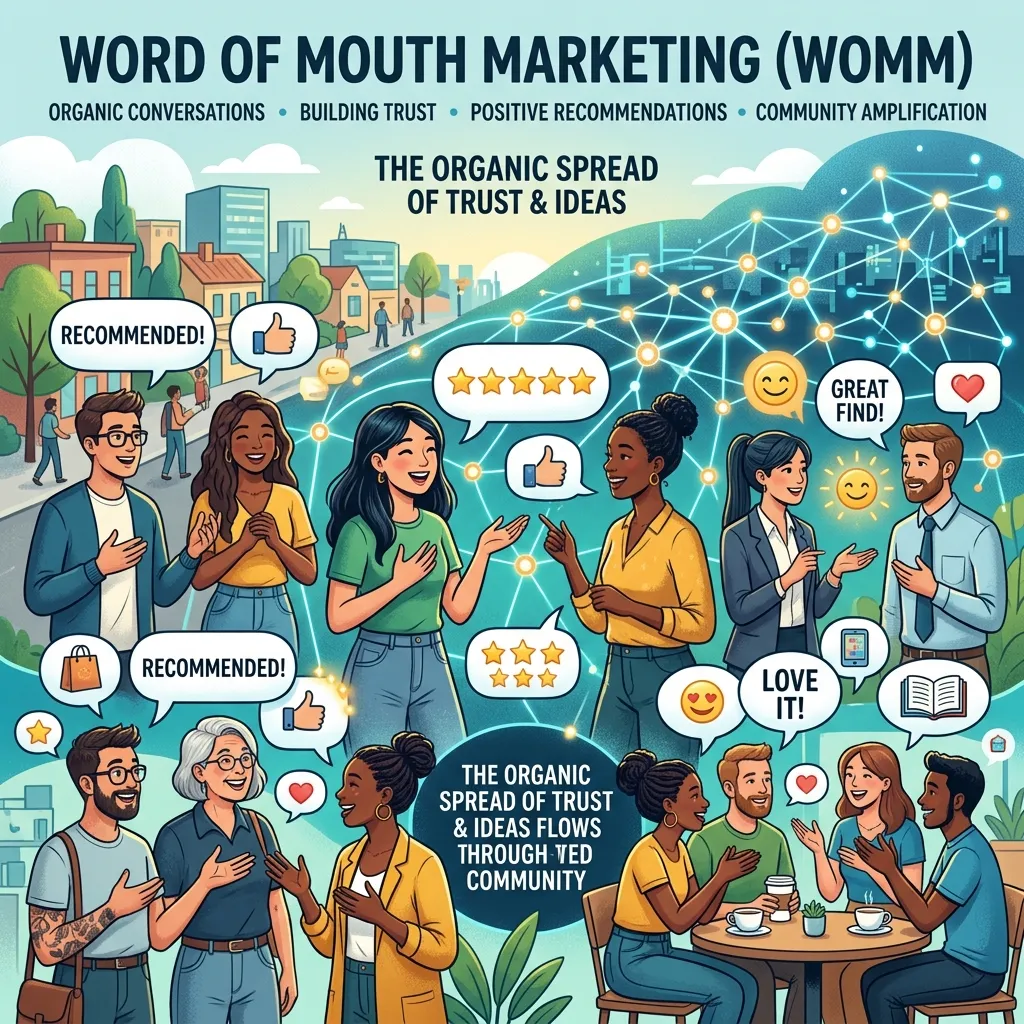
Word of mouth marketing (WOM) is any strategy that encourages people to share their experiences with a brand, product, or service. These conversations can happen in person, over text, or across social media platforms. The goal is simple: get customers talking, and make sure they have something good to say.
WOM matters because it builds on trust that brands can’t manufacture on their own. A study by the Wharton School of Business found that referred customers have a 16% higher lifetime value than non-referred customers. They also tend to stick around longer and refer others, creating a compounding effect.
Unlike paid advertising, word of mouth doesn’t switch off when your budget runs dry. A single great experience can spark recommendations for months. That’s what makes it one of the most cost-effective marketing channels available to businesses of any size.
Word of mouth marketing (WOM) is any strategy that encourages people to share their experiences with a brand. Today, digital ecosystems amplify this effect, especially through channels like social proof in word of mouth marketing.
What are the most effective word of mouth marketing techniques?
The best WOM techniques share one thing in common: they give people a genuine reason to talk. You can’t force authentic conversation, but you can create the conditions that make it likely.
Encouraging memorable experiences is essential, especially when combined with modern engagement tactics like gamified word of mouth campaigns.
Deliver experiences worth talking about
The foundation of every word of mouth strategy is a product or service that exceeds expectations. Customers rarely mention an experience that was merely fine. They talk about the unexpected—the surprise upgrade, the handwritten thank-you note, the support agent who solved their problem in minutes.
Focus on the moments that surprise and delight. A small gesture, like remembering a returning customer’s name or including a free sample, can turn an ordinary transaction into a story worth sharing.
Encourage user-generated content
User-generated content (UGC) is one of the most scalable forms of word of mouth. When customers post photos, reviews, or videos featuring your brand, they’re vouching for you to their entire network.
Make it easy and rewarding to share. Branded hashtags, photo-friendly packaging, and simple contests all nudge customers toward posting. Then amplify the best content by reposting it on your own channels, which encourages others to join in.
Build a referral loop
A structured referral program turns satisfied customers into active recruiters. We’ll cover this in detail below, but the core idea is to reward people for bringing in new business—creating a steady, repeatable source of warm leads.
How do customer referral marketing strategies work?
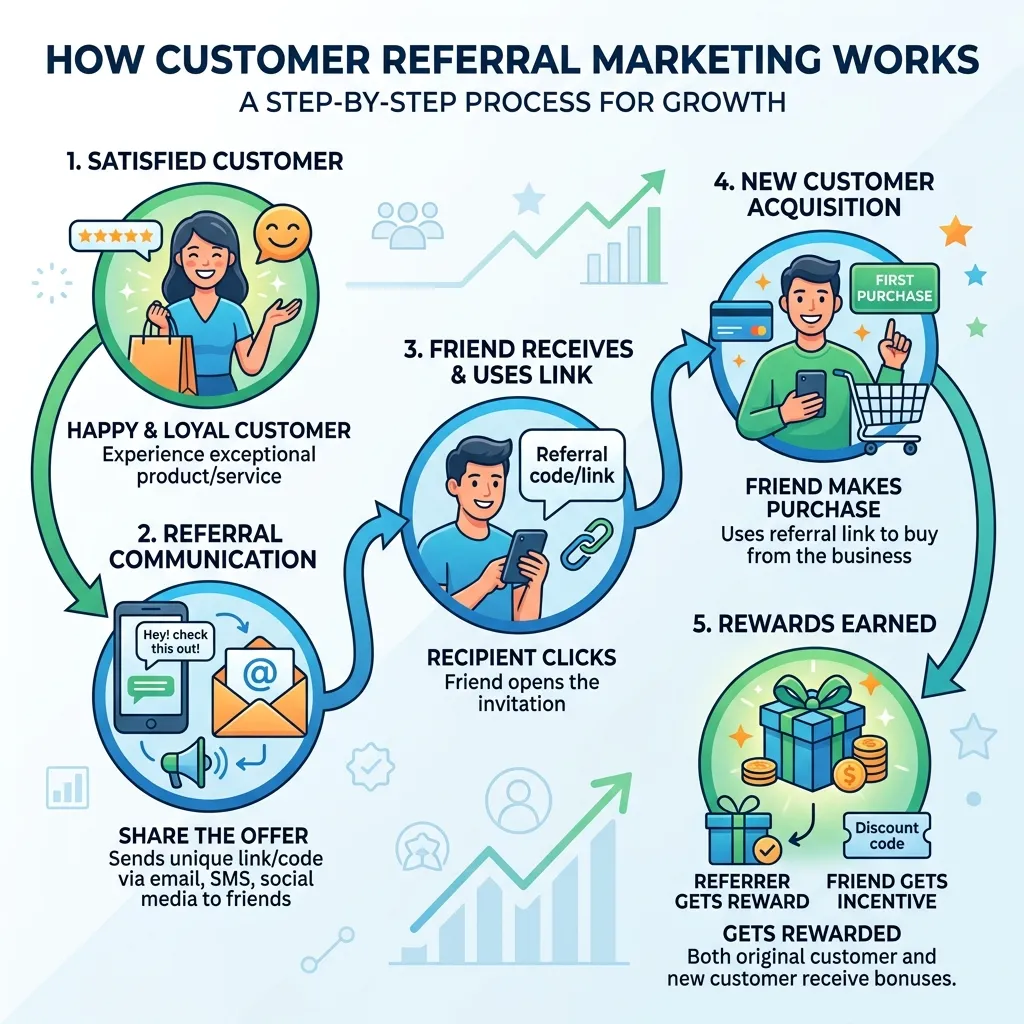
Customer referral marketing rewards existing customers for introducing new ones. Done well, it transforms casual recommendations into a measurable growth engine.
The most successful referral programs use a two-sided incentive: both the referrer and the new customer receive a reward. Dropbox famously used this model, offering free storage to both parties. The program helped Dropbox grow its user base by 3,900% in 15 months, according to the company’s own reporting.
To build an effective referral program, keep these principles in mind:
- Make the reward meaningful. The incentive should feel worth the effort of sharing. Cash, credit, discounts, or exclusive perks all work, depending on your audience.
- Reduce friction. A referral should take seconds. Pre-written messages, one-click sharing, and personalized links remove barriers.
- Time the ask well. Invite customers to refer right after a positive experience, like a successful purchase or a glowing review.
- Track and reward promptly. Slow or unclear rewards kill momentum. Confirm referrals quickly and deliver incentives without delay.
Choose a referral program over a one-off discount campaign if you want sustained, compounding growth rather than a short-term sales spike.
How does influencer-driven word of mouth marketing work?
Influencer marketing is word of mouth at scale. Many brands now compare approaches using frameworks like influencer vs word of mouth marketing differences. Instead of relying on individual customers, you partner with people who already have the trust and attention of a large audience.
The key is authenticity. Audiences can spot a forced endorsement instantly, and a mismatched partnership can damage both the brand and the influencer. The most effective collaborations feel like a genuine recommendation rather than a paid plug.
Micro-influencers vs. mega-influencers
Bigger isn’t always better. Micro-influencers—creators with 1,000 to 100,000 followers—often deliver higher engagement rates than celebrities with millions of followers. Their audiences tend to be tightly knit and highly trusting.
Choose micro-influencers if niche relevance and engagement matter more than sheer reach. Choose larger influencers if your goal is broad awareness and you have the budget to support it.
Make partnerships authentic
Give influencers creative freedom to present your product in their own voice. Provide the product, share key talking points, and then step back. The content that resonates most reflects the creator’s real personality, not a script written by your marketing team.
What are the best viral and buzz marketing strategies?
Viral marketing aims to create content so compelling that people share it without being asked. Buzz marketing focuses on generating excitement and conversation around a specific moment, launch, or campaign.
Both rely on emotion. Research from Wharton professor Jonah Berger found that content evoking high-arousal emotions—awe, excitement, amusement, even anger—is far more likely to be shared than neutral content.
Here are tactics that fuel buzz:
- Tap into emotion. Make people laugh, surprise them, or move them. Emotional content spreads.
- Create something remarkable. A bold campaign, an unexpected product feature, or a clever stunt gives people a reason to talk.
- Leverage timing. Tie campaigns to trends, holidays, or cultural moments while interest is high.
- Make sharing effortless. Build sharing into the experience with one-tap buttons, embeddable content, and mobile-friendly formats.
Buzz marketing carries risk. Campaigns designed to provoke can backfire if they cross a line, so weigh the upside against potential brand damage before launching anything edgy.
What are the most effective online word of mouth marketing tactics?
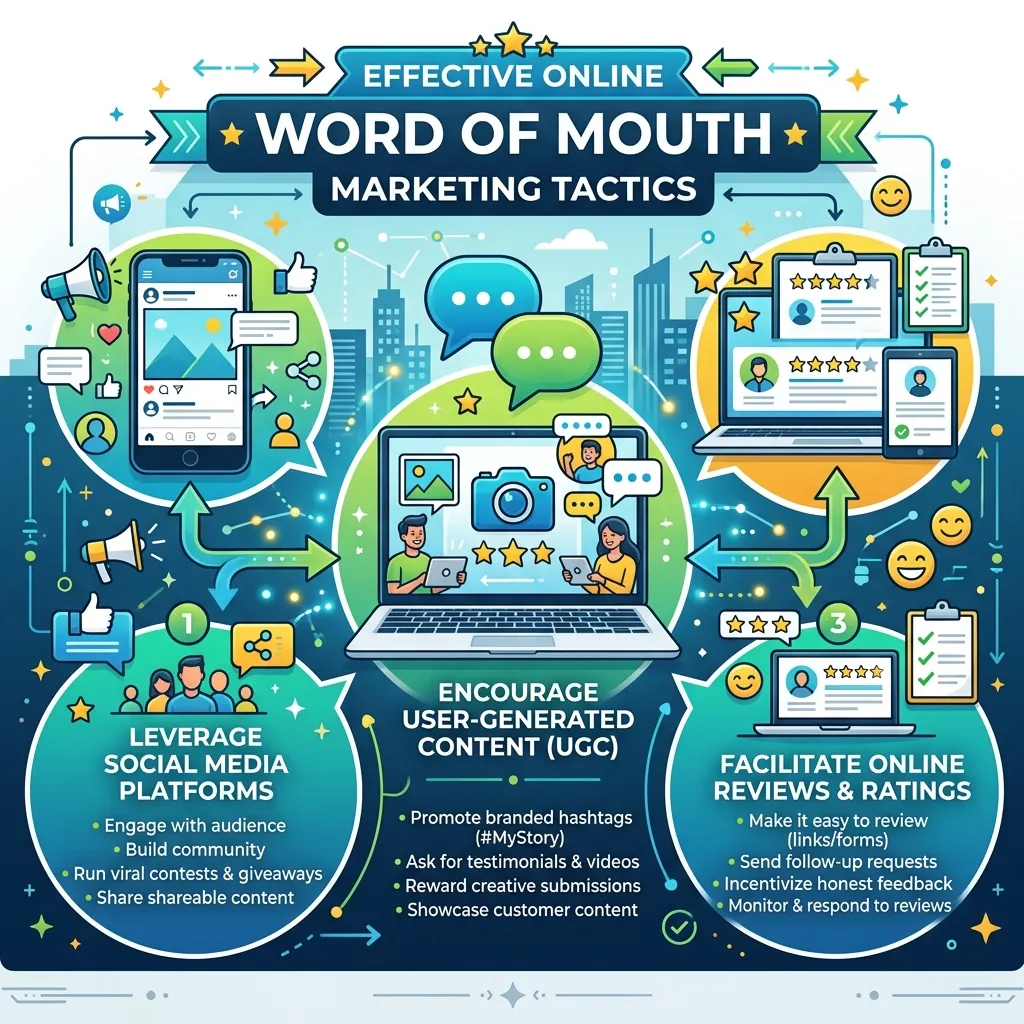
The internet has supercharged word of mouth. A single review, tweet, or post can reach thousands of people in minutes. Online WOM tactics focus on capturing and amplifying these digital conversations.
Collect and showcase reviews
Online reviews are modern word of mouth. According to BrightLocal’s 2023 survey, 98% of consumers read online reviews for local businesses. Actively request reviews after a purchase, respond to every review (positive and negative), and feature your best testimonials prominently on your site.
Build community
Branded communities—on platforms like Facebook, Discord, Reddit, or your own forum—give advocates a home base. Members share tips, answer each other’s questions, and spread the word organically. A thriving community turns customers into a self-sustaining marketing force.
Engage on social media
Respond to mentions, join relevant conversations, and treat your social channels as two-way streets. When a brand replies thoughtfully to a customer post, it signals that real people are listening—and that encourages more people to engage.
How does word of mouth impact consumer trust?
Trust is the currency of word of mouth, and the relationship runs both ways. Recommendations build trust, and trust generates more recommendations.
Consider the numbers. Nielsen reports that 88% of people trust personal recommendations above all other advertising. Meanwhile, a study by the Spiegel Research Center found that displaying reviews can increase conversion rates by up to 270%.
This trust effect explains why WOM outperforms traditional advertising on a dollar-for-dollar basis. People filter out ads instinctively, but they lean in when a friend, family member, or trusted creator vouches for something. Every authentic recommendation chips away at the skepticism that surrounds paid marketing.
How do you turn customers into brand advocates?
Brand advocacy is the highest form of word of mouth. Advocates don’t just recommend you once—they champion your brand repeatedly and defend it to others.
Building advocacy takes more than a good product. It requires ongoing engagement and a sense of belonging:
- Reward loyalty. Recognize and celebrate your most active customers with exclusive perks, early access, or public shout-outs.
- Create a feedback loop. Ask for input, act on it, and tell customers how their feedback shaped your decisions. People advocate for brands that listen.
- Give advocates a platform. Feature customer stories, invite them to events, or create an ambassador program. Spotlighting advocates deepens their commitment.
- Stay consistent. Trust erodes quickly with broken promises. Deliver reliably, every time, to keep advocates on your side.
Invest in a formal advocacy or ambassador program if you already have a loyal base eager to spread the word. If you’re still building that base, focus first on the customer experience that creates advocates in the first place.
Putting your word of mouth strategy into action
Word of mouth marketing isn’t a single tactic—it’s the natural result of doing right by your customers and giving them easy, rewarding ways to talk about it. Start with an experience worth sharing, then layer on referral programs, influencer partnerships, and online engagement to amplify the conversation.
Begin small. Pick one or two strategies that fit your business and audience, measure what happens, and expand from there. Track referral rates, review volume, social mentions, and customer lifetime value to see what’s working. Over time, these efforts compound into a powerful, low-cost growth engine built on the most persuasive force in marketing: genuine human trust.
The brands that win at word of mouth are the ones that earn it. Focus on creating moments customers can’t wait to share, and the conversations will follow.
Frequently asked questions
How much does word of mouth marketing cost?
Word of mouth marketing can range from nearly free to a significant investment, depending on your approach. Encouraging reviews and UGC costs little beyond staff time. Referral programs require funding for incentives, while influencer partnerships can range from free product gifting to large paid contracts. The strong return on investment, driven by higher trust and customer lifetime value, makes WOM cost-effective across budgets.
How long does it take to see results from word of mouth marketing?
Timelines vary by tactic. A viral campaign can generate buzz within days, while building a community or advocacy base often takes months. Referral programs typically show measurable results within a few weeks of launch. Word of mouth tends to compound over time, so the longer you sustain your efforts, the stronger the returns.
What are the biggest risks of word of mouth marketing?
The main risk is loss of control. Because customers and creators shape the message, negative experiences can spread just as fast as positive ones. Inauthentic influencer partnerships or buzz campaigns that misfire can also damage trust. Mitigate these risks by delivering consistent quality, responding quickly to criticism, and choosing partners who align with your values.
Who benefits most from word of mouth marketing?
Word of mouth marketing benefits businesses of all sizes, but it’s especially valuable for startups and small businesses with limited ad budgets. It also works well for brands with passionate communities or highly shareable products. Companies that prioritize customer experience tend to see the strongest results.
How do you measure word of mouth marketing success?
Track metrics such as referral rates, review volume and ratings, social media mentions, branded hashtag usage, and net promoter score (NPS). Customer lifetime value and the percentage of new customers who arrive through referrals also reveal how effectively your word of mouth efforts drive growth.
What is word of mouth marketing?
Word of mouth marketing is a strategy that encourages customers to share positive experiences about a brand with others, helping drive organic promotion and trust-based growth.
Why is word of mouth marketing important?
It is important because people trust personal recommendations more than ads, making it one of the most effective ways to increase brand awareness and sales.
What are the best word of mouth marketing strategies?
The best strategies include referral programs, influencer partnerships, user-generated content, community building, and delivering exceptional customer experiences.
How does word of mouth marketing help businesses grow?
It helps businesses grow by generating trusted recommendations that attract new customers without high advertising costs.
What is a referral program in word of mouth marketing?
A referral program rewards existing customers for bringing new customers, turning satisfied users into active promoters of the brand.
How do influencers help in word of mouth marketing?
Influencers expand word of mouth reach by sharing authentic product recommendations with their engaged followers.
What role does customer experience play in word of mouth marketing?
A strong customer experience encourages people to naturally share positive feedback and recommend the brand to others.
How can social media improve word of mouth marketing?
Social media amplifies word of mouth by allowing customers to share reviews, posts, and experiences with a larger audience instantly.
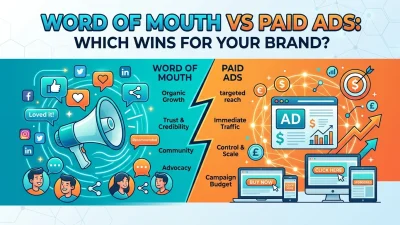
Is word of mouth marketing better than paid advertising?
It can be more effective in building trust and long-term loyalty, while also being more cost-efficient than traditional advertising.
How do you measure word of mouth marketing success?
Success can be measured through referral rates, online reviews, social mentions, and customer satisfaction scores like NPS.
Can small businesses use word of mouth marketing effectively?
Yes, small businesses often benefit the most because strong customer relationships naturally lead to more referrals and organic growth.