A referral marketing strategy turns happy customers into active promoters by rewarding them for introducing your brand to others. The best programs combine clear incentives, simple sharing tools, and great timing—often delivering higher-quality leads at a lower cost than paid ads.
People trust their friends more than they trust your marketing. That’s the simple truth behind referral marketing. When someone you know recommends a product, you’re far more likely to buy it than if you’d seen the same product in an ad. Nielsen research has long shown that recommendations from people we know are among the most trusted forms of advertising.
This guide breaks down how to build a referral marketing strategy that actually works. You’ll learn how to design incentives people care about, how to launch a referral system without a huge budget, and how to keep improving it over time. We’ll also cover real campaign examples, the difference between affiliate and referral marketing, and the tactics that help a program spread on its own.
Whether you run a scrappy startup or an established brand, the principles here apply. The goal is the same: get your best customers talking, and reward them for it.
What is a referral marketing strategy?

A referral marketing strategy is a structured plan for encouraging existing customers to recommend your product or service to others, usually in exchange for a reward. Instead of paying for clicks or impressions, you pay for results—a new customer who arrives with built-in trust.
The foundation of this approach is deeply connected to social proof in word-of-mouth marketing, where people rely on trusted recommendations before making decisions.
This approach taps into something money can’t easily buy: social proof. A referral comes pre-loaded with credibility because it’s delivered by someone the new customer already trusts. That’s why referred customers tend to convert faster, spend more, and stick around longer.
The strategy works across nearly every industry, from software and fashion to banking and food delivery. The mechanics shift, but the foundation stays the same—make it easy and worthwhile for customers to spread the word.
Why word-of-mouth marketing still wins
Word-of-mouth marketing is the engine behind every great referral program. It’s the natural conversation that happens when someone loves what you offer and tells a friend about it. A referral strategy simply gives that conversation a nudge and a reward.
Modern businesses amplify this effect using customer stories and testimonials strategies, which turn satisfied users into visible proof of value.
Here’s why it’s so powerful:
- Trust is built in. A recommendation from a friend carries weight that no ad can match.
- It’s cost-effective. You spend money only when a referral converts, which protects your budget.
- The leads are better. Referred customers often match your ideal profile because your existing customers tend to know people like themselves.
- It compounds. Each new happy customer becomes a potential source of more referrals.
The challenge is that word-of-mouth doesn’t always happen on its own. People get busy, forget, or simply don’t think to share. A well-built referral system removes that friction and gives customers a clear reason to act.
Customer referral program ideas to get you started
Not every referral program needs to look the same. The right format depends on your audience, your margins, and what motivates your customers. Here are several ideas worth testing:
Double-sided rewards
Both the referrer and the new customer get something. For example, “Give $20, get $20.” This feels fair and removes the awkwardness of asking a friend to buy something purely for your benefit. Double-sided rewards are popular because they motivate both people in the exchange.
Tiered rewards
The more friends a customer refers, the bigger the reward. A customer might earn a small discount for one referral, free shipping for three, and a premium gift for ten. Tiers keep your most enthusiastic advocates engaged over time.
Charitable referrals
Instead of a personal reward, the referrer triggers a donation to a cause. This works well for brands with a strong mission and customers who care about social impact.
Exclusive access
Offer early access to new products, members-only content, or VIP events. For some audiences, status and exclusivity beat a straight discount.
Points-based programs
Referrals earn points that customers can redeem for products, upgrades, or perks. This pairs naturally with an existing loyalty program.
How to create a referral system step by step

Building a referral system doesn’t require a massive budget. It requires a clear plan. Here’s a straightforward process to follow.
Step 1: Set a clear goal
Decide what success looks like. Are you chasing new sign-ups, more sales, or higher retention? Your goal shapes every other decision, from the incentive to the messaging.
Step 2: Choose the right incentive
Pick a reward that matters to your customers without eating your margins. Cash and store credit work well for purchases, while exclusive perks suit premium brands. Test a couple of options to see what drives the most action.
Step 3: Make sharing effortless
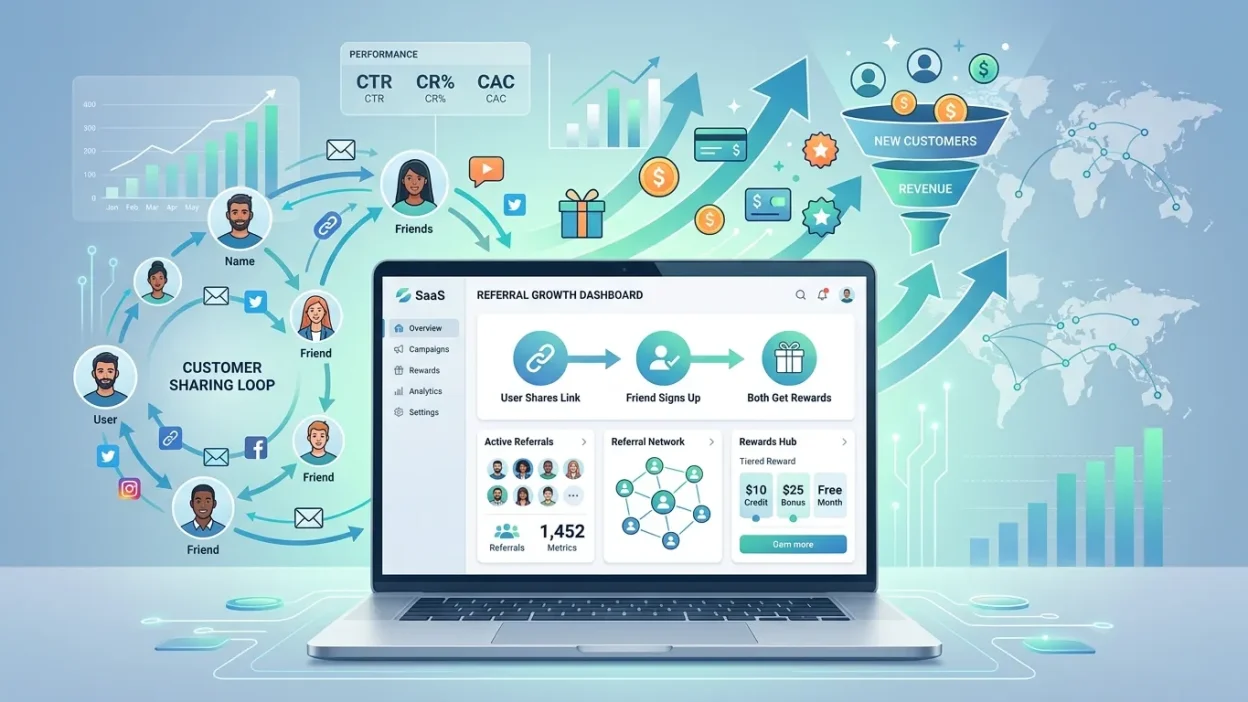
Friction kills referrals. Give customers a one-click way to share—a unique link, a pre-written message, or a simple email invite. The fewer steps involved, the more people will follow through.
Step 4: Pick the right moment to ask
Timing matters more than most brands realize. Ask for a referral right after a positive experience: a successful purchase, a five-star review, or a happy support interaction. That’s when goodwill is highest.
Step 5: Track and reward reliably
Use a referral tool or platform to track who referred whom and to deliver rewards automatically. Nothing sours a program faster than a customer who refers a friend and never receives their reward.
Referral marketing techniques for business growth
Once your system is live, a few proven techniques can boost its impact.
Promote it everywhere. A referral program only works if people know it exists. Mention it in your emails, on your website, inside your app, and on social media. Add a reminder to post-purchase pages and order confirmations.
Personalize the ask. A generic “refer a friend” banner gets ignored. A message that names the customer and references their recent purchase feels far more relevant.
Create urgency. Limited-time bonuses—”Refer two friends this month for a double reward”—can spark a wave of activity from customers who’d otherwise put it off.
Celebrate your advocates. Thank customers who refer often. A personal note, a surprise gift, or public recognition makes them feel valued and keeps them sharing.
What makes the best referral incentive programs work
The best referral incentive programs share a few traits. They offer rewards that feel genuinely valuable, they keep the process simple, and they deliver on their promises quickly.
When choosing an incentive, consider these guidelines:
- Match the reward to the price point. A $5 reward won’t excite someone buying a $2,000 product. Scale the incentive to the purchase value.
- Choose cash or credit when in doubt. Monetary rewards are easy to understand and widely appealing.
- Use experiential rewards for premium brands. If your customers value status, an exclusive event or early access can outperform a discount.
- Keep redemption simple. A reward that’s hard to claim feels like no reward at all.
Choose monetary incentives if broad appeal and simplicity matter most. Choose exclusive or experiential rewards if your brand sells on prestige and your customers value belonging over discounts.
Referral marketing campaign examples that inspired millions
Some of the most famous growth stories in business were powered by referrals.
Dropbox offered free storage space to both the referrer and the new user. The double-sided reward fit the product perfectly—more space is exactly what Dropbox users wanted. The program helped the company grow rapidly without heavy ad spend.
PayPal famously paid early users cash to invite friends. While expensive, the strategy seeded a massive user base quickly and established PayPal as a default payment option.
Airbnb gave travel credit to both the referrer and the friend who signed up and booked a stay. The reward connected directly to the core experience: more travel.
The common thread? Each reward tied back to the product’s core value. That alignment is what made these campaigns spread.
Customer advocacy marketing: turning fans into a movement

A referral program is one part of a bigger idea: customer advocacy marketing. This strategy focuses on identifying your most passionate customers and giving them ways to champion your brand.
Advocacy goes beyond a single referral. It includes reviews, testimonials, social media shout-outs, user-generated content, and community participation. Your advocates become an extension of your marketing team—except their recommendations carry more trust than anything you could say yourself.
To build advocacy, start by spotting your happiest customers. Look at repeat buyers, five-star reviewers, and people who already mention you online. Then give them a reason and a way to share, whether through a referral program, an ambassador group, or simple thank-you gestures that make them feel seen.
Viral referral marketing tactics that spread on their own
Viral referral marketing happens when each new customer brings in more than one additional customer, creating a chain reaction. Reaching that point is hard, but a few tactics improve your odds.
- Lower the effort to share. The easier it is to pass along, the more it spreads. Pre-filled messages and one-tap sharing help.
- Make the reward instant. Immediate gratification fuels sharing. Waiting weeks for a reward dampens enthusiasm.
- Build sharing into the product. When using your product naturally involves others—like invites, collaboration, or splitting a bill—referrals happen organically.
- Add a social element. Public leaderboards or shareable milestones can turn referring into a fun, competitive activity.
Virality is never guaranteed. But removing friction and rewarding speed gives your program the best chance to take off.
What’s the difference between affiliate and referral marketing?
Affiliate and referral marketing are often confused, but they serve different purposes.
This distinction is explained in detail in brand advocacy vs affiliate marketing differences, which highlights how each model impacts customer acquisition differently.
Referral marketing relies on existing customers recommending your brand to people they know. The motivation is usually a reward or genuine enthusiasm, and the relationship is personal. Referrers are your customers first.
Affiliate marketing relies on partners—often bloggers, influencers, or websites—who promote your product to their audience in exchange for a commission. Affiliates may never have used your product, and their motivation is primarily financial.
In short: referrals come from happy customers, while affiliates come from paid partners. Many brands run both. Choose referral marketing if you want to amplify customer trust and word-of-mouth. Choose affiliate marketing if you want to reach new audiences through established publishers and creators.
Referral program optimization tips for the long run
Launching a program is just the start. The brands that win keep refining theirs.
- Track the right metrics. Watch referral rate, conversion rate, and the lifetime value of referred customers. These numbers tell you what’s working.
- Test your incentives. Try different rewards and see which drives more action. A small change can have a big effect.
- Simplify the steps. Review your sharing flow regularly and cut any step that isn’t essential.
- Refresh the messaging. Even a great program goes stale. Update your copy, visuals, and offers to keep it feeling new.
- Ask for feedback. Survey customers who referred and those who didn’t. Their answers reveal what to fix.
Treat your referral program as a living system, not a one-time launch. Small, steady improvements compound over time.
Turning customers into your best marketers
A strong referral marketing strategy does something paid advertising can’t—it puts your growth in the hands of the people who already love what you do. When you make sharing easy, reward it fairly, and ask at the right moment, your customers become a steady source of high-quality, trusting new buyers.
Start small. Pick one referral program idea, set a clear goal, and launch a simple version you can improve over time. Track your results, listen to your customers, and refine as you go. The compounding power of word-of-mouth will do the rest.
Frequently asked questions
How much does it cost to start a referral program?
Costs vary widely. You can launch a basic program for free using manual tracking and store credit as the reward. Dedicated referral software typically ranges from modest monthly fees for small businesses to higher tiers for larger operations. Your biggest variable cost is the incentive itself, which you pay only when a referral converts.
How long does it take to see results from a referral program?
Most programs begin generating referrals within the first few weeks, but meaningful growth often takes two to three months. This window lets you gather data, test incentives, and refine your messaging. Referral marketing rewards patience and continuous optimization.
Who should use referral marketing?
Referral marketing works best for brands with satisfied customers and a product people enjoy recommending. It’s especially effective for subscription services, e-commerce stores, and software companies. If your customers already talk about you, a referral program will amplify those conversations.
What’s the biggest mistake brands make with referral programs?
The most common mistake is making the program hard to find or hard to use. If customers don’t know it exists or face too many steps to share, the program stalls. Promote it widely and keep the sharing process as simple as possible.
Is referral marketing better than paid advertising?
For many brands, referral marketing delivers higher-quality leads at a lower cost because referred customers arrive with built-in trust. That said, the two work well together. Paid ads can drive initial awareness, while referrals turn satisfied customers into a sustainable growth channel.
What is a referral marketing strategy and how does it work?
A referral marketing strategy is a system that encourages existing customers to recommend your business to others in exchange for rewards or incentives.
Why is a referral marketing strategy important for business growth?
A referral marketing strategy is important because it builds trust-driven leads, increases conversions, and reduces customer acquisition costs.
How do I create an effective referral marketing strategy?
To build a strong referral marketing strategy, define your goal, choose an incentive, simplify sharing, and promote the program across all customer touchpoints.
What makes a referral marketing strategy successful?
A successful referral marketing strategy focuses on simple sharing, valuable rewards, and timely customer engagement after a positive experience.
What are the best incentives for a referral marketing strategy?
The best referral marketing strategy incentives include discounts, cash rewards, store credit, and exclusive perks that motivate customers to share.
How does a referral marketing strategy generate leads?
A referral marketing strategy generates leads by turning satisfied customers into brand advocates who bring in highly trusted new customers.
Can small businesses use a referral marketing strategy effectively?
Yes, a referral marketing strategy works well for small businesses because it relies on word-of-mouth and requires a low marketing budget.
What tools help manage a referral marketing strategy?
Tools like referral software platforms help track referrals, automate rewards, and manage a referral marketing strategy efficiently.
How do I promote my referral marketing strategy?
You can promote a referral marketing strategy through email campaigns, social media, website banners, and post-purchase messages.
What mistakes should I avoid in a referral marketing strategy?
Common mistakes in a referral marketing strategy include unclear rewards, complicated sharing steps, and poor communication with customers.