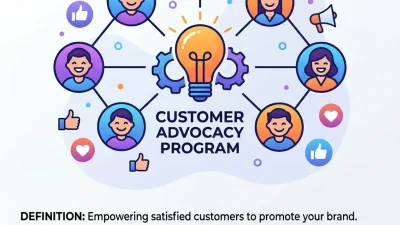
A strong customer advocacy strategy turns satisfied customers into active supporters who share experiences, recommend your brand, provide testimonials, and influence potential buyers. This guide explains how to build a customer advocacy strategy, identify advocates, create advocacy programs, motivate participation, measure results, and avoid common mistakes.
What Is a Customer Advocacy Strategy?
A customer advocacy strategy is a structured approach to encouraging satisfied customers to voluntarily support, recommend, and promote a brand based on their genuine experiences.
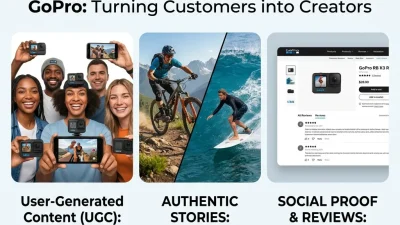
Instead of relying only on traditional advertising, businesses use customer relationships to generate authentic forms of promotion. These can include referrals, reviews, testimonials, case studies, social media mentions, user-generated content, event participation, and product recommendations.
The key idea is simple: help successful customers become confident voices for your brand.
Customer advocacy is different from simply asking every customer to promote a product. Effective advocacy starts with delivering a valuable customer experience. When customers receive consistent value and feel connected to a company, they are more likely to share their experiences with others.
A successful strategy therefore connects several areas:
- Customer satisfaction
- Customer experience
- Brand trust
- Community engagement
- Referrals
- Reviews and testimonials
- User-generated content
- Customer feedback
- Loyalty and retention
Businesses can also learn more about the broader concept through this customer advocacy strategy guide.
Why Is Customer Advocacy Important?
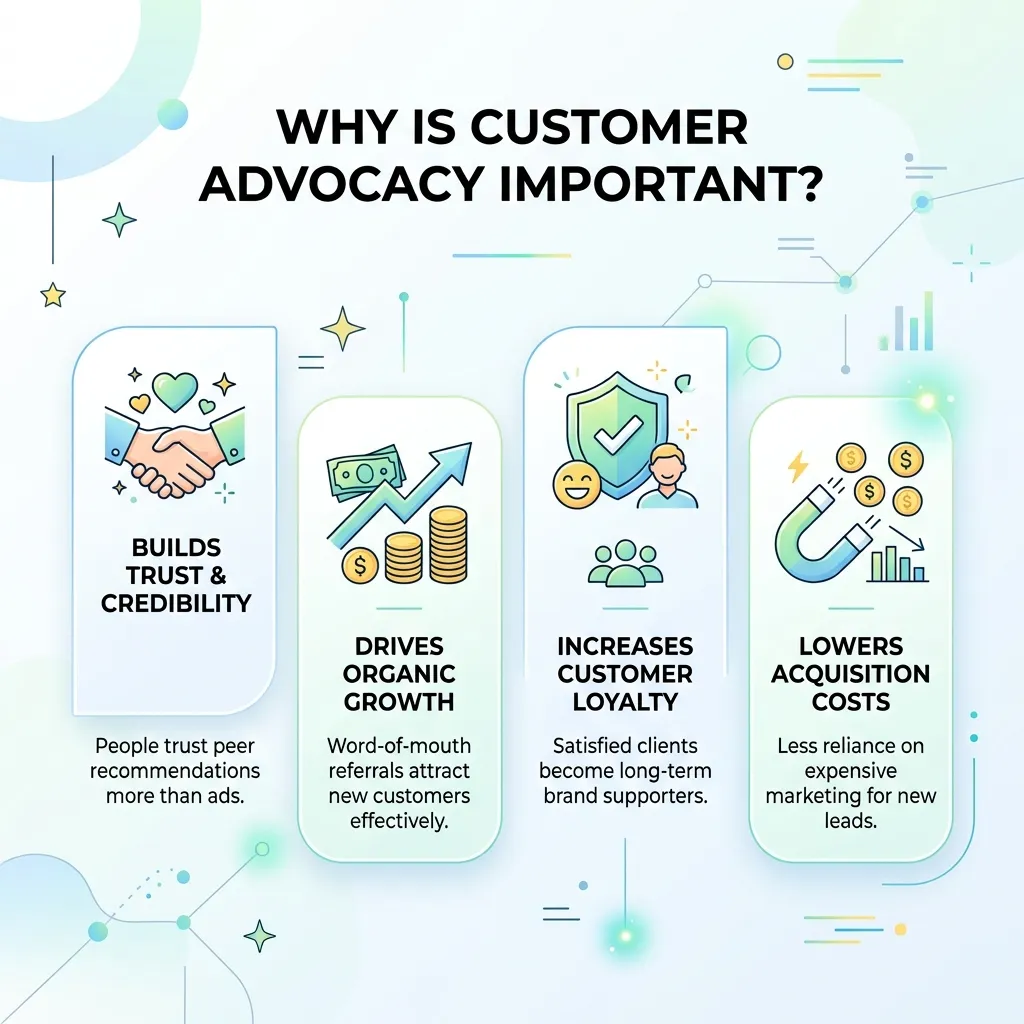
Traditional advertising tells potential customers what a company wants them to know. Customer advocacy allows real customers to share what they actually experienced.
That distinction can make advocacy particularly valuable during the consideration and decision-making stages of the buyer journey.
Builds Trust
Customers often want evidence that a product or service can deliver what a company promises. Reviews, testimonials, case studies, and recommendations can provide social proof from people who have actually interacted with the brand.
Trust becomes even more important when customers are comparing multiple providers.
Generates Authentic Word-of-Mouth
Customer advocacy can create organic conversations around a brand. A customer who recommends a product to a colleague, posts about an experience, or shares a success story can introduce the brand to a new audience.
This makes advocacy closely connected with word-of-mouth marketing.
Supports Customer Acquisition
Advocates can help businesses reach potential buyers without depending entirely on paid acquisition channels.
For example, a satisfied customer might:
- Recommend the product to a friend.
- Share a referral link.
- Publish a positive review.
- Participate in a case study.
- Mention the company on social media.
Each activity can contribute to new customer discovery.
Strengthens Customer Relationships
Advocacy should not be viewed only as an acquisition tactic. It can also deepen relationships with existing customers.
When businesses recognize customers, invite them into communities, ask for feedback, and give them meaningful opportunities to participate, customers can feel more connected to the brand.
Customer Advocacy Strategy vs. Customer Loyalty
Customer loyalty and customer advocacy are related, but they are not identical.
Customer loyalty generally describes a customer’s willingness to continue buying from a company.
Customer advocacy goes a step further. An advocate actively supports the brand by recommending it, sharing experiences, creating content, participating in programs, or influencing other potential customers.
For example:
| Customer behavior | Loyalty | Advocacy |
|---|---|---|
| Makes repeat purchases | ✓ | Possible |
| Renews subscription | ✓ | Possible |
| Leaves a review | Sometimes | ✓ |
| Refers a friend | Sometimes | ✓ |
| Shares brand content | Sometimes | ✓ |
| Provides a testimonial | Rarely | ✓ |
| Participates in a case study | Rarely | ✓ |
A loyal customer can become an advocate, but loyalty alone does not guarantee advocacy.
How to Build a Customer Advocacy Strategy
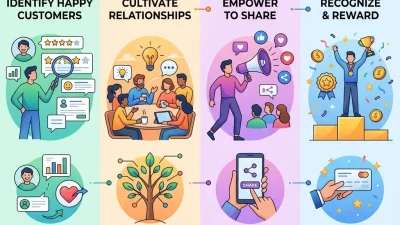
Creating a sustainable advocacy strategy requires more than launching a referral campaign. You need to understand your customers, identify potential advocates, create valuable participation opportunities, and measure the results.
1. Define Your Advocacy Goals
Start by deciding what you want customer advocacy to accomplish.
Your goals could include:
- Increasing referrals
- Generating more reviews
- Collecting testimonials
- Increasing user-generated content
- Improving brand awareness
- Building a customer community
- Increasing retention
- Generating qualified leads
- Increasing customer lifetime value
Make the objectives measurable.
For example, instead of saying:
“We want more customer advocates.”
Set a measurable objective such as:
“Generate 100 qualified customer referrals within six months.”
Specific objectives make it easier to evaluate whether your customer advocacy strategy is working.
2. Understand Your Best Customers
Not every customer will immediately become an advocate.
Start by analyzing existing customers and identifying people who demonstrate strong engagement.
Look for customers who:
- Frequently use your product
- Have achieved measurable results
- Give positive feedback
- Leave reviews
- Interact with your brand online
- Participate in your community
- Refer other customers
- Engage with emails or events
- Have been customers for a meaningful period
Customer satisfaction surveys can also help identify people who are likely to recommend your business.
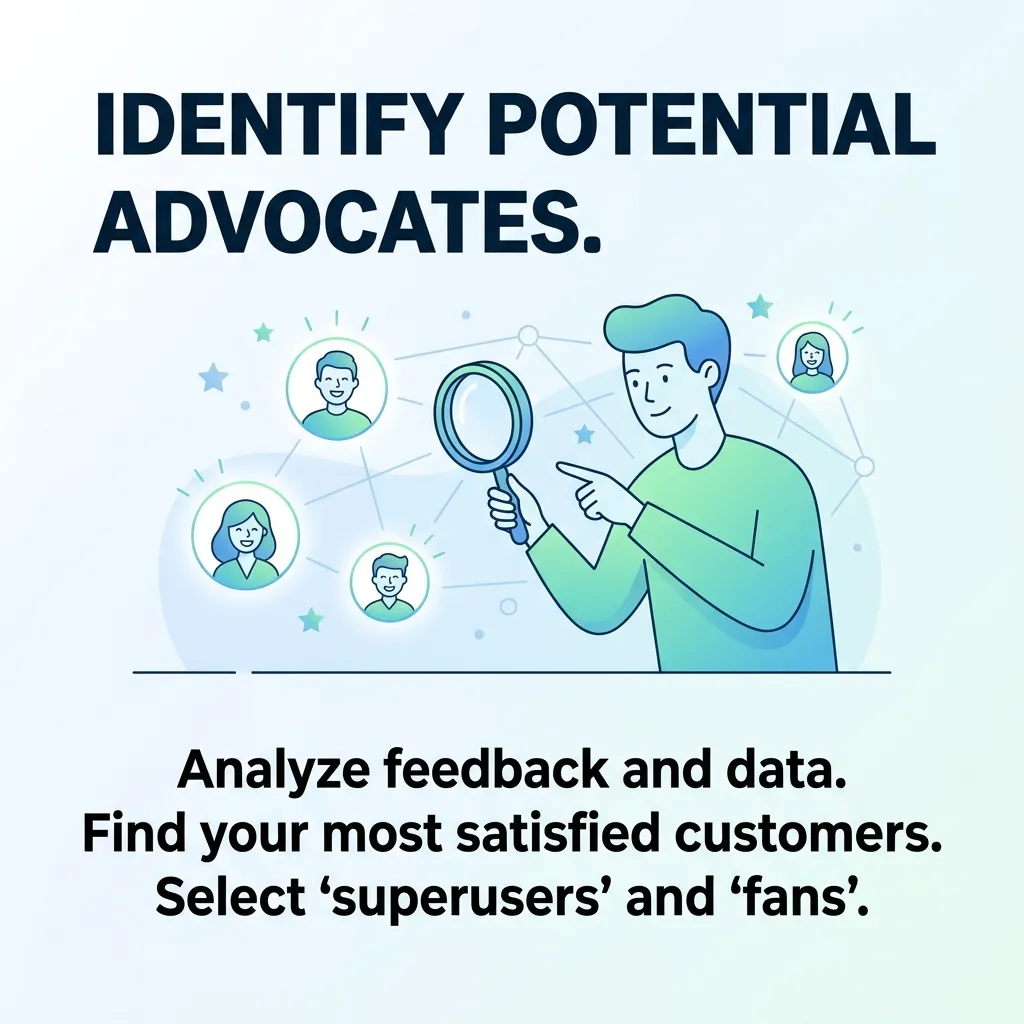
3. Identify Potential Customer Advocates
Once you understand your customer base, create an advocate profile.
Potential advocates often demonstrate a combination of:
High satisfaction + strong engagement + positive outcomes + willingness to participate
However, avoid assuming that every highly satisfied customer wants public recognition. Some customers may prefer private referrals or feedback rather than social media promotion.
Personalized outreach is therefore more effective than sending the same request to everyone.
4. Create Different Advocacy Opportunities
Give customers multiple ways to participate.
Not every advocate wants to write a long testimonial. Some may prefer making a referral, answering a survey, joining an event, or sharing a social post.
Your program can include:
Reviews
Ask customers to honestly review their experience on relevant platforms.
Testimonials
Invite successful customers to share their experience in written, audio, or video formats.
Referrals
Create a simple process that allows customers to recommend your business to people they know.
Case Studies
Turn successful customer experiences into detailed stories showing the problem, solution, and outcome.
User-Generated Content
Encourage customers to create photos, videos, posts, tutorials, or other content featuring their genuine experience.
Community Participation
Invite advocates to answer questions, participate in discussions, or support other members of your customer community.
Events
Give loyal customers opportunities to join webinars, panels, workshops, or customer-only events.
5. Make Advocacy Easy
One of the biggest mistakes companies make is creating too much friction.
If a customer needs to complete a complicated form, wait for multiple approvals, and follow a long set of instructions, participation will probably decline.
Make every advocacy action simple.
For example:
Complicated process:
Customer → form → email → approval → upload → confirmation
Better process:
Customer → one clear request → simple submission
Provide clear instructions and explain exactly what you need.
6. Give Customers a Reason to Participate
Not every advocacy activity needs a financial reward.
Customers can participate because they:
- Want recognition
- Enjoy helping others
- Want to share expertise
- Like being part of a community
- Want early access
- Appreciate exclusive experiences
- Want to influence product development
- Feel connected to the brand
For some activities, appropriate rewards can increase participation.
Possible incentives include:
- Discounts
- Loyalty points
- Early product access
- Exclusive content
- Event invitations
- Recognition
- Gift cards
- Community status
- Product credits
However, rewards should never encourage customers to provide dishonest or misleading opinions.
The Federal Trade Commission emphasizes that endorsements should be truthful and not misleading, and material connections between marketers and endorsers may need clear disclosure.
7. Build a Customer Advocacy Program
A formal customer advocacy program can organize your strategy at scale.
A typical program may include:
Advocate identification → invitation → onboarding → advocacy activities → recognition → measurement
Your program should define:
- Who qualifies
- What advocates can do
- How customers are invited
- What rewards are available
- What content can be submitted
- How contributions are reviewed
- How advocates are recognized
- Which KPIs are tracked
A dedicated brand advocacy platform guide can also help businesses understand how technology can support advocacy management.
8. Create a Strong Referral Component
Referrals are one of the most direct forms of customer advocacy.
A good referral experience should make it easy for an advocate to share your brand with someone who could genuinely benefit from it.
For example, you can provide:
- Personalized referral links
- Referral codes
- Email sharing
- Social sharing
- Referral landing pages
- Clear rewards
- Referral tracking
However, referrals should focus on relevance rather than encouraging customers to spam their contacts.
For businesses developing a referral-focused advocacy strategy, a customer referral program guide provides additional context.
9. Use Customer Stories as Social Proof
Customer stories can turn individual experiences into marketing assets.
A strong customer story usually explains:
- The customer’s original challenge
- Why they searched for a solution
- Why they selected your product
- How they implemented it
- What changed
- What results they experienced
Instead of simply saying:
“The product is excellent.”
A detailed story provides context and makes the experience more useful to prospective customers.
You can explore this approach further through a customer stories and testimonials guide.
10. Build Advocacy Into the Customer Journey
Customer advocacy should not be treated as a one-time marketing campaign.
Look for natural moments throughout the customer journey.
After a Positive Outcome
When customers successfully achieve a meaningful result, they may be more receptive to an advocacy request.
After a Positive Support Interaction
A customer who has just received excellent support may be willing to provide feedback or a testimonial.
After a Milestone
Product milestones, anniversaries, renewals, or successful project completions can create natural opportunities.
After a Review
If a customer already leaves positive feedback, you can ask whether they would be interested in a deeper testimonial or case study.
Timing matters. Asking for advocacy immediately after purchase may be less effective than waiting until the customer has experienced real value.
11. Personalize Advocacy Requests
Generic messages often feel transactional.
Instead of:
“Please promote our product.”
Use the customer’s actual experience as the starting point.
For example:
“You mentioned that our platform helped your team reduce the time spent on manual reporting. Would you be comfortable sharing that experience in a short customer story?”
This approach gives customers a clear reason for the request and makes the activity feel more relevant.
12. Recognize and Appreciate Advocates
Advocates should feel valued rather than exploited.
Recognition can take many forms:
- Featuring customer stories
- Highlighting community contributions
- Sending personalized thank-you messages
- Inviting advocates to private events
- Giving early product access
- Creating an advocate leaderboard
- Offering exclusive experiences
Recognition can also encourage other satisfied customers to participate.
13. Measure Customer Advocacy Strategy Performance
A customer advocacy strategy needs measurable KPIs.
Useful metrics include:
Referral Rate
Measures how frequently customers generate referrals.
Referral Conversion Rate
Shows how many referred prospects become customers.
Advocate Participation Rate
Measures how many invited customers participate in advocacy activities.
Review Volume
Tracks the number of genuine customer reviews generated.
Testimonial Conversion
Measures how many customers invited to provide testimonials actually participate.
User-Generated Content
Tracks the amount and engagement of customer-created content.
Customer Lifetime Value
Helps determine whether stronger advocacy is associated with more valuable customer relationships.
Net Promoter Score
NPS can help identify customers who are more likely to recommend a company, although a willingness to recommend should not automatically be treated as actual advocacy.
Advocacy-Generated Revenue
This is one of the most important business metrics because it connects advocacy activity with commercial outcomes.
Common Customer Advocacy Strategy Mistakes
Even well-designed programs can fail when businesses focus too heavily on short-term promotion.
Asking Too Early
Customers need time to experience value before being asked for meaningful advocacy.
Treating Every Customer the Same
Different customers have different motivations, preferences, and levels of engagement.
Overusing Incentives
Rewards can increase participation, but excessive incentives can make advocacy feel transactional and may create credibility issues.
Ignoring Negative Feedback
A customer advocacy strategy should not only collect positive comments. Negative feedback can reveal product and service improvements.
Making Participation Complicated
Too many steps reduce participation.
Focusing Only on Referrals
Referrals are valuable, but advocacy can also include reviews, stories, community participation, feedback, social content, and events.
Publishing Misleading Testimonials
Customer experiences should be represented honestly. The FTC notes that endorsements and testimonials must not be deceptive, and marketers should have appropriate support for claims made through endorsements.
How to Improve Customer Advocacy Over Time
A customer advocacy strategy should evolve based on data and customer feedback.
Start by analyzing which advocacy activities produce the strongest outcomes.
For example:
| Activity | Key metric |
|---|---|
| Referral campaign | Referral conversion |
| Customer reviews | Review volume and quality |
| Testimonials | Testimonial participation |
| Case studies | Engagement and influenced leads |
| UGC | Reach and engagement |
| Community | Participation and retention |
| Events | Attendance and engagement |
Then improve the activities that produce meaningful business results.
You should also regularly ask advocates what they enjoy, what creates friction, and what would make participation more valuable.
Protect Customer Trust
Trust is the foundation of advocacy.
Do not manipulate reviews, pressure customers into positive statements, or hide important information about incentives.
Privacy also matters when collecting customer data, stories, testimonials, or other advocacy content. NIST’s Privacy Framework highlights the importance of ethical decision-making around personal data and building customer trust while managing privacy risks.
Create a Feedback Loop
Your advocates can provide more than promotional content. They can help improve your business.
Use advocacy programs to collect insights about:
- Product improvements
- Customer pain points
- Support quality
- New feature requests
- Competitive advantages
- Buying motivations
- Customer expectations
This turns advocacy into both a marketing and customer-insight channel.
Customer Advocacy Strategy Examples
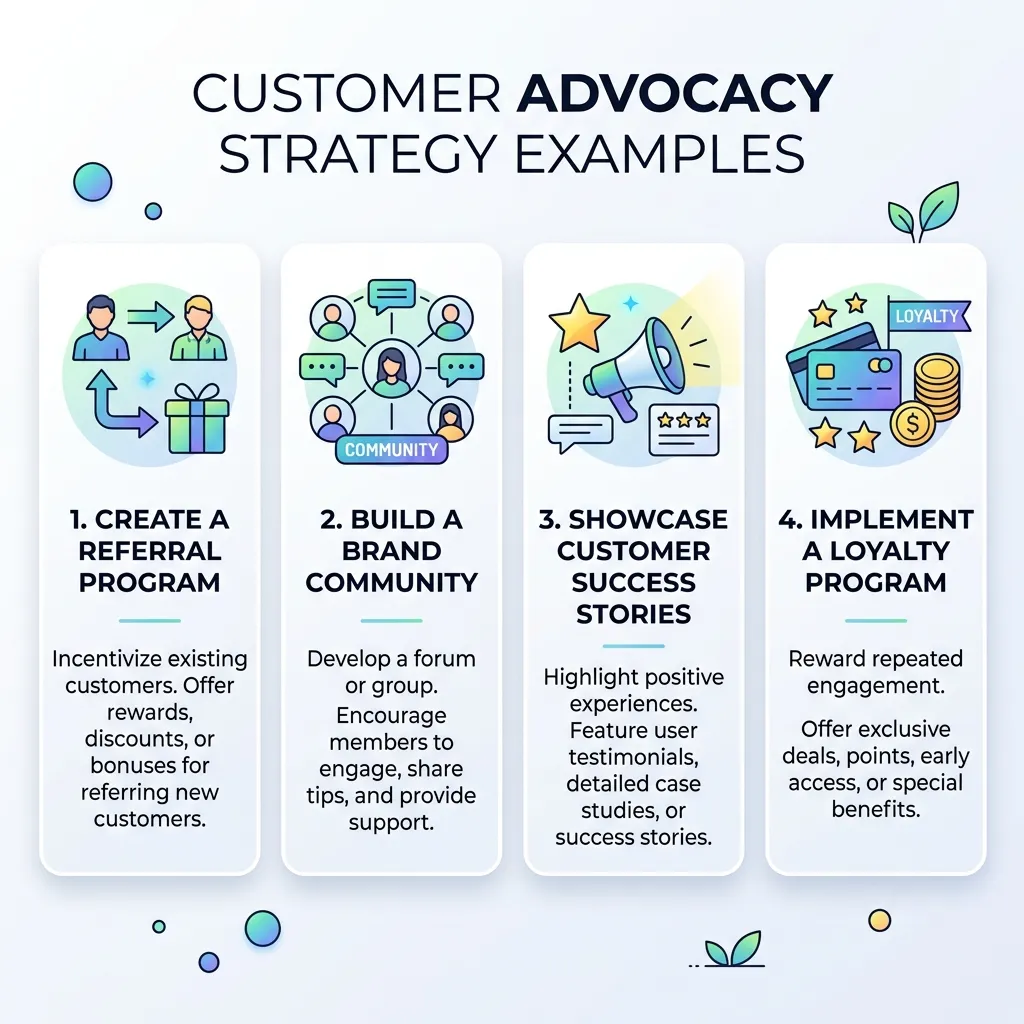
Here are several practical examples of how businesses can apply the strategy.
SaaS Company
A software company identifies customers who have achieved strong results and invites them to:
- Join a customer community
- Participate in webinars
- Provide testimonials
- Refer other businesses
- Join case studies
E-commerce Brand
An online retailer encourages satisfied customers to:
- Leave genuine reviews
- Share product experiences
- Create user-generated content
- Recommend products
- Participate in loyalty activities
Professional Services Company
An agency can turn successful projects into customer stories, testimonials, referrals, and expert interviews.
B2B Company
A B2B organization can create an advocate council where selected customers provide feedback, participate in product discussions, speak at events, and share real-world experiences.
Customer Advocacy Strategy Best Practices
To build a sustainable program, follow these principles:
- Start with customer value.
- Identify advocates based on engagement and satisfaction.
- Make participation simple.
- Offer multiple advocacy opportunities.
- Personalize requests.
- Recognize customer contributions.
- Use incentives responsibly.
- Keep reviews and testimonials authentic.
- Track measurable business outcomes.
- Use customer feedback to improve the experience.
- Respect customer privacy.
- Continuously optimize the program.
Conclusion
A strong customer advocacy strategy transforms satisfied customers from passive buyers into active supporters of your brand. Instead of relying exclusively on paid advertising, businesses can build trust through authentic referrals, reviews, testimonials, customer stories, communities, and user-generated content.
The most effective approach starts with customer value. When customers receive meaningful results and have positive experiences, businesses can create simple, relevant opportunities for them to share those experiences.
Start by defining clear advocacy goals, identifying your best potential advocates, choosing the right advocacy activities, and measuring results. Over time, use customer feedback and performance data to improve the program.
The goal is not simply to generate more promotional content. The goal is to create customers who genuinely want to talk about your brand.
Frequently Asked Questions
1. What is a customer advocacy strategy?
A customer advocacy strategy is a structured plan for turning satisfied customers into active supporters who recommend, review, refer, or publicly share their genuine experiences with a brand.
2. Why is customer advocacy important?
Customer advocacy can strengthen trust, generate word-of-mouth, support customer acquisition, increase engagement, and build stronger relationships with existing customers.
3. How do you create a customer advocacy strategy?
Start by defining objectives, identifying satisfied customers, creating simple advocacy opportunities, personalizing requests, recognizing participants, and tracking measurable results.
4. Who can become a customer advocate?
Any satisfied and engaged customer can potentially become an advocate. Strong candidates often have positive experiences, meaningful product results, and a willingness to participate.
5. What are examples of customer advocacy?
Examples include referrals, reviews, testimonials, case studies, user-generated content, social media recommendations, community participation, customer events, and product feedback.
6. What is the difference between customer advocacy and customer loyalty?
Customer loyalty focuses primarily on continued purchasing or engagement, while customer advocacy involves actively supporting or recommending the brand to others.
7. Should customer advocates be rewarded?
Rewards can encourage participation, but they are not always necessary. Recognition, exclusive experiences, early access, community status, and other non-monetary benefits can also motivate advocates.
8. How do you identify potential customer advocates?
Look at customer satisfaction, product engagement, positive feedback, repeat purchases, referrals, reviews, community participation, and successful customer outcomes.
9. What KPIs should you track?
Important metrics include referral rate, referral conversion, advocate participation, review volume, testimonial participation, UGC engagement, advocacy-generated leads, and advocacy-generated revenue.
10. Can customer advocacy improve brand trust?
Yes. Genuine customer experiences can provide social proof and help potential buyers understand how other customers experienced a product or service.
11. What is the biggest customer advocacy mistake?
One of the biggest mistakes is treating customers as promotional resources instead of building genuine relationships. Advocacy should follow customer value and trust.
12. How can businesses make customer advocacy sustainable?
Create a consistent program, provide multiple participation options, personalize communication, recognize advocates, respect privacy, maintain authenticity, and continuously optimize the strategy using customer feedback and performance data.