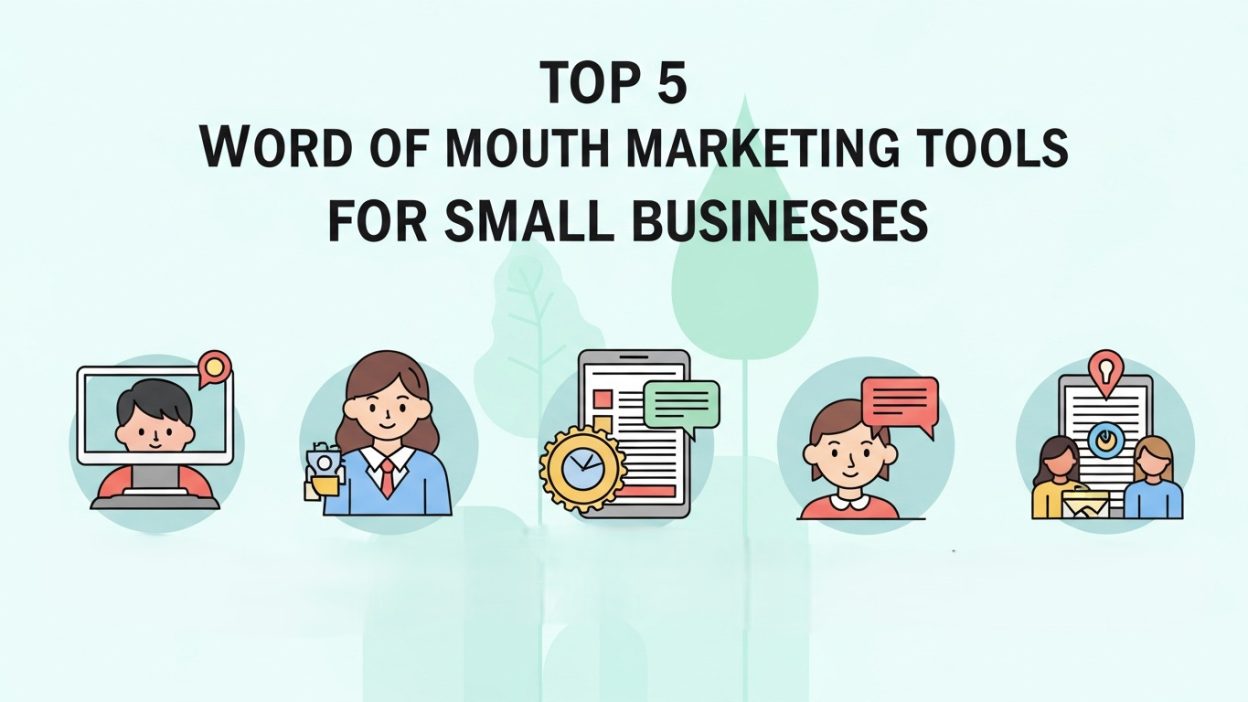
Word-of-mouth marketing helps small businesses grow through trusted customer referrals, reviews, and authentic recommendations. Modern tools like ReferralCandy, Podium, Birdeye, Trustpilot, and Mention automate sharing, manage reputation, and track performance. These platforms make WOM marketing affordable and scalable, turning satisfied customers into brand advocates while increasing trust, visibility, and organic growth without heavy advertising costs.
One of the best ways to grow your business is through word of mouth. Recommendations from friends and family outweigh the appeal of any advertisement. Savvy small business owners are aware of this and aspire to cultivate positive word of mouth.
The challenge? It wasn’t long ago that word of mouth marketing was a game that could only be played by the largest brands with the most substantial marketing budgets. Not anymore. The word of mouth marketing tools of today are built for small businesses on budgets and busy schedules.
4 Reasons Word of Mouth Marketing is so Powerful
The reason word of mouth marketing is effective is because it is based on trust. Someone who suggests your service to their network is gambling with their reputation. This is what makes the recommendation so important.
According to studies, 92% of people trust recommendations from others they know. That compares with the old way of advertising, which only 33% of people trust. The difference is massive.
Word of mouth advertising is great for small businesses for a variety of reasons:
-
Cost-effective: You don’t have to pay for an advertising space or media placement
-
Super targeted: Friends get recommended for similar needs
-
Quick to develop trust: Increasing numbers of people buy a product or service because they are told others have had a good experience with the product or service
-
Generates loyal customers: Community sourced customers are known to stick around longer
The problem is that word of mouth marketing can seem totally random and hard to control. And that’s where the right tools matter.
Selecting Word of Mouth Marketing Tools: What You Need to Consider
Before I share our favorite word of mouth marketing tools, it’s important to know what you should be looking for in your small business’ word of mouth marketing tools.
Essential Features to Look For
-
Simple setup and usage: You’ve got enough to learn without the hassle of figuring out complex software. Seek out tools you can set up in minutes, not hours.
-
Automation features: The top tools operate behind the scenes, automatically asking your customers for feedback or referrals at a time when they’re most likely to provide it.
-
Integration options: Your word of mouth tool should be able to work directly with your other systems, whether that’s your email platform, CRM, or a point-of-sale system.
-
We pick up for free: Small business budgets are small, and no one is going to pay you for a load of plastic. Seek out tools that offer good value without being prohibitively expensive.
-
Mobile-friendly: Your customers are using their phones. Make certain that any tool you select is mobile-friendly.
Questions to Ask Before Choosing
-
What’s your main goal? (More online reviews, referral programs or social media shout-outs?)
-
How tech-savvy is your team?
-
How much do you have to spend per month on marketing tools?
-
Which social media websites do your customers use the most?
Word of Mouth Marketing Tools for Small Businesses
ReferralCandy
What it is:
Builds bespoke referral programs in which customers get rewards for referring other customers. The platform keeps track of referrals, sends automated emails and manages rewards.
Key features:
-
Customizable referral program templates
-
Automated email sequences
-
Real-time tracking and analytics
-
Integration with popular e-commerce platforms
-
Mobile-optimized referral pages
Best for:
E-commerce businesses and service-based businesses that need to formalize their referral process.
Pricing:
Plans begin at $47 per month, 30-day free trial.
Why small businesses love it:
It’s easy to set up — and the automated process means you don’t need to actively keep track of referrals. Clients claim they moved 20–30% more referrals in the first month.
Podium
What it is:
Centralized customer communication across text, email and social, with an easy way to request and manage online reviews.
Key features:
-
Unified messaging inbox
-
Automated review requests
-
Review response management
-
Text message marketing
-
Google My Business and Facebook Integration
Best for:
Local businesses such as restaurants, salons, auto repair shops and retail stores that depend on online reviews.
Pricing:
Starts at $89 per month with various tiers depending on desired features.
Why small businesses love it:
Text messages get opened at significantly higher rates (98% versus 20% for email) and the automated review requests help keep reviews fresh and frequent.
What it does:
It keeps an eye on your online reputation on 150+ review sites, automates review requests, and lets you quickly respond to feedback.
Key features:
-
Multi-platform review monitoring
-
Automated review invitation campaigns
-
AI-powered response suggestions
-
Competitive benchmarking
-
Social media monitoring
Best for:
Service businesses; multi-location businesses that want to maintain a solid reputation across several platforms.
Pricing:
Custom pricing depending on business size & requirements. Average costs range from $199 to $399 per month for small businesses.
Why small businesses love it:
It saves hours of manual tracking and helps businesses respond to reviews three times faster than the manual process.
Trustpilot
What it is:
A platform for customer reviews and a suite of business tools that allows businesses to collect feedback, display reviews on their websites and analyze customer sentiment.
Key features:
-
Automated review invitations
-
Website review widgets
-
Review analytics and insights
-
Integration with e-commerce platforms
-
Mobile app for managing reviews
Best for:
E-commerce businesses, service providers looking to gain trust by displaying customer feedback clearly.
Pricing:
Free basic plan available. Business plans are available starting at $99 per month.
Why small businesses love it:
The Trustpilot badge on websites leads to an average 13% increase in conversions and the platform’s scale means reviews are displayed prominently in the search results.
Mention
What it is:
Watches social media, blogs, forums and news sites for references to your brand, products or industry keywords.
Key features:
-
Real-time social media monitoring
-
Sentiment analysis
-
Competitor tracking
-
Influencer identification
-
Team collaboration tools
Best for:
Businesses interested in monitoring and participating in online conversations about their brand or industry.
Pricing:
Start of plans ranges from $25 per month for solo users and there are team plan options.
Why small businesses like it:
The tool can help businesses jump into conversations organically and identify potential brand advocates among their online community members.
How You Can Use Word of Mouth Marketing Tools to Your Success
Start with Clear Goals
Decide what success looks like before you start. Are you trying to:
-
Increase online reviews by 50%?
-
Produce 100 referrers in a month?
-
Make your overall go up from 4.2 to 4.5 stars?
Clear goals: What makes it easy to choose the right tool, and to measure success.
Time Your Requests Carefully
You should ask for reviews or referrals right at the moment when customers have had a positive experience. This might be:
-
Straight after a good service
-
A few days from when they bought the product
-
(Comment on PS4 issue and customer service)
Make It Easy for Customers
I would reduce as much friction around this process as I can. This means:
-
Directing to review sites
-
Providing multiple ways to give feedback
-
Keeping referral processes simple
-
Mobile-optimizing all customer-facing pages
Follow Up Appropriately
Not all customers want to be asked for an annotation ― and they certainly don’t want to be asked multiple times in one visit — but you also can’t stop after just one try.
A decent sequence to follow up with might be:
-
Initial request immediately after service
-
Gentle reminder one week later
-
Last follow-up 2 weeks after that
Monitor and Respond
Once you start getting the reviews and yields flowing, remain involved:
-
Respond to both good and bad reviews
-
Thank customers for referrals
-
Address concerns quickly and professionally
-
Leverage feedback to grow your business
The Measurement of Your Word of Mouth Marketing Success
Measuring your word-of-mouth strategy performance is essential for understanding how customer advocacy influences brand growth. By tracking review analytics, referral performance, social listening tools, and overall business outcomes, you can evaluate if your WOM campaigns are generating positive ROI and long-term customer loyalty.
Review Metrics
These indicators reveal how customers perceive your brand and help monitor online reputation:
-
New customer reviews per month to measure review volume growth
-
Average star rating across platforms to analyze product and service satisfaction
-
Review response rate to improve customer engagement and trust
-
Response time for online reviews, a key customer experience metric
Strong review analytics highlight brand credibility and improve SEO visibility.
Referral Metrics
Track these customer referral program metrics to measure how effective your advocacy engine is:
-
Total referrals generated through WOM campaigns
-
Referral conversion rate showing customer acquisition efficiency
-
Lifetime value of referred customers, a core loyalty indicator
-
Cost per acquisition via referrals, proving WOM marketing ROI
Referred customers typically show higher loyalty and longer retention.
Social Media Metrics
Use these social listening and engagement metrics to measure digital word-of-mouth reach:
-
Brand mentions across platforms
-
Sentiment analysis of mentions to protect your brand reputation
-
Engagement rates on shared content including comments, clicks & shares
-
Growth in social media followers driven by customer advocacy
These insights show how far your brand story spreads online.
Business Impact Metrics
These KPIs connect WOM success to revenue growth and marketing efficiency:
-
Overall revenue growth influenced by advocacy
-
Customer acquisition cost improvements
-
Customer retention rate and churn reduction
-
Net Promoter Score (NPS) changes measuring loyalty strength
Tracking these business outcomes proves whether your word-of-mouth campaigns are driving sustainable results.
Common Mistakes to Avoid in Word-of-Mouth Marketing
Even with strong tools and a solid customer advocacy strategy, many brands make avoidable word-of-mouth marketing mistakes that slow down growth and damage credibility. Understanding these errors will help you strengthen brand trust, improve online reputation, and increase customer referrals effectively.
Asking Too Soon or Too Often
-
Request reviews only after customers have used the product long enough to form an opinion.
-
Avoid sending repeated reminders that may annoy or frustrate buyers.
-
Schedule review or referral requests at natural satisfaction peaks—like after positive feedback or reorders.
Ignoring Negative Feedback
-
Treat criticism as an opportunity to showcase excellent customer service.
-
Respond professionally to negative reviews to build public trust.
-
Analyze recurring complaints to make real improvements to your product or service.
Not Following Up
-
Don’t install WOM tools and then forget about them—maintain consistent follow-up.
-
Monitor engagement data and adjust your outreach emails/messages regularly.
-
Re-engage satisfied customers to encourage referrals, reviews, and testimonial content.
Focusing Only on Quantity
-
Prioritize quality, detailed customer reviews over short or generic comments.
-
Encourage customers to share their real experiences, not one-word praise.
-
Use strong reviews as storytelling content across social media, emails, and ads.
How to Get Word of Mouth Working For Your Business

Word of mouth marketing software can change the way your small business gains and keeps customers. The point is to pick the tools that best fit your particular needs and use them diligently.
Begin with one tool to tackle a difficulty. If you’re looking for additional online reviews, consider Podium or Birdeye. If you’re interested in launching a referral program, check out ReferralCandy. Mention is a great option for keeping an eye on your social media.
These are tools that are designed to enhance and streamline Word of Mouth marketing, not circumvent good customer service. The best marketing is still a great customer experience that people want to share on their own.
Take a step forward today by picking one of the tools from this list and giving it a trial run in your business. Your customers are already discussing businesses like yours — make sure they’re talking about you.
Conclusion
Word-of-mouth marketing is no longer limited to large corporations. Today’s tools empower small businesses to generate consistent referrals, collect powerful reviews, and monitor brand conversations effortlessly. When paired with exceptional customer experience and smart automation, WOM becomes a reliable growth engine. Start small, stay consistent, and let your happiest customers drive trust, visibility, and sustainable business expansion.