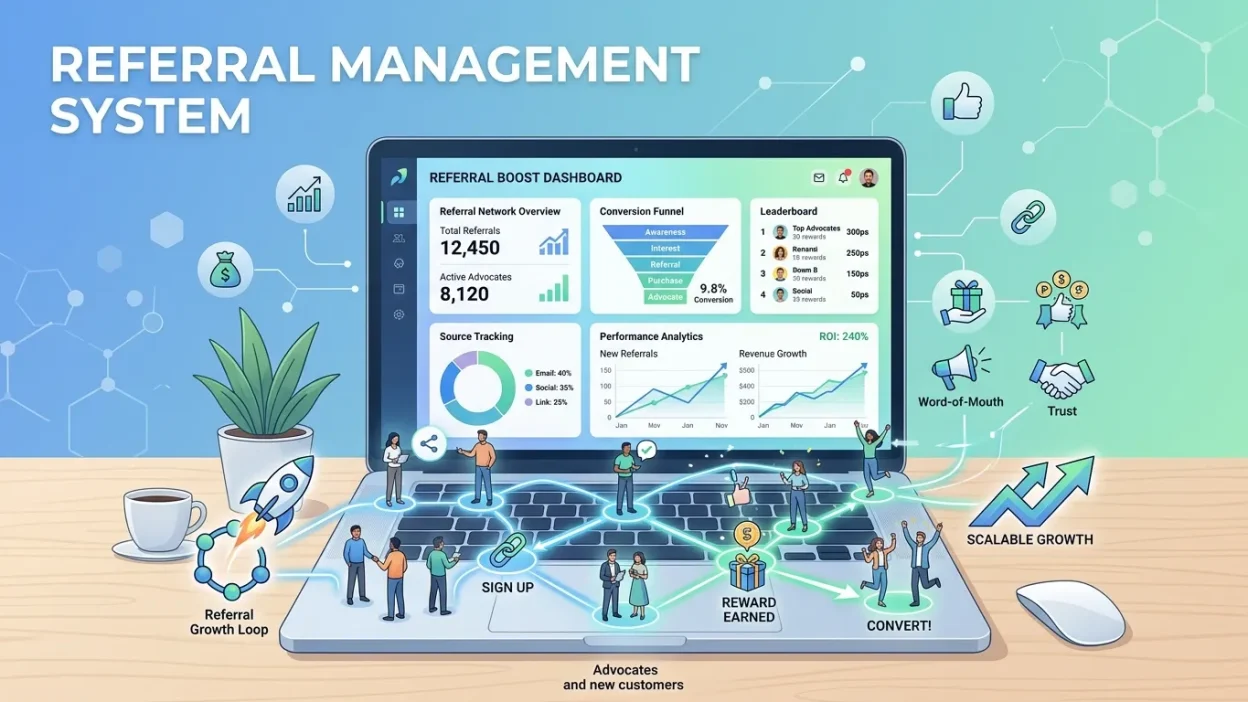
A referral management system is software that automates how businesses track, manage, and reward customer referrals. It handles everything from generating unique referral links to distributing rewards, helping companies turn happy customers into a steady stream of new leads—without the manual spreadsheet headaches.
Word of mouth has always been one of the most powerful ways to grow a business. People trust recommendations from friends and family far more than any ad. The challenge? Managing referrals by hand quickly becomes messy. Tracking who referred whom, confirming purchases, and sending out rewards on time can eat up hours your team doesn’t have.
That’s where a referral management system comes in. These platforms automate the entire referral process, so you can scale your word-of-mouth marketing without drowning in admin work. In this guide, we’ll break down what referral management software does, the key features to look for, and how to choose the right tool for your business.
By the end, you’ll understand how automated referral management can lower your customer acquisition costs, boost loyalty, and turn your best customers into your most effective marketers.
What is a referral management system?
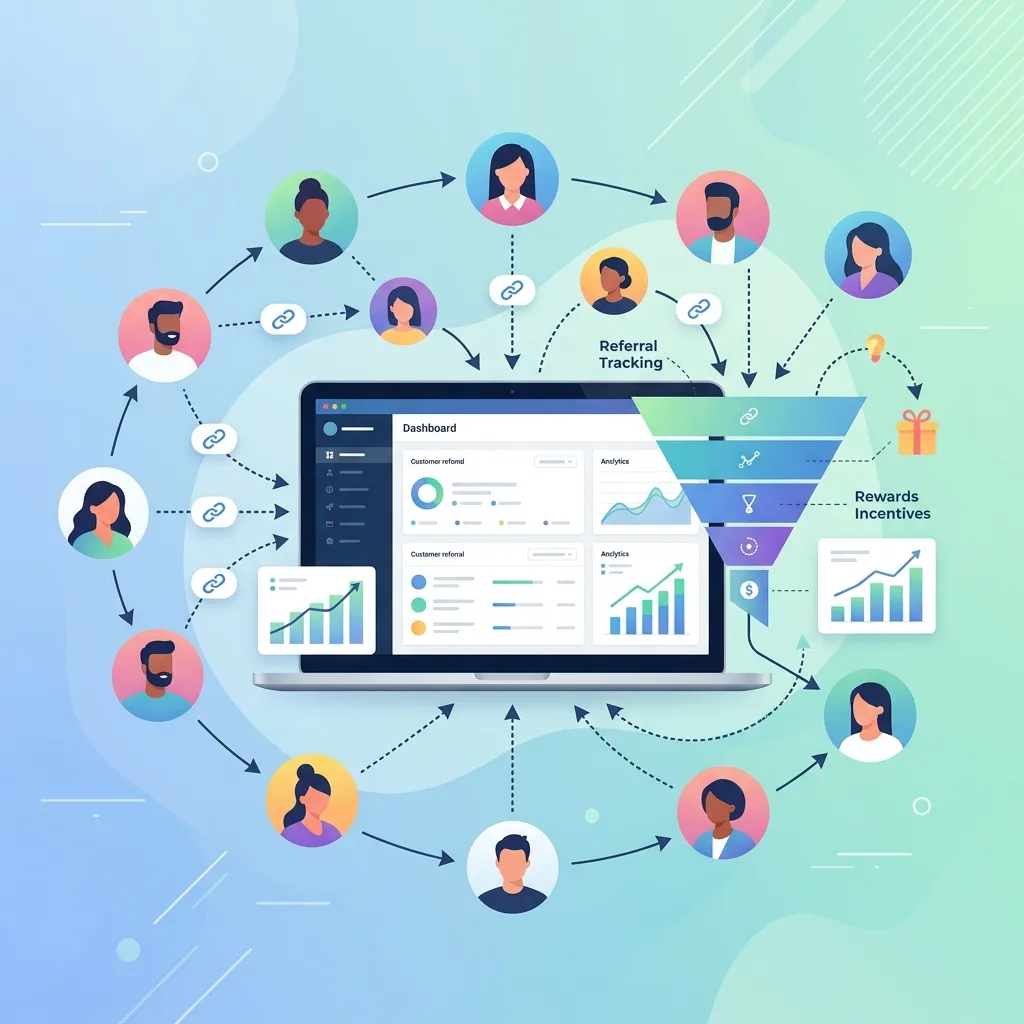
A referral management system is software that helps businesses create, track, and optimize customer referral programs. Instead of manually keeping tabs on who referred a new customer, the software does it automatically. It assigns unique referral links or codes, monitors conversions, and triggers rewards once a referral is verified.
Think of it as the engine behind your word-of-mouth marketing. The system tracks every step of the referral journey—from the moment a customer shares a link to the moment a new buyer completes a purchase. This removes guesswork, reduces errors, and gives you clear data on what’s working.
Most modern referral marketing platforms also include analytics dashboards, fraud detection, and integrations with your existing tools like CRMs, email platforms, and e-commerce stores. The result is a smoother experience for both you and your customers.
This approach is part of a much larger ecosystem of modern advocacy tools, similar to those discussed in this overview of the best word of mouth marketing tools.
Why does referral tracking software matter?
Referral tracking software solves a problem that grows worse as your business scales. When you have ten customers, you might remember who sent a friend your way. When you have ten thousand, that’s impossible without automation.
Modern businesses also combine referral tracking with broader reputation-building tactics like those used in social proof in word of mouth marketing.
Here’s why referral tracking and rewards software has become essential for growing companies:
- Accuracy: Manual tracking leads to missed referrals and unhappy customers. Automated tracking captures every referral correctly.
- Speed: Rewards are sent out instantly once a referral is confirmed, keeping your advocates motivated.
- Visibility: You can see exactly which customers, channels, and campaigns drive the most referrals.
- Scale: The software handles thousands of referrals as easily as it handles ten.
Referred customers also tend to be more valuable. They often have higher lifetime value and lower churn rates than customers acquired through paid ads. A good referral tracking system helps you capture more of these high-quality leads.
Key features of customer referral program software
Not all referral platforms are built the same. When evaluating tools, you should think beyond automation and consider long-term advocacy impact, similar to insights from this guide on measure brand advocacy program success.
Automated referral management
The whole point of investing in software is to save time. Automated referral management handles the repetitive tasks—generating links, tracking clicks, verifying purchases, and issuing rewards—without anyone on your team lifting a finger. This frees your staff to focus on strategy rather than data entry.
Reward distribution and management
A strong referral program management system makes it easy to set up and deliver rewards. Whether you offer cash, discounts, store credit, or gift cards, the software should automate payouts and let you customize rewards for different campaigns or customer tiers.
Real-time analytics and reporting
You can’t improve what you can’t measure. Look for a referral marketing platform that gives you clear dashboards showing referral volume, conversion rates, and return on investment. These insights help you double down on what works and fix what doesn’t.
Fraud prevention
Referral fraud—where people game the system for rewards—can drain your budget fast. The best referral automation platforms include built-in fraud detection to flag suspicious activity and protect your program.
Integrations
Your referral software should play nicely with the tools you already use. Strong integrations with CRMs, email marketing platforms, payment processors, and e-commerce systems keep your data connected and your workflows smooth.
Customizable campaigns
Different goals call for different campaigns. Good referral campaign management tools let you run multiple programs at once, test different rewards, and tailor messaging to specific audiences—all from one dashboard.
How does automated referral management work?
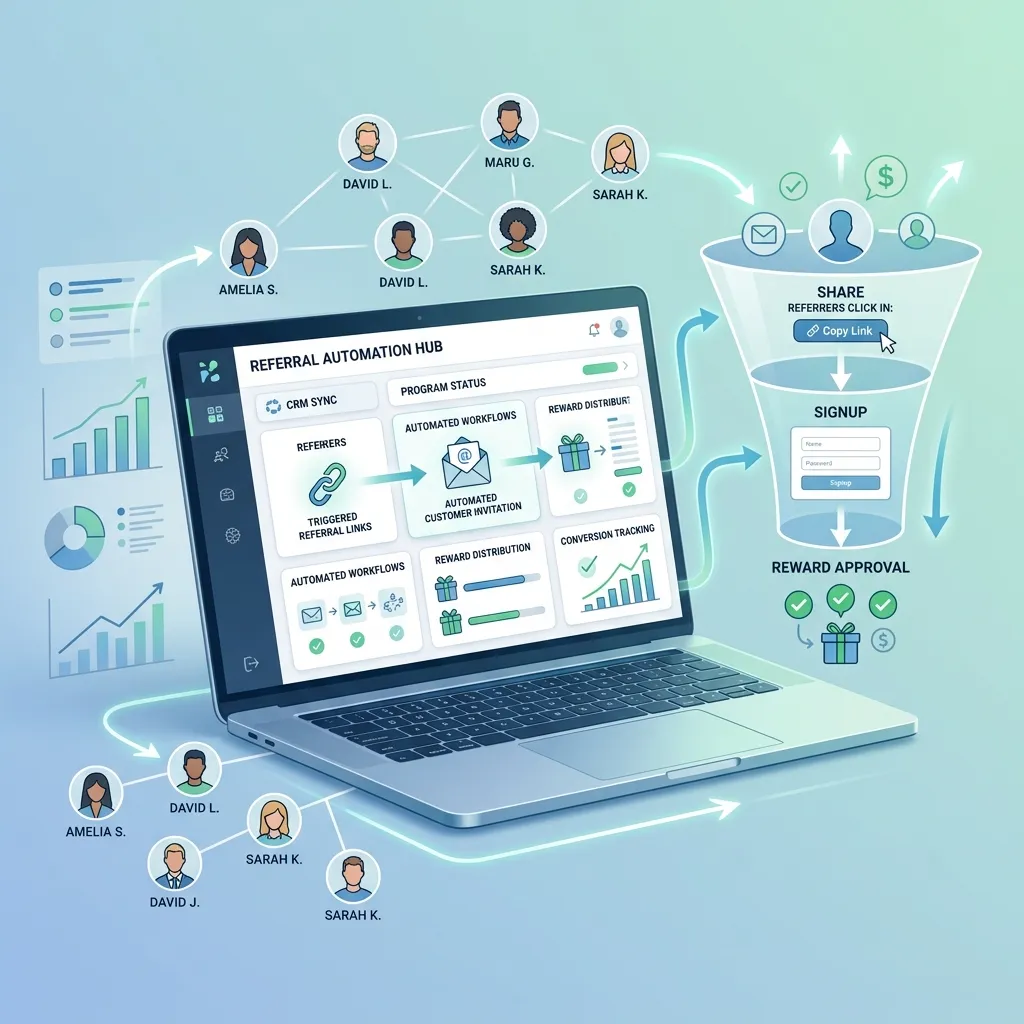
Understanding the mechanics helps you see the value. Here’s how a typical automated referral management process flows from start to finish.
Step 1: A customer joins the program. They sign up and receive a unique referral link or code tied to their account.
Step 2: They share the link. The customer shares their link with friends, family, or their social network, often through email, text, or social media.
Step 3: A new customer clicks and buys. When someone clicks the link and makes a purchase, the system records the referral and ties it back to the original customer.
Step 4: The referral is verified. The software confirms the purchase is legitimate and not fraudulent.
Step 5: Rewards are issued. Once verified, both the referrer and the new customer can receive their rewards automatically.
This entire cycle runs without manual oversight. Your team sets up the rules once, and the system handles the rest.
Who needs partner referral management software?
Referral software isn’t only for direct customer referrals. Many businesses run partner programs where affiliates, resellers, or other companies refer new customers. Partner referral management software is built for these relationships.
This type of software tracks referrals across a network of partners, manages commission structures, and provides partners with their own dashboards to monitor performance. If your growth strategy depends on partnerships—as it does for many SaaS companies and B2B businesses—partner referral management features are worth prioritizing.
Choose partner-focused software if managing affiliate commissions and partner relationships matters more to you than running simple customer-to-customer referrals. For businesses focused purely on customer advocacy, a standard customer referral program platform may be a better fit.
How to choose the right referral marketing platform

With so many options available, picking the right tool can feel overwhelming. Use these criteria to narrow down your choices.
Define your goals first
Are you trying to lower customer acquisition costs, increase loyalty, or build a partner network? Your goals shape which features matter most. A business focused on customer advocacy needs different tools than one building an affiliate program.
Consider your budget
Referral software ranges from affordable monthly subscriptions to enterprise-level pricing. Factor in not just the base cost but also any fees tied to the number of referrals, users, or integrations you need.
Evaluate ease of use
A platform packed with features means little if your team can’t figure it out. Look for an intuitive interface and solid customer support. Many providers offer free trials—use them to test the experience before committing.
Check integration options
Make sure the software connects with your existing tech stack. Smooth integrations save time and prevent data silos.
Read reviews and case studies
See how other businesses in your industry have used the platform. Real customer feedback often reveals strengths and weaknesses you won’t find on a sales page.
The benefits of customer advocacy and referral software
Investing in the right system pays off in several ways. Here’s what businesses typically gain from quality customer advocacy and referral software.
- Lower acquisition costs: Referrals cost far less than paid advertising, since your customers do the promoting for you.
- Higher-quality leads: Referred customers tend to convert better and stay loyal longer.
- Stronger relationships: Rewarding loyal customers deepens their connection to your brand.
- Better data: Detailed analytics help you understand and improve your marketing over time.
- Scalable growth: Automation lets you grow your program without growing your workload.
Turning happy customers into your best marketers
A referral management system takes one of the oldest forms of marketing—word of mouth—and makes it measurable, scalable, and reliable. Rather than hoping customers spread the word, you give them a clear reason and an easy way to do it, then reward them for their efforts.
The right platform depends on your specific needs. Start by defining your goals, then look for software with strong automation, clear analytics, fraud protection, and the integrations your business relies on. Take advantage of free trials to find the tool that fits your team and budget.
Ready to grow through referrals? Begin by mapping out what a successful referral program looks like for your business, then choose a referral management system that helps you get there.
Frequently asked questions
How much does referral management software cost?
Pricing varies widely. Entry-level plans can start around $50 to $100 per month, while enterprise platforms with advanced features and high referral volumes can cost thousands per month. Many providers offer tiered pricing based on the number of referrals, users, or features you need, so you can start small and scale up.
How long does it take to set up a referral program?
Most referral management systems can be set up within a few days to a couple of weeks. The timeline depends on how complex your program is and how many integrations you need. Platforms with templates and pre-built integrations let you launch faster than fully custom solutions.
What’s the difference between referral and affiliate software?
Referral software focuses on existing customers recommending your product to friends and family, usually for a one-time reward. Affiliate software, often part of partner referral management platforms, manages ongoing relationships with marketers or partners who earn commissions for driving sales. Some platforms handle both.
Can referral software prevent fraud?
Yes. Quality referral automation platforms include fraud detection features that flag suspicious behavior, such as self-referrals or fake accounts. These safeguards protect your reward budget and keep your program fair.
Who benefits most from a referral management system?
Any business that relies on customer recommendations benefits, but it’s especially valuable for e-commerce stores, SaaS companies, and subscription services. These businesses have repeat customers and clear conversion points, which make referral tracking and rewards software easy to implement and measure.
What is a referral management system?
A referral management systems is software that automates the process of tracking, managing, and rewarding customer or partner referrals to help businesses grow through word-of-mouth marketing.
How does a referral management system work?
A referral management systems assigns unique referral links or codes, tracks referrals, verifies conversions, and automatically distributes rewards when referral goals are met.
Why is a referral management system important for businesses?
A referral management systems improves accuracy, saves time, reduces manual work, and helps businesses generate high-quality leads through customer recommendations.
What features should I look for in a referral management system?
Key features include referral tracking, automated rewards, analytics, fraud detection, CRM integrations, campaign management, and customizable referral programs.
Can a referral management system help reduce customer acquisition costs?
Yes, a referral management systems helps lower acquisition costs by leveraging existing customers to generate new leads, often at a lower cost than paid advertising.
Is a referral management system suitable for small businesses?
Absolutely. Small businesses can use a referral management systems to automate referrals, increase customer engagement, and grow without investing heavily in traditional marketing.
What is the difference between a referral management system and affiliate software?
A referral management systems focuses on customer referrals and rewards, while affiliate software is designed for managing partners or affiliates who earn commissions from sales.
Can a referral management system prevent referral fraud?
Most modern referral management systems include fraud detection tools that identify suspicious activity, duplicate referrals, and fake accounts.
How much does a referral management system cost?
The cost of a referral management systems varies by provider, features, and business size, with plans ranging from affordable monthly subscriptions to enterprise-level solutions.
How do I choose the best referral management system?
Choose a referral management systems based on your goals, budget, integration requirements, ease of use, reporting capabilities, and automation features.