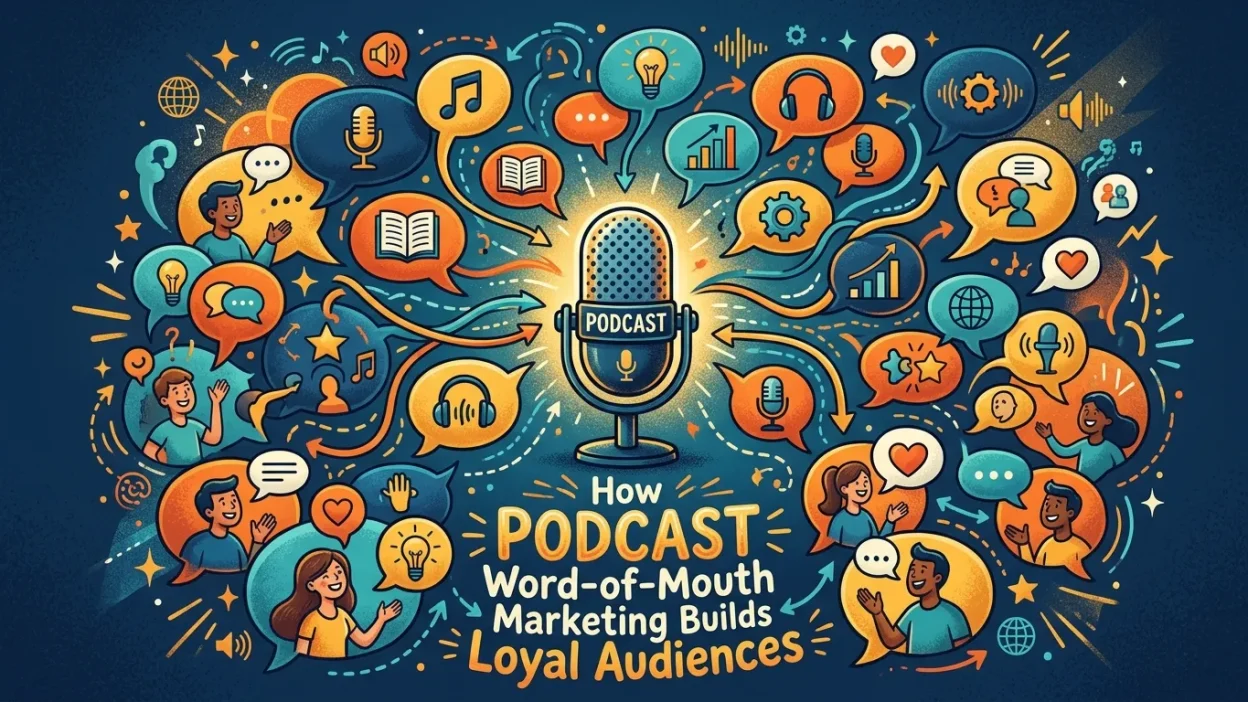
Podcast Word-of-Mouth marketing is the process of turning listeners into advocates who recommend your show to friends, family, and online communities. Because podcasts build trust and personal connections, recommendations feel authentic and drive high-quality audience growth. By focusing on engagement, community building, referral programs, and shareable content, creators can use Podcast Word-of-Mouth strategies to increase brand awareness, attract loyal listeners, and grow their audience organically.
Podcast word-of-mouth (WOM) marketing happens when listeners recommend a show to friends, family, and online communities. It works because audio creates trust and intimacy that other formats struggle to match. Brands and creators can fuel this organic spread through audience engagement, referral incentives, community building, and strategic influencer partnerships.
A single recommendation from a friend can do more for a podcast than a month of paid ads. That’s the quiet power of word-of-mouth marketing in the audio space. When someone says, “You have to listen to this episode,” they’re handing over their personal credibility—something no banner ad can buy.
Podcasts are uniquely built for this kind of sharing. Listeners spend hours with hosts, often during commutes, workouts, or chores. That sustained attention builds a sense of connection few other media can claim. And connected listeners talk. They tell coworkers about a fascinating interview. They text episode links to family. They post clips in group chats.
This blog breaks down how podcast word-of-mouth marketing actually works, why audio content is so effective at sparking conversation, and the practical strategies you can use to turn passive listeners into active promoters. Whether you run a branded podcast or an independent show, these tactics will help you grow an audience that markets for you.
What is podcast word-of-mouth marketing?
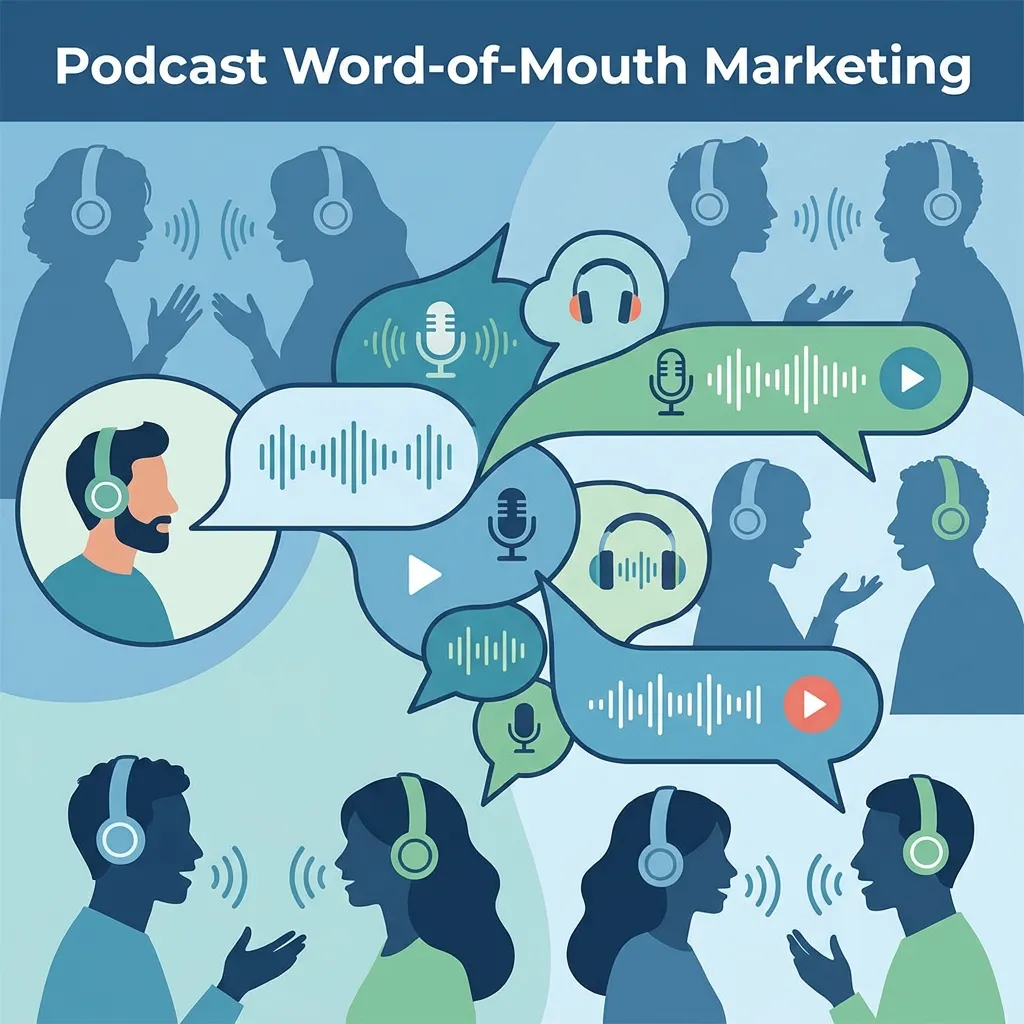
Podcast word-of-mouth marketing is the process of encouraging listeners to recommend your show to others through organic, person-to-person sharing. Instead of relying solely on paid promotion, you build a program so valuable and shareable that your audience does the promoting for you.
This approach matters because trust drives listening decisions. According to Nielsen, 88% of people trust recommendations from people they know more than any other form of advertising. Podcasts amplify this effect. The host’s voice, personality, and consistency create a parasocial bond, so when a listener recommends a show, they’re vouching for a relationship—not just a product.
Word-of-mouth also compounds over time. One enthusiastic listener might bring in three new listeners, and each of those could bring in three more. This organic growth tends to attract higher-quality audiences too, since people who arrive via recommendation already trust the source.
Why audio content marketing sparks more conversation
Audio content marketing works differently from text or video. Listeners can’t multitask away from a podcast the way they skim an article. They’re often fully present, even while doing something else with their hands. That immersive quality makes the content stick.
Three features make audio especially shareable:
- Intimacy: Hearing a voice in your ears feels personal. This closeness makes listeners feel like they know the host, which strengthens their desire to share the experience.
- Length: A typical podcast episode runs 30 to 60 minutes, giving hosts room to tell stories, explore ideas, and build emotional resonance—the exact ingredients that prompt sharing.
- Portability: People listen everywhere, which means they encounter share-worthy moments in many different contexts throughout their day.
When you create audio content designed to be remembered, you give listeners something worth repeating. A surprising statistic, a vulnerable story, or a hot take can all become the thing someone mentions at dinner.
How to boost podcast audience engagement
Engagement is the foundation of word-of-mouth. Listeners who feel involved are far more likely to recommend your show. The goal is to turn one-way listening into a two-way relationship.
Ask listeners to participate
Invite your audience into the conversation. Read listener questions on air, run polls on social media, or create a voicemail line for feedback. When people see their contributions featured, they feel ownership over the show—and owners promote what they help build.
Reward your most active fans
Recognition fuels loyalty. Shout out listeners who share episodes, leave reviews, or submit great questions. A simple on-air thank-you costs nothing but makes a fan feel seen, increasing the odds they’ll keep spreading the word.
Create share-worthy moments
Plan for shareability. End each episode with a quotable takeaway, a cliffhanger, or a clear reason to tell a friend. The easier you make it to summarize why an episode mattered, the more often listeners will pass it along.
These tactics are strongly connected to the concept of social proof in marketing, where visible engagement encourages further participation.
Building a podcast referral marketing strategy
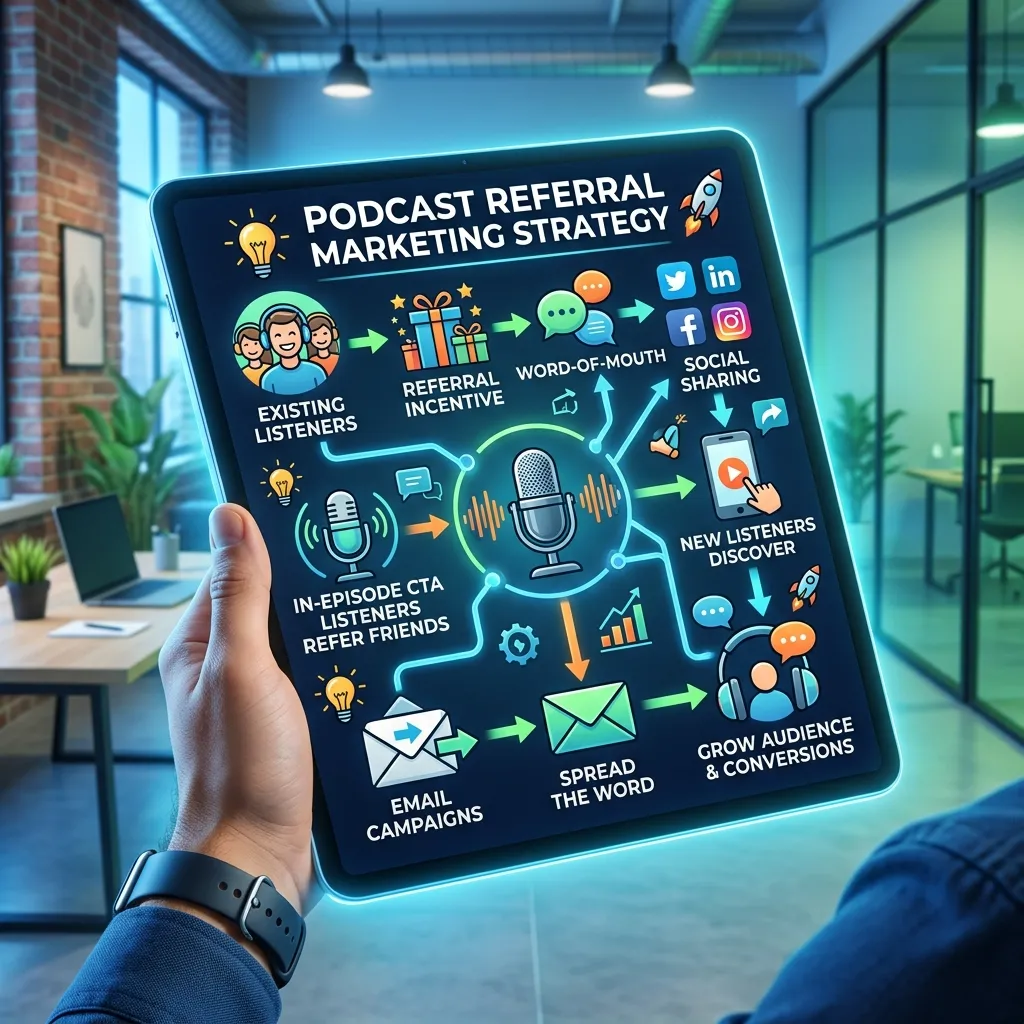
Podcast referral marketing turns casual sharing into a structured system. Instead of hoping listeners spread the word, you give them clear reasons and tools to do so.
Start with a simple ask. Many podcasters underestimate how effective it is to directly request shares. A line like, “If this episode helped you, send it to one person who needs to hear it,” can measurably increase forwarding.
You can also add incentives:
- Referral rewards: Offer exclusive bonus episodes, merchandise, or shoutouts to listeners who refer a set number of new subscribers.
- Shareable assets: Create audiograms, quote graphics, and pre-written social captions so sharing takes seconds, not minutes.
- Trackable links: Use unique referral links or codes to measure which listeners drive the most growth, then nurture those relationships.
The key is to reduce friction. The less effort a referral requires, the more referrals you’ll get.
For implementation ideas, explore how to create referral programs that drive word-of-mouth effectively.
How listener-driven marketing fuels organic growth
Listener-driven marketing puts your audience at the center of your promotion. Rather than broadcasting at people, you empower them to carry your message into their own networks.
This works because listeners know their communities better than you do. A fan who recommends your true-crime show to their book club is reaching an audience you’d never find through ads. Their personal endorsement also carries weight that no marketing copy can replicate.
To activate listener-driven marketing, make your audience feel like collaborators. Feature user-generated content, such as listener reviews or fan art. Encourage listeners to tag the show when they post about an episode. Build rituals—catchphrases, inside jokes, or recurring segments—that fans want to reference and explain to others.
When listeners feel like part of something, sharing becomes an expression of identity rather than a favor.
This behavior is deeply tied to principles of community marketing and loyal audience building, where engaged groups become self-sustaining growth engines.
Growing podcast brand awareness through organic promotion
Organic podcast promotion focuses on long-term, sustainable visibility rather than quick paid spikes. It builds podcast brand awareness by meeting potential listeners where they already spend time.
Repurpose episodes across platforms
Turn each episode into multiple pieces of content. Pull out short audio clips for social media, transcribe key segments into blog posts, and design quote cards for Instagram. This multiplies the chances someone discovers—and shares—your show.
Collaborate with other podcasts
Cross-promotion remains one of the most effective organic tactics. Swap guest appearances or shoutouts with shows that share your audience. Each host’s recommendation acts as a trusted endorsement to a relevant, engaged listener base.
Optimize for discovery
Write clear, keyword-rich episode titles and descriptions so your show surfaces in podcast app searches. A descriptive title that names the topic and guest helps both algorithms and potential listeners understand why an episode is worth a click.
How to approach podcast community building
Podcast community building transforms an audience of individual listeners into a connected group. Communities generate word-of-mouth naturally, because members talk to each other—and to outsiders—about what they love.
Choose a home base for your community. This could be a Discord server, a Facebook group, a Slack channel, or a comments section. The platform matters less than the consistency of your presence within it.
Then, give the community reasons to gather:
- Exclusive content: Share behind-the-scenes clips, early episode access, or members-only Q&As.
- Live events: Host live recordings, virtual meetups, or listening parties that turn passive fans into active participants.
- Member spotlights: Celebrate community members publicly to reinforce belonging.
A thriving community becomes a self-sustaining engine. Members recruit new members, answer each other’s questions, and defend the show—all without prompting.
Using influencer podcast marketing effectively
Influencer podcast marketing leverages people with established audiences to recommend your show. Done well, it puts your podcast in front of thousands of potential listeners through a trusted voice.
The most natural form is the guest appearance. When you host an influencer with their own following, they often share the episode with their audience, sending engaged new listeners your way. Choose guests whose followers overlap with your ideal listener for the strongest results.
You can also partner with creators outside the podcast itself. A relevant YouTuber, newsletter writer, or social media personality can recommend your show to their community. For these partnerships to land, the endorsement must feel authentic. Audiences quickly sense forced promotion, so prioritize creators who genuinely connect with your content.
Crafting a podcast recommendation strategy

A podcast recommendation strategy ties all these tactics into a deliberate plan for getting recommended—both by listeners and by algorithms.
Start by mapping your listener journey. Identify the moment when a new listener becomes a fan, then design prompts around it. If most listeners commit after three episodes, focus your “share this show” asks during that window.
Next, make recommending effortless at every touchpoint:
- Include a clear share call-to-action in every episode.
- Add share links and pre-written suggestions to your show notes.
- Remind listeners across email and social channels why your show is worth passing on.
Finally, measure and refine. Track which episodes get shared most and what they have in common. Double down on the formats, topics, and moments that consistently spark recommendations.
Turning listeners into your best marketers
Podcast word-of-mouth marketing isn’t a single tactic—it’s the natural result of creating audio worth talking about and giving your audience easy ways to spread the word. The shows that grow fastest treat their listeners as partners, not just consumers.
Start small. Pick one strategy from this guide—maybe a direct share request or a community space—and commit to it for a month. Track what happens, learn from the results, and layer in new tactics as you go. Over time, these efforts compound into an audience that actively champions your show.
The best marketing for your podcast is already sitting in your listeners’ headphones. Give them a reason to talk, and they will.
Frequently asked questions
What is podcast word-of-mouth marketing?
Podcast word-of-mouth marketing is when listeners organically recommend a show to others through personal sharing—telling friends, texting episode links, or posting in online communities. It relies on listener trust rather than paid advertising to drive growth.
Why is word-of-mouth so effective for podcasts?
Podcasts create an intimate, sustained connection between host and listener. This bond makes recommendations feel personal and credible. Since 88% of people trust recommendations from people they know (Nielsen), podcast referrals carry significant weight.
How can I encourage listeners to recommend my podcast?
Ask directly at the end of episodes, create shareable assets like audiograms and quote cards, offer referral rewards, and feature listeners who spread the word. Reducing the effort required to share is the most reliable way to increase referrals.
How long does it take to grow a podcast through word-of-mouth?
Word-of-mouth growth is gradual but compounding. Results often take several months as your audience builds trust and your community develops. Unlike paid ads, this growth tends to be more durable and attracts higher-quality, more engaged listeners.
Is influencer marketing worth it for podcasts?
Influencer podcast marketing can be highly effective when the influencer’s audience overlaps with your ideal listener and the endorsement feels authentic. Guest appearances are often the most natural and cost-effective approach, since guests typically share episodes with their own followers.